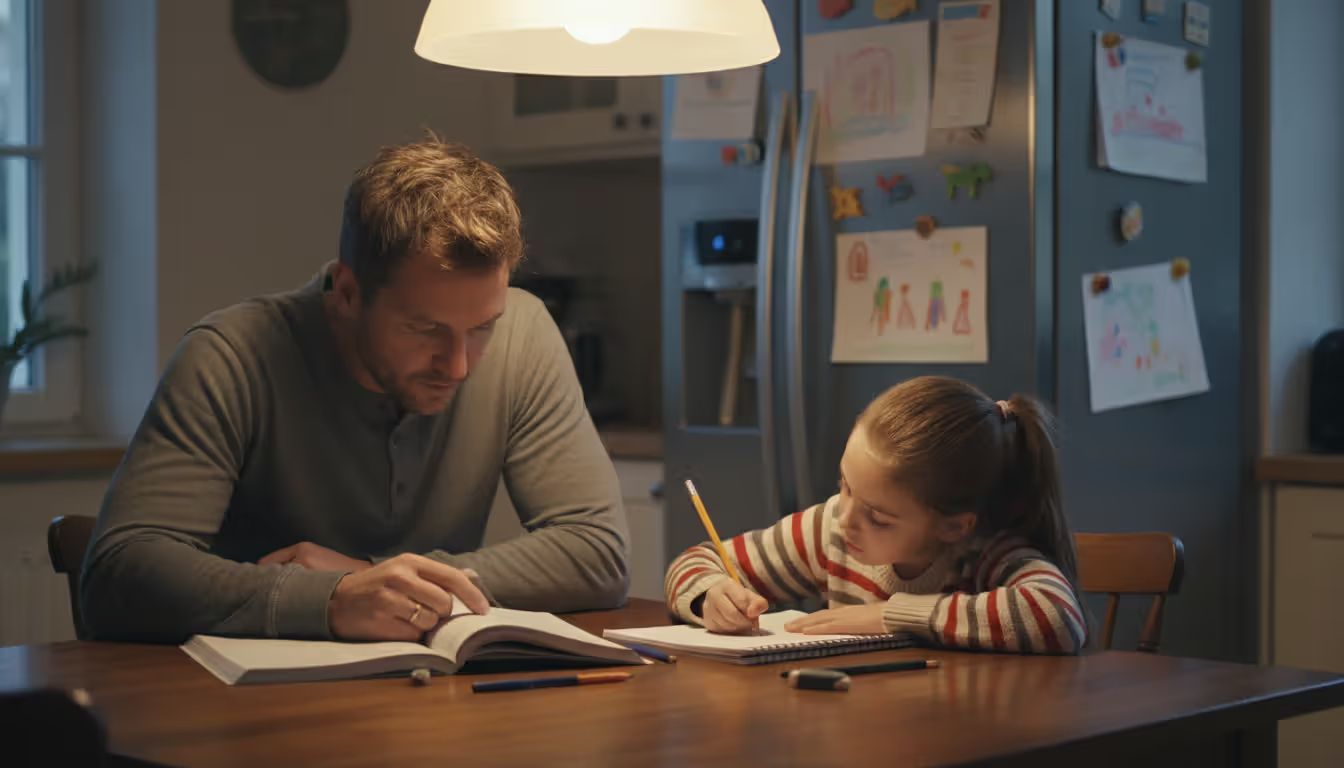
When relationships end, parents face tough questions about their children's future. Who'll pick schools? Where will the kids sleep most nights? After a breakup or divorce, you might assume you'll split everything 50-50. But that's not always how things work—or even what's best for your child.
Some situations demand that one parent take the lead. Maybe communication has completely broken down. Perhaps safety concerns make shared parenting impossible. Understanding how courts approach these concentrated custody arrangements can help you make informed decisions during an already difficult time.
What Is Sole Custody?
Think of sole custody as consolidating parental authority under one roof rather than spreading it across two households. Courts designate one parent as the custodial parent—the person primarily responsible for raising the child. The other parent becomes the non-custodial parent, usually retaining some involvement but with significantly less authority.
Here's what trips people up: "sole custody" actually covers two separate issues that judges analyze independently.
Sole legal custody hands one parent complete control over life-shaping decisions. Want to enroll your daughter in a private Catholic school? You don't need your ex's approval. Considering ADHD medication for your son? That's your call alone. These choices cover four main areas: where the child goes to school (including any special education programs), medical care (everything from routine vaccinations to major surgeries), religious training (or the decision to skip it entirely), and activities like sports teams or music lessons.
Sole physical custody determines where your child actually lives day-to-day. The child's clothes, toys, and toothbrush stay primarily at one parent's house. That parent handles morning routines, packs lunches, helps with algebra homework, and tucks the child in most nights. The other parent typically gets scheduled visits—maybe every other weekend, Wednesday evenings, alternating holidays—but doesn't provide the daily structure.
The custodial parent becomes the child's anchor point. Bills for school field trips arrive at that address. Emergency contacts list that phone number first. Child support payments generally flow toward the custodial parent to help cover expenses.
Don't confuse sole custody with completely cutting off the other parent. Courts rarely eliminate all contact unless genuine danger exists. Even parents who've made serious mistakes usually retain visitation rights—supervised if necessary, but maintained. The biological or legal parent-child relationship continues, just with strict boundaries around decision-making and living arrangements.
Author: Dylan Fairmont;
Source: sbardellaorchards.com
Sole Legal Custody vs. Sole Physical Custody
You can have one without the other, which surprises many parents. A judge might award you sole physical custody while requiring you to share legal decisions. Or you might split physical time fairly evenly while one parent gets final say on major choices.
Sole legal custody is all about authority over the big stuff. One parent holds the power to: - Choose which elementary, middle, or high school the child attends - Consent to medical procedures, from tonsillectomies to orthodontic work - Decide whether the child attends church, synagogue, or no religious services at all - Sign permission slips for extracurriculars and determine which activities fit the schedule
The parent without legal custody? They're out of the loop on these decisions. You might choose to ask their opinion anyway—some parents do this to keep the peace—but you're under no legal obligation to even inform them before making these choices.
Sole physical custody focuses on the everyday realities of raising a child. This parent manages: - The child's bedroom, belongings, and personal space - Daily schedules including wake-up times, meals, and bedtimes - Transportation to school, friends' houses, and activities - Routine matters like screen time rules, chore charts, and discipline
The other parent gets time with the child according to whatever schedule the court approved, but that's visiting—not co-parenting the daily grind.
What You're Comparing
Sole Legal Custody
Sole Physical Custody
Main Purpose
Authority over major life decisions
Where the child lives and who handles daily care
What This Parent Controls
School selection, medical consent, religious instruction, significant activities
The child's home base, everyday routines, minute-to-minute supervision
Other Parent's Involvement
Gets no vote on big decisions; might receive informational updates
Visits according to court schedule
Common Situations
One parent makes terrible decisions, disappeared entirely, or turns every choice into a battle
Other parent's housing is unstable, has a chaotic work schedule, or lives hours away
Why would a judge grant one without the other? Consider Jenna and Marcus. They live in the same town and can coordinate drop-offs without screaming matches. Marcus has a stable apartment and genuinely loves his daughter. But he also believes vaccines cause autism and refused to get their daughter treatment when she broke her wrist, insisting essential oils would heal the bone. A judge might give them joint physical custody (the daughter splits time between both homes) while granting Jenna sole legal custody to prevent Marcus from making dangerous medical decisions.
Or take Sarah and Tom. They cooperate beautifully on decisions about their son's education and healthcare. But Tom's military deployment schedule means he's overseas or relocating every few months. Sarah gets sole physical custody because Tom can't provide a consistent home, yet they maintain joint legal custody because Tom's judgment is sound and they communicate well when he's available.
Author: Dylan Fairmont;
Source: sbardellaorchards.com
Sole Custody vs. Joint Custody
Walk into any family courtroom and you'll notice something: judges really, really want parents to share custody. It's not just preference—in most states, it's the starting assumption. Courts believe children do better when both parents stay actively involved, and mountains of research back them up.
Joint legal custody means Mom and Dad must actually talk to each other and reach agreements. Choosing between public and private school? You're negotiating. One parent wants braces now, the other wants to wait? Time to compromise. Joint physical custody (sometimes called shared physical custody) means your child bounces between two homes, spending substantial time in each. That doesn't always mean a perfect 50-50 split—it might be 60-40, or alternating weeks, or even weekdays at one house and weekends at the other.
With sole custody, one parent runs the show. Need to switch pediatricians? Done. Want to sign up for travel soccer? Go ahead. You're not waiting for texts back or arguing about every decision. Your child has one primary home with consistent rules, routines, and expectations. The downside? Your child sees the other parent far less—maybe four days a month instead of 15. That relationship can suffer.
What Changes
Sole Custody
Joint Custody
Who Decides the Big Stuff
One parent handles education, healthcare, and religious choices alone
Both parents must hash out major decisions together; neither has veto power
How Much Time With Each Parent
Child primarily lives with one parent; other parent visits (common pattern: every other weekend plus one weeknight)
Child moves between homes frequently, spending meaningful time with both
Communication Demands
Very limited; custodial parent might send occasional updates but doesn't need permission
Reserved for situations where sharing custody would endanger the child or simply won't work
Default assumption in most states unless clear evidence points another direction
Judges green-light joint custody when parents meet certain criteria. Can you be in the same room without hostility erupting? Do you both live within a reasonable distance—close enough that the child can keep the same school and friends while moving between homes? Has each parent demonstrated competent caregiving? Check those boxes and courts will push for shared arrangements.
But sole custody makes sense—or becomes necessary—under different circumstances. When parents can't exchange basic information ("Soccer practice got moved to Thursday" / "I DON'T CARE WHAT YOU THINK"), shared decision-making creates paralysis. The child needs a signed permission slip for the field trip, but Mom and Dad can't agree whether she should go. She misses the trip. That's not serving anyone's best interest.
Safety issues override everything else. History of domestic violence? Active addiction? Untreated mental illness causing dangerous episodes? Courts won't force a child to split time between homes when one home isn't safe.
Geography matters too. If one parent accepts a job transfer to California while the other stays in Pennsylvania, meaningful shared physical custody becomes logistically impossible. Someone's getting sole physical custody—usually the parent remaining in the child's established community.
When Is Sole Custody Granted?
Author: Dylan Fairmont;
Source: sbardellaorchards.com
Every family court in America operates under the same fundamental principle: whatever serves "the best interest of the child" wins. That phrase appears in statutes across all 50 states. Judges don't care much about what's fair to Mom or Dad—they care about protecting and providing stability for the child.
Sole custody represents a major deviation from the shared-parenting norm. You're asking a judge to say, "One parent shouldn't have equal say or equal time." That's a serious claim requiring serious proof.
Documented abuse or neglect tops the list of reasons courts grant sole custody. We're not talking about one spanking or missing a few bedtimes. This means evidence of physical harm (bruises, fractures, medical records), sexual abuse (often involving criminal charges), emotional abuse severe enough that therapists document the damage, or neglect so serious the child's health suffered. Police reports, hospital records, CPS investigations, and testimony from mandated reporters (teachers, doctors, counselors) build these cases.
Ongoing substance abuse that interferes with basic parenting functions is a deal-breaker. Maybe your ex has three DUI convictions. Perhaps your child told their teacher that Daddy "sleeps all day and smells funny." Drug tests showing positive results for methamphetamine or opioids carry weight. So do photos of drug paraphernalia in the house, or testimony from witnesses who've seen the parent too impaired to supervise a child. Judges want to see patterns, not one bad night.
Serious mental health issues, particularly when left untreated, can make joint custody unworkable or unsafe. A parent experiencing severe untreated bipolar disorder might disappear during manic episodes or become completely non-functional during depressive ones. Schizophrenia with paranoid delusions might lead a parent to make dangerous choices based on false beliefs. Courts look at whether the parent complies with treatment, takes prescribed medications, and whether the condition directly impacts their ability to care for the child safely.
Parental abandonment speaks for itself. When one parent vanishes for six months—no calls, no visits, no child support—what claim do they have to shared custody? The parent who stayed and handled everything alone has proven their commitment. The one who disappeared hasn't.
Parental unfitness covers a range of concerning behaviors: exposing the child to dangerous people (like registered sex offenders or violent criminals), failing to provide adequate food or shelter, repeatedly ignoring court orders, or systematically trying to destroy the child's relationship with the other parent.
Major relocation often forces sole physical custody arrangements. When one parent's career takes them from Boston to Seattle, you can't maintain an alternating-week custody schedule. The parent staying put—keeping the child in familiar schools, near established friends and family—usually becomes the primary physical custodian by necessity, not because the other parent did anything wrong.
Courts approach sole custody requests with healthy skepticism. Most judges have seen too many cases where one parent weaponizes custody to punish an ex-spouse. To overcome the presumption that children need both parents involved, you must present specific, documented evidence showing that sole custody isn't about your feelings toward your ex—it's about protecting your child from demonstrated harm or providing essential stability that joint custody can't achieve. Character attacks and lifestyle complaints fail. Evidence-based safety concerns succeed
— Rebecca Thornton
What about the child's own preferences? Courts listen to older children but rarely let a seven-year-old pick their custody arrangement. A teenager with well-reasoned opinions? That carries real weight. Judges try to distinguish between genuine preferences and situations where one parent coached the child on what to say.
The quality of each parent-child bond matters enormously. Who's attended every parent-teacher conference for the past four years? Who handled doctor appointments and knew the pediatrician's name? Who helped with homework and knew the names of the child's friends? Courts notice when one parent has been deeply involved while the other remained peripheral.
How to Get Sole Custody
Pursuing sole custody isn't for the faint of heart. The process demands meticulous preparation, serious evidence, and usually professional legal help. While procedures vary from California to New York, certain steps remain consistent.
Step 1: Get your paperwork filed. You'll submit a formal petition asking the family court for sole legal custody, sole physical custody, or both. If you're going through a divorce, this request gets incorporated into your divorce filing. Already have an existing custody order that's not working? You'll file a separate motion asking the court to modify the current arrangement. Either way, you can't just say "I want sole custody." Your petition must spell out exactly why this arrangement serves your child's best interest and what's changed since any previous orders.
Step 2: Build an evidence file that's undeniable. Judges respond to documentation, not stories. You need proof.
Gather police reports if domestic violence occurred. Collect medical records showing injuries, missed vaccinations, or untreated conditions. Request school records that document absences, behavioral issues linked to the other parent's home, or teacher concerns. Save text messages and emails that demonstrate the other parent's inability to co-parent—threats, erratic behavior, or refusal to communicate about basic logistics.
Take photographs of unsafe living conditions. Compile witness statements from people who've directly observed concerning behavior: teachers who noticed the child arriving hungry or wearing dirty clothes, relatives who've seen substance abuse, therapists who've documented emotional harm.
Keep a detailed parenting journal starting now. Every time the other parent misses a scheduled visit, write it down with the date and time. Document when they showed up intoxicated, when the child came home talking about inappropriate situations, when basic needs went unmet. Write like you're testifying—specific facts, not emotional reactions. "Saturday, March 15, 2:00 PM: Sarah was supposed to pick up Jake for the weekend. She never arrived and didn't respond to three phone calls" works. "Sarah is irresponsible and doesn't care about Jake" doesn't.
Step 3: Try mediation if your state requires it. Most jurisdictions mandate that parents attempt mediation before judges will hear contested custody cases. A neutral third party helps you negotiate a custody plan without litigation. Even though you want sole custody, approach this process in good faith—courts look favorably on parents who genuinely tried to compromise. If the other parent's behavior creates genuine safety concerns that make sitting in a room together inappropriate, your attorney can request a mediation exemption based on domestic violence or similar issues.
Step 4: Cooperate fully with custody evaluations. When cases get ugly, judges often appoint a psychologist or social worker to conduct a thorough custody evaluation. This professional will interview you, interview the other parent, observe each parent interacting with the child, visit both homes, and review mountains of records. They'll submit a detailed report with custody recommendations that carries tremendous weight with the judge.
Make your home spotless for the home visit. Have food in the refrigerator and age-appropriate toys available. Don't trash-talk the other parent to the evaluator—that backfires. Focus on your positive contributions and the child's needs. Be prepared to discuss any concerns about the other parent factually, with supporting evidence, not emotional accusations.
Author: Dylan Fairmont;
Source: sbardellaorchards.com
Step 5: Present your case at the hearing. When mediation fails to resolve things, you're headed for a custody hearing or trial. You'll take the witness stand and testify about why sole custody protects your child. Your attorney will introduce all that evidence you've been gathering and call witnesses to support your position. The other parent does the same thing—presenting their evidence and their witnesses. Your attorney gets to cross-examine the other parent, potentially revealing concerning information they wouldn't volunteer. The judge asks questions, reviews everything, and eventually issues a decision.
Step 6: Hire an experienced family law attorney. Technically, you can represent yourself. Practically, that's often a terrible idea in contested sole custody cases. These cases involve complex legal standards and life-changing stakes. An attorney who regularly practices in your local family court knows what Judge Martinez cares about versus what Judge Thompson prioritizes. They know how to introduce evidence effectively, how to cross-examine witnesses to expose weaknesses, and how to present your case in the most persuasive way possible. Yes, attorneys are expensive. But the difference between winning and losing custody often comes down to quality representation.
What courts actually require to grant sole custody boils down to proving that joint custody would harm your child or that the other parent simply cannot fulfill basic parenting responsibilities. Minor disagreements about bedtimes or diet won't cut it. Different parenting styles don't matter. You need to demonstrate serious issues—documented abuse, active untreated addiction, mental health crises that create danger, a clear pattern of neglect, or complete inability to communicate about even basic child-related matters.
Understand that judges watch carefully for parents who seek sole custody as revenge. Some view these requests as attempts to punish an ex or eliminate them from the child's life. Frame everything around protecting your child, not attacking your former partner. Focus relentlessly on the child's needs and safety, not your grievances about the divorce or breakup.
Sole Custody Rights and Responsibilities
Winning sole custody grants you considerable authority—but it also saddles you with serious obligations. Understanding both sides helps you exercise your rights appropriately while meeting your legal duties.
What you can do as the custodial parent: Make every major decision about your child's life unilaterally. Prefer the public school near your house? Enroll them without asking permission. Child needs therapy after the divorce? Choose the therapist and schedule appointments. Want to raise them in your faith tradition (or raise them secular)? That's your decision. You control whether they join the debate team, try out for volleyball, or take guitar lessons.
You manage the child's daily existence—rules, schedules, discipline, screen time, friendship choices, household responsibilities. You determine who spends time with your child while they're in your care, including new romantic partners (within reason).
You can relocate, but with limits. Most custody orders restrict moves beyond a certain radius—commonly 50 to 100 miles—without either court approval or written consent from the other parent. Planning to move across the state for a job opportunity? You'll need to petition the court for permission to relocate with the child, and the judge will weigh factors like the reason for the move, how it affects the child's relationship with the other parent, and whether it genuinely serves the child's best interest.
You're entitled to child support from the non-custodial parent. Every state calculates this using guidelines based on both parents' incomes, the custody arrangement, and the child's needs. The other parent's duty to financially support the child continues regardless of how much or how little time they spend together.
What you must do as the custodial parent: Provide a safe, stable home that meets the child's physical and emotional needs. Food in the pantry. Clean clothes. A safe bed. Access to necessary medical care. Emotional support, appropriate discipline, and genuine affection. You're responsible for making sure your child attends school regularly and receives an appropriate education.
You must honor the non-custodial parent's court-ordered visitation unless a judge specifically suspends or terminates those rights. Interfering with visitation—"forgetting" about scheduled pickups, making the child unavailable, or coaching the child to refuse visits—can land you in contempt of court. Judges take parental interference seriously. In extreme cases, a parent who systematically blocks the other parent's access can lose custody entirely.
You should keep the non-custodial parent reasonably informed about significant aspects of the child's life. You're not required to consult them about decisions—that's the whole point of sole custody—but completely freezing them out looks vindictive. Most judges expect you to share information about serious medical issues, major school problems, and important life events. Deliberately hiding information about the child's wellbeing can come back to haunt you if the other parent petitions for modification.
Author: Dylan Fairmont;
Source: sbardellaorchards.com
What the non-custodial parent retains: Regular visitation or parenting time according to whatever schedule the court approved. Standard visitation often includes alternating weekends (Friday evening through Sunday evening), one weeknight visit per week, alternating major holidays (Thanksgiving one year, Christmas the next), and extended time during summer break. The specific schedule depends on factors like work schedules, how far apart the parents live, and the child's age and needs.
The non-custodial parent typically keeps the right to access school and medical records, even without legal custody. Federal laws like FERPA (education records) and HIPAA (medical information) protect parental access unless a court specifically restricts it for safety reasons.
When circumstances change enough to modify custody: Either parent can petition the court for modification when significant changes occur. The non-custodial parent might seek joint custody or even sole custody if they've addressed the problems that led to the original order. Completed a substance abuse program and maintained two years of sobriety? Found stable employment and housing? Demonstrated consistent, appropriate involvement in the child's life? Courts will reconsider previous arrangements.
You as the custodial parent might need to seek restrictions on the other parent's visitation if new safety concerns emerge—perhaps they've relapsed, entered a violent relationship, or exhibited concerning behavior around the child.
Courts require substantial evidence of changed circumstances that genuinely affect the child's best interest. Simply regretting the original custody decision isn't sufficient grounds. The parent seeking modification carries the burden of proving that changes warrant adjusting the arrangement. Expect the process to take months, during which the existing custody order remains in full effect.
Frequently Asked Questions About Sole Custody
Can sole custody be reversed or modified?
Absolutely—custody orders are never truly permanent. Either parent can ask the court to modify custody when circumstances shift significantly. You'll need to prove two things: first, that substantial changes have occurred since the judge signed the original order, and second, that modifying custody would genuinely serve the child's best interest better than the current arrangement. Say the non-custodial parent completes rehab, stays sober for 18 months, secures stable housing, and maintains consistent appropriate contact with the child. A judge might transition from sole custody to joint custody based on that turnaround. The reverse can happen too—if the custodial parent develops serious problems or the child's needs change drastically, the other parent might petition for primary custody. Courts deliberately make modifications difficult to prevent parents from constantly relitigating custody and to give children the stability they need.
Does sole custody terminate the other parent's parental rights?
No—these are completely different legal concepts that people often confuse. Sole custody means one parent has primary authority and physical care, but the other parent remains legally the child's parent with visitation rights, access to records, and financial obligations. Termination of parental rights is a separate, extreme legal action that completely severs the legal parent-child relationship—as if that parent never existed in the child's life. Courts only terminate parental rights in the most severe situations: serious ongoing abuse, complete abandonment for an extended period, or when termination is necessary for adoption (like when a stepparent wants to adopt). Even parents who lose all custody and visitation due to terrible behavior usually keep their parental status unless rights are formally terminated through a separate legal proceeding.
How long does it take to get sole custody?
That depends on whether you're fighting about it. An uncontested case where both parents agree sole custody makes sense might wrap up in 2-3 months—basically the time needed to draft paperwork, file it, and get a hearing date. A contested case requiring evidence gathering, custody evaluations, mediation sessions, and hearings typically runs 6-12 months. High-conflict situations involving abuse allegations, multiple motions, and extensive litigation can drag on beyond a year, sometimes approaching 18 months or more. If you need emergency protection because immediate danger exists, you can obtain temporary custody orders within days—but understand those are interim measures pending a full hearing where both sides present evidence. Filing for sole custody during a divorce generally takes longer than modifying an existing custody order, since the divorce itself involves many other issues being negotiated simultaneously.
What happens if the non-custodial parent violates visitation orders?
When the non-custodial parent repeatedly fails to show up for scheduled visits, arrives drunk or high, returns the child late consistently, or otherwise violates the custody order, you can file a motion for contempt of court. Document every violation carefully—dates, times, what happened, any witnesses. The judge can impose various sanctions including fines, modification of the visitation schedule to something more structured, requiring the parent to attend parenting classes, or in serious cases, jail time for contempt. If violations involve endangering the child—driving intoxicated with the child in the car, exposing them to domestic violence, leaving them unsupervised—document everything meticulously and consider seeking emergency modification of the order to require supervised visitation or restrict access. Courts take violations seriously, but they also generally want to preserve parent-child relationships when possible, so remedies often focus first on correcting behavior rather than eliminating contact entirely.
Can a custodial parent move to another state with the child?
Not without following proper legal procedures. Most custody orders include relocation provisions restricting moves beyond a certain distance—commonly 50 or 100 miles—without court approval or written consent from the other parent. Planning to relocate? You must petition the court for permission, and the judge will analyze several factors: why you need to move (job opportunity, family support, remarriage), how the move impacts the child's relationship with the non-custodial parent, the child's connections to their current community (school, friends, activities, extended family), whether your reason for moving is legitimate or just an attempt to interfere with the other parent's access, and ultimately whether the move serves the child's best interest. If your move would make the other parent's current visitation schedule impossible—like moving from Ohio to Oregon—the court might deny permission unless you can propose a workable alternative schedule, or might approve the move but adjust the custody arrangement significantly. Moving without permission is a serious violation that can result in contempt charges, orders requiring you to return immediately, and potentially losing custody altogether.
How much does it cost to pursue sole custody?
Legal costs vary wildly based on your location, attorney experience, and how much fighting is involved. An uncontested sole custody case where both parents basically agree might run $2,000-$5,000 in attorney fees—basically paying someone to draft proper paperwork and handle the court process correctly. A contested custody battle requiring extensive evidence gathering, depositions, expert witnesses, multiple hearings, and possibly trial can easily climb past $15,000-$30,000 or more, sometimes significantly more in expensive metro areas or particularly complex cases. Court filing fees add another $200-$400 typically. Factor in additional costs like custody evaluations ($2,000-$5,000 depending on the evaluator and scope), guardian ad litem fees if the court appoints one to represent the child's interests, and expert witness fees if you need a psychologist or other professional to testify. Some parents qualify for free or reduced-cost legal aid services if their income falls below certain thresholds—check with your local legal aid society. While expensive, many family law attorneys offer payment plans, and the long-term implications for your child's daily life and wellbeing often justify the financial investment.
Navigating sole custody requires understanding not just the legal standards but also what truly serves your child's best interest. Courts don't hand out sole custody awards casually—they demand clear, convincing evidence that concentrating authority in one household protects your child better than shared parenting would.
Whether you're seeking sole custody to protect your child from demonstrated harm or defending against a sole custody request you believe is unfounded, focus on documented facts rather than emotional appeals. Keep detailed records of everything relevant to your child's safety and wellbeing. Work with a family law attorney who knows your local court system inside and out.
Most importantly, keep your child's genuine needs at the center of every decision, even when the legal battle feels intensely personal. What arrangement will give them the stability, safety, and support they need to thrive? The custody arrangement established now will shape your child's daily reality for years to come, making it worth every bit of effort to get it right.
When parents separate or divorce, children need stability while the legal process unfolds. Courts recognize this urgency and can issue orders that establish where children live and who makes decisions for them before a final judgment
Shared custody allows both parents to remain actively involved in their children's lives after separation. This comprehensive guide explains how shared custody works, compares common schedules from 50/50 splits to 60/40 arrangements, clarifies the difference between shared and joint custody, and provides practical strategies for successful co-parenting
When parents separate, dividing time with children becomes critical. This guide explains parenting time schedules, legal rights, modification procedures, and enforcement options. Learn the difference between parenting time and visitation, calculate time percentages, and create agreements that work
A parenting coordinator helps high-conflict divorced parents implement custody orders and resolve disputes without constant court involvement. Unlike mediators, they have authority to make binding decisions on specific issues when parents can't agree, working with families for months or years
The content on this website is provided for general informational and educational purposes only. It is intended to explain concepts related to family law, divorce, custody, child support, and related legal matters.
All information on this website, including articles, guides, and examples, is presented for general educational purposes. Legal processes may vary depending on jurisdiction, personal circumstances, and applicable laws.
This website does not provide legal advice, and the information presented should not be used as a substitute for consultation with qualified family law attorneys or legal professionals.
The website and its authors are not responsible for any errors or omissions, or for any outcomes resulting from decisions made based on the information provided on this website.