A man and a woman standing apart from each other in front of a modern American courthouse entrance with columns and steps, the woman holding a document folder, daytime lighting
When your marriage ends, you're fighting for time with your kids, or you need protection from an abusive partner, you'll likely end up in family court. It's a particular part of your local court system—separate from where criminal cases or business lawsuits get heard. This is where judges make decisions about your most personal relationships: who gets the house, where your children sleep on school nights, and how much money changes hands each month.
The family court system exists in every state, though it goes by different names depending on where you live. California calls it "family court." New York uses "family court" for some matters and "supreme court, matrimonial part" for divorces. Texas sends you to "district court" for family cases. Whatever the name on the door, you're in the right place if you're dealing with divorce, custody, child support, or domestic violence issues.
Here's what makes these courts different: the same judge might see your case multiple times over several years. File for divorce today, come back in two years to modify custody, return in five years because your ex stopped paying support. That ongoing relationship between families and the court creates a unique dynamic you won't find in most other legal proceedings.
What Is Family Court and What Does It Handle?
Think of family court as the corner of your state's court system that deals exclusively with domestic relationships and what happens to children when families split apart or face crises.
Every state runs its family court system differently. Some maintain completely separate family courthouses with dedicated judges who hear nothing but family cases. Others assign family matters to judges who also handle other civil cases. The procedures, forms, and even what the court can decide vary from state to state—sometimes dramatically.
What doesn't change is the focus: these courts step in when families can't resolve their own disputes. Should Mom or Dad have primary custody? How will you divide property you accumulated during fifteen years of marriage? Does this child need a legal guardian because his parents can't safely care for him? Family court judges tackle these questions daily.
State law governs everything that happens in family court. Don't expect to find family law in federal statutes or the U.S. Constitution. Each state legislature writes its own rules about divorce grounds, custody standards, and support calculations. California's community property approach differs markedly from New Jersey's equitable distribution system. Florida's alimony laws bear little resemblance to New York's maintenance provisions.
Judges in these courtrooms wield enormous power over intimate aspects of your life. They'll decide how often you see your children. They'll determine how much of your paycheck gets deducted for support before you ever see it. They can order you to sell the house you've lived in for twenty years or award it entirely to your ex-spouse. And here's the thing: once they issue an order, you must follow it. Ignore a family court order and you might find yourself in jail for contempt.
Author: Olivia Marlowe;
Source: sbardellaorchards.com
Types of Cases Heard in Family Court
Walk into any family courthouse on a weekday morning and you'll see the full spectrum of family crisis and conflict.
Divorce cases pack the dockets. Some couples agree on everything—they just need a judge's signature to make their separation legal. These uncontested divorces move through the system relatively quickly. Then you've got the contested divorces where spouses fight over every asset, every debt, every future dollar of support. These cases drag on for months, sometimes years, racking up attorney fees that exceed the value of what they're fighting about.
Custody and parenting time battles generate the most emotion and conflict in family court. Parents fight over legal custody—who makes decisions about school, medical care, and religion. They fight over physical custody—whose house serves as the child's primary residence. They argue about summer vacation schedules, holiday rotations, and whether Dad should get the kids on his birthday that falls on Mom's regular Tuesday. Some parents share joint custody with relatively equal time. Others establish primary custody with one parent while the other gets every other weekend plus one evening per week.
Child support proceedings establish monthly payments from one parent to the other. Every state uses a guideline formula that plugs in both parents' gross incomes, the number of children, health insurance costs, and childcare expenses. Punch the numbers into the calculator and out pops a support figure. The paying parent sees that amount deducted from their paycheck automatically through wage withholding. Support typically continues until age eighteen, though some states extend it to nineteen or until high school graduation if that comes later.
Paternity cases establish legal fatherhood when parents weren't married when their child was born. This matters because unmarried fathers have zero legal rights to their children until a court establishes paternity. These cases often involve DNA testing when the man disputes fatherhood. Once paternity is established, custody and support issues follow immediately.
Adoption proceedings create permanent legal parent-child relationships. Stepparent adoptions happen when someone marries a person with kids and wants to legally adopt those children. Relative adoptions occur when grandparents, aunts, or uncles adopt related children whose parents can't care for them. Agency adoptions involve children placed through state child welfare departments or private adoption agencies. Each type follows different procedures, but all permanently terminate the biological parents' legal rights.
Guardianship appointments put children in the care of adults other than their parents without completely severing parental rights. Maybe parents face temporary incarceration, serious illness, or drug addiction treatment. A guardian steps in to care for the child during that period. Unlike adoption, guardianship can be reversed when circumstances improve.
Author: Olivia Marlowe;
Source: sbardellaorchards.com
Domestic violence protective orders keep abusers away from their victims. A person in immediate danger can get an emergency order within 24 hours, sometimes the same day. These temporary orders last until a full hearing occurs, usually within two to three weeks. If the judge finds abuse occurred, a permanent order might last one year, two years, or even indefinitely. Violating a protective order results in immediate arrest in most jurisdictions.
Modifications bring people back to court when life circumstances change. Lost your job? You'll need to modify your support order before you stop paying—just quitting payments lands you in contempt. Your ex wants to move 500 miles away with your kids? File for a custody modification. Child grew older and wants to live with the other parent? Modification time again.
How the Family Court Process Works
Starting a family court case means navigating a specific sequence of steps, paperwork requirements, and court appearances. Missing a deadline or skipping a required form can delay your case by months.
Filing Your Case and Initial Steps
Everything starts with a petition or complaint—the initial paperwork that tells the court what you want. Filling out these forms requires detailed information about you, the other party, your marriage, your children, and your financial situation. You'll list all your assets, debts, income sources, and monthly expenses. For custody cases, you'll draft a proposed parenting plan specifying exactly how you think parenting time should be divided.
Filing fees hit you immediately. Expect to pay $200 to $435 depending on your county and case type. Can't afford it? Fill out a fee waiver application proving you're broke, and most courts will let you file for free.
Once you've filed, you must serve the other party—legally deliver copies of everything you filed. You can't just hand the papers to your spouse yourself or mail them. Most states require a sheriff's deputy, professional process server, or in some cases certified mail with return receipt. Service of process runs another $50 to $125. The clock doesn't start ticking on the case until the respondent has been properly served.
Your spouse or the other parent then has twenty to thirty days (varies by state) to file a response. What happens if they don't respond? You can request a default judgment where the judge grants everything you asked for without opposition. Smart move would be responding on time.
After both sides have filed initial paperwork, the court sends you a notice with your first hearing date, usually four to eight weeks out. Many courts automatically schedule case management conferences where judges establish deadlines, identify contested issues, and order both parties to attend mediation or parenting classes.
What Happens During Family Court Hearings
You'll likely attend multiple hearings before your case concludes. Each serves a different purpose.
Temporary orders hearings address urgent issues within the first month or two of filing. Who stays in the family home while the divorce proceeds? Who has the children this weekend? How much temporary support should be paid? Judges make quick decisions based mainly on written declarations rather than live witness testimony. These orders remain in place until final resolution—which might be a year away.
Status conferences amount to check-ins where judges ask attorneys whether cases are settling, whether discovery is complete, and when parties will be ready for trial. These hearings last five or ten minutes. Judges get annoyed if you're not prepared to answer their scheduling questions.
Settlement conferences happen when judges or court mediators try pushing parties toward agreement. Some judges will tell you their tentative ruling—"Here's what I'm inclined to order if you don't settle"—hoping that motivates compromise. Many courts mandate settlement conferences before allowing cases to reach trial.
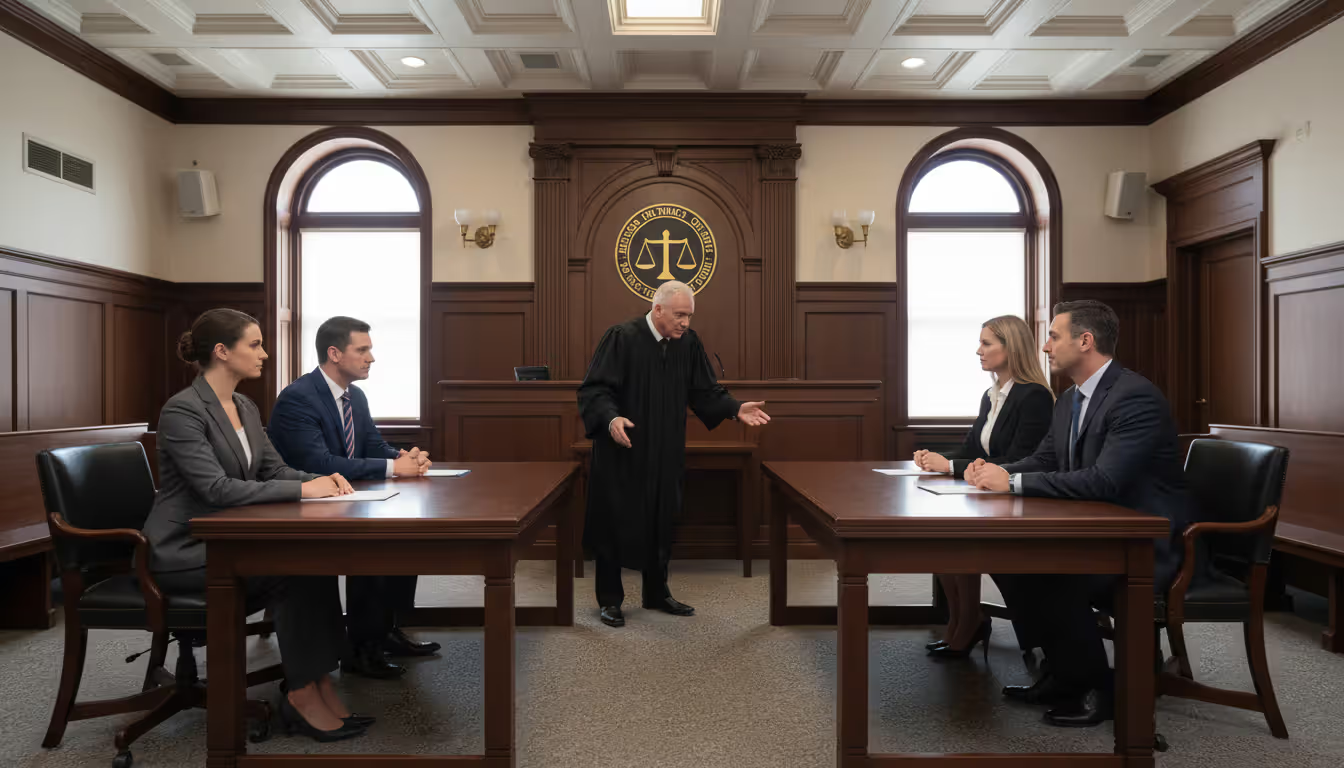
Trials occur when everything else fails. Both sides present evidence through witness testimony and documents. Your attorney will question your witnesses (direct examination), and your spouse's attorney gets to cross-examine them, trying to poke holes in their testimony. Expect the same treatment when you testify. Unlike TV courtroom dramas, there's no jury in family court—the judge decides everything.
Courtroom formality varies by judge. Some run tight ships with strict evidence rules. Others let people ramble on a bit, especially self-represented parties. Most family court judges actively question witnesses themselves, particularly in custody matters where they're trying to figure out what's best for the kids.
After all evidence is presented, judges either rule immediately from the bench or take the case "under submission" to issue a written decision later. Complex property divisions and custody disputes typically result in detailed written orders you'll receive one to four weeks after trial.
Author: Olivia Marlowe;
Source: sbardellaorchards.com
The Role of the Family Court Judge
Your judge determines your family's future. That judge decides whether you keep the house or have to sell it. She determines whether you see your kids every other weekend or share 50-50 custody. He calculates support payments that might continue for the next fifteen years.
In custody disputes, judges apply the "best interests of the child" standard—a vague legal principle that gives them enormous discretion. They'll weigh factors like which parent has been the primary caregiver, each parent's mental and physical health, any domestic violence history, the child's adjustment to home and school, and the child's own preference if old enough to express a reasonable one. How judges weigh these factors varies tremendously. One judge might heavily favor keeping siblings together; another might prioritize maintaining children's current school enrollment.
Child support calculations involve far less discretion. Your state's guideline formula dictates the amount based on mathematical inputs. Judge thinks the guideline amount seems too high or too low? She can deviate from the guidelines, but only if specific circumstances justify it, and she must explain the deviation in writing. Most judges stick to the guidelines because deviations create appeal risks.
Dividing property in divorce depends on whether you're in a community property or equitable distribution state. The nine community property states (Arizona, California, Idaho, Louisiana, Nevada, New Mexico, Texas, Washington, Wisconsin) start from the premise that marital assets get split 50-50. The other forty-one states follow equitable distribution, meaning fair but not necessarily equal division based on factors like length of marriage, each spouse's income and earning capacity, and who's getting primary custody of the kids.
Beyond deciding cases, judges run their courtrooms. They'll sustain or overrule objections to evidence. They'll cut off witnesses who ramble. They'll tell your attorney to move things along if proceedings drag. And they can hold you in contempt—meaning jail time—if you violate their orders or behave badly in court.
Each judge brings their own personality and preferences to the bench. Some are patient and willing to listen to self-represented parties stumble through their cases. Others expect crisp, efficient presentations and grow visibly irritated by disorganization. A few judges are known locally as "father-friendly" or "mother-friendly," though such reputations often oversimplify complex decision-making. Attorneys practicing regularly in a particular courthouse learn these tendencies and adjust their strategies accordingly.
Family Court vs Civil Court: Key Differences
Family court technically falls under the civil court umbrella, but walk into a family courtroom versus a business litigation courtroom and you'll notice immediate differences.
Business disagreements, injury claims, real estate conflicts, breach of contract actions
Formality Level
Moderate structure; judges frequently question witnesses directly; hearsay rules relaxed in some situations
High formality; strict procedural compliance expected; judges remain more passive
Evidence Standards
Preponderance standard (more likely than not); written declarations frequently accepted instead of live testimony
Preponderance or clear and convincing standard depending on claim; stricter hearsay rules
Typical Outcomes
Continuing obligations like custody schedules and monthly payments; subject to modification when life changes
Money judgments or injunctions; usually final and difficult to revisit
Privacy/Confidentiality
State-dependent; some close courtrooms for minor-involved matters; mediation always confidential
Generally public proceedings; anyone can attend; court files accessible
Appeal Options
Narrow appeal grounds; judges have wide latitude on custody and support decisions; property division more appealable
Broader appeal rights based on legal errors or discretion abuse
The ongoing nature of family court jurisdiction stands out most. Sue your neighbor for breach of contract, get your judgment, and you're done—that case is over. File for custody, get your order, and you might be back in front of that same judge five more times over the next decade for modifications, enforcement hearings, and contempt proceedings.
Family courts also push settlement far harder than general civil dockets. Judges recognize that parents who negotiate their own custody arrangements comply better than those with arrangements imposed by judicial order. Most family courts mandate mediation before trial. Some judges will practically beg parties to settle, expressing frustration when people fight in court over issues like who gets the toaster oven.
The emotional temperature runs much hotter too. Watching your marriage legally dissolve or fighting over your relationship with your children carries psychological weight that a business dispute rarely matches. Family court judges and staff expect tears, outbursts, and high emotions. Security officers in family courthouses stay especially alert because domestic violence cases and custody disputes occasionally trigger dangerous confrontations.
What to Expect: Procedures and Timelines
How long will your case take? That depends on complexity, how much you and your spouse agree on, and how backed up your local courthouse is.
Realistic timelines: An uncontested divorce without children might wrap up in two to three months from filing to final judgment. Add kids, and you're looking at four to six months minimum even if everything's agreed upon—courts want time to review parenting plans carefully. Contested divorces average six months to a year, sometimes pushing two years if discovery disputes arise or experts need to complete custody evaluations.
Custody modifications can move relatively quickly—three to six months—if circumstances requiring modification are clear-cut. Child support modifications follow similar timelines.
From the day you file until your first hearing expect one to two months. Emergency protective order hearings happen much faster—often within 24 to 72 hours. Temporary orders hearings get scheduled within four to six weeks for urgent matters like who stays in the house or temporary custody.
Final trials might not get scheduled until eight months to a year after filing in busy urban counties. Rural counties with less congested dockets might get you to trial in four to six months.
Required documentation will bury you in paperwork. Every state requires detailed financial disclosures listing every income source, every asset you own, every debt you owe, and all monthly expenses. These Income and Expense Declarations or Financial Affidavits run six to twelve pages and require bank statements, pay stubs, tax returns, and retirement account statements as attachments.
Custody cases require parenting plans—detailed proposals covering where children live each day of the week, which holidays they spend with which parent, how summer vacation gets divided, and how parents will make major decisions. Some states provide form parenting plans; others leave you to draft your own.
You'll need proof of service showing the other party received every document you filed. Many jurisdictions now require e-filing through online portals rather than paper documents delivered to the clerk's office.
Courtroom etiquette matters more than you might think. Show up fifteen to twenty minutes early—family court dockets run long and your case might get called earlier than scheduled. Dress like you're going to an important job interview: business professional or business casual. Leave the ripped jeans, tank tops, shorts, and flip-flops at home. Turn your phone completely off, not just silent.
When addressing the judge, say "Your Honor" or "Judge [Last Name]"—never "Sir," "Ma'am," or the judge's first name. Rise when the judge enters or exits the courtroom. Sit unless testifying or speaking to the judge.
Don't interrupt anyone, especially the judge. Control your reactions when your spouse lies—and they probably will lie. Rolling your eyes, sighing loudly, or shaking your head makes you look bad to the judge. Take notes if you need an outlet for your frustration.
Bring organized copies of all relevant documents even if you already filed them. You might need to reference a specific bank statement or email during testimony.
Missing a scheduled hearing creates serious problems. Judges may grant default judgments giving the other party everything they requested. You might be found in contempt of court. In extreme cases, judges issue bench warrants authorizing your arrest.
Can't make your court date because of a genuine emergency—hospitalization, family death, or unavoidable work conflict? File a written motion for continuance immediately, explaining the emergency and proposing alternative dates. Courts grant few continuances, so "I wasn't prepared" or "I couldn't get off work" usually won't cut it unless you filed your request well in advance.
Some courts allow phone or video appearances for minor procedural hearings like status conferences. Always request permission beforehand through written motion or by following local rules for remote appearances.
Author: Olivia Marlowe;
Source: sbardellaorchards.com
Common Family Court Outcomes and Enforcement
Judges issue different types of orders depending on the case stage and what's been proven.
Temporary orders bridge the gap from case filing to final resolution. These address immediate custody needs, set temporary support amounts, determine who stays in the family home, and establish responsibility for paying the mortgage and other ongoing expenses. They'll stay in effect until permanent orders are issued, which might be eight months or a year down the road.
Permanent or final orders resolve the case and continue indefinitely. Despite being called "permanent," they're actually modifiable if circumstances substantially change later. A permanent custody order might govern parenting time until your child turns eighteen, but either parent can request modifications if life circumstances warrant it.
Judgments and decrees are the official documents that legally end marriages, divide property, and establish ongoing obligations. These become part of the public record, though some states seal portions involving minor children.
Modification processes exist because life doesn't stand still after the judge signs the final order. Parents can request custody modifications when circumstances substantially change—one parent wants to relocate across the country for a job opportunity, or a child's needs change as they grow older. Support modifications happen when paying parents lose jobs, receiving parents' income increases significantly, or children's needs change.
Courts don't modify orders easily. The requesting party must prove circumstances have substantially and permanently changed since the original order. Minor changes or situations that existed when the first order was issued won't justify modification. Your ex finally getting the job promotion they expected all along? Probably not substantial enough. Your ex suffering a disabling injury that ends their career? Definitely substantial.
Enforcement mechanisms kick in when someone violates court orders. When support payments stop, the other parent can request wage garnishment attaching future paychecks, seizure of tax refunds, suspension of driver's licenses and professional licenses, liens on property, and even jail time through contempt proceedings.
Custody order violations might result in makeup time for the wronged parent, modification of custody in serious cases, or contempt sanctions including jail time.
Contempt proceedings punish willful violations. Judges distinguish between civil contempt meant to force compliance going forward and criminal contempt that punishes past violations. Civil contempt can lock you up until you comply—you literally hold the keys to your jail cell by choosing to follow the order. Criminal contempt results in fixed jail sentences as punishment.
Proving contempt requires showing three elements: the person knew about the order, had the ability to comply, and willfully chose not to. Can't pay support because you genuinely lost your job through no fault of your own? That's not contempt, though you absolutely should file for a modification rather than just stopping payments.
Most people think they can walk into family court, explain their situation to the judge, and everything will work out fairly. That's not how it works. Judges have fifteen or twenty minutes for your case on a crowded motion calendar. They need you to clearly state what you're asking for, provide documentation supporting your request, and explain how it serves your children's best interests. Show up unprepared and you've already lost. The difference between people who get good outcomes and those who don't usually comes down to preparation and understanding the process
— Jennifer Martinez
Frequently Asked Questions
Do I need a lawyer for family court?
Nobody can force you to hire an attorney—you're allowed to represent yourself in any family court matter. Plenty of people handle straightforward cases without lawyers, particularly uncontested divorces where both spouses agree on everything, or simple child support modifications. But contested custody battles, complex property division involving businesses or retirement accounts, or cases involving domestic violence allegations really call for professional legal help. Attorneys know the procedural rules, local court customs, and how to present evidence effectively. Many people lose not because their position is wrong but because they don't know how to prove it properly. Some attorneys offer "limited scope representation" where they handle just specific tasks—draft your documents, coach you on trial preparation, or appear at one crucial hearing—rather than representing you through the entire case. This saves money while getting professional help for the hardest parts. Legal aid organizations help qualifying low-income individuals for free or very low cost in most areas.
How long does a family court case take?
You're looking at anywhere from two months to over two years depending on case complexity, whether issues are contested, and your local court's backlog. Uncontested divorces where both spouses agree on all terms might finish in eight to twelve weeks. Throw children into the mix and you're at four to six months minimum even with full agreement because courts review parenting arrangements carefully. Contested cases where you're fighting over custody, property, or support average nine months to eighteen months. Complex cases involving business valuations, custody evaluations, or forensic accountants can stretch past two years. Emergency matters like temporary restraining orders get heard within days or weeks. Most courts issue temporary orders within the first one or two months to address immediate needs while the case grinds toward final resolution. Continuances, discovery disputes, difficulty serving the other party, and scheduling conflicts routinely push cases beyond initial time estimates.
Can family court orders be changed later?
Yes—most family court orders can be modified when circumstances substantially change, which is what makes family court different from other legal proceedings. Child support, custody, and parenting time orders are specifically designed to be modifiable because children's needs evolve and parents' situations change over the years. The parent seeking modification must prove significant circumstance changes since the prior order was issued and show that modification serves the children's best interests. Property division from divorce is generally carved in stone—once the judge divides assets, that's final. Spousal support may or may not be modifiable depending on your specific order's language and your state's laws. Some orders explicitly state whether they're modifiable. The key is proving substantial change, not just minor alterations. Your income dropped by fifteen percent? Might not be enough. You became permanently disabled and can't work? Definitely substantial.
What happens if I disagree with the family court judge's decision?
You can appeal most family court decisions to your state's appellate court, though winning an appeal is tough. Appellate courts review whether the trial judge made legal errors or abused discretion, not whether the appellate judges personally would have decided things differently. Family court judges get enormous discretion in custody and support matters, making those decisions especially hard to overturn on appeal. You'll need to file a notice of appeal within strict deadlines—usually thirty to sixty days after the final order—and missing that deadline kills your appeal rights. Appeals take anywhere from six months to two years and cost thousands in attorney fees for transcript preparation and appellate brief writing. The trial court's order usually remains in effect during your appeal unless you obtain a stay, which requires showing you're likely to win the appeal and will suffer irreparable harm if the order stays in effect. Many family law cases make poor candidates for appeal because appellate courts heavily defer to trial judges who actually watched the witnesses testify and assessed their credibility firsthand.
Is family court open to the public?
It varies by state and the specific case type. Many states treat family court like other civil proceedings—presumptively open to the public—though judges can close courtrooms when necessary to protect children's privacy or keep domestic violence victims safe. Some states automatically close adoption proceedings and most juvenile dependency matters. Court files might be partially sealed with children's names redacted even when hearings remain public. Mediation sessions are always confidential regardless of jurisdiction. The trend in some states moves toward greater family court transparency and public access, while others prioritize privacy for families going through difficult personal crises. If you're concerned about your nosy neighbor or coworkers watching your divorce trial, you can ask the judge to close the courtroom or seal records, though judges aren't required to grant those requests without good reason.
How much does it cost to go to family court?
Initial filing fees run $175 to $435 depending on your county and case type—divorces cost more than support modifications in most places. Paying a process server to deliver documents to the other party costs $50 to $125. If you need a court reporter for a hearing, expect $300 to $600 per day. Now add attorney fees if you hire a lawyer: $225 to $550 per hour depending on your location and the attorney's experience level. Simple uncontested divorces might cost $2,000 to $4,500 in total attorney fees. Contested custody battles regularly reach $15,000 to $75,000 or more in attorney fees—each side sometimes spending more fighting over custody than their case's entire financial value. Extra costs include custody evaluations ($2,500 to $6,000), expert witness fees, mediation costs ($150 to $400 per hour), and copying expenses for discovery documents. Courts waive filing fees for indigent parties who submit fee waiver applications proving they can't afford to pay. Many attorneys offer payment plans or limited scope representation to reduce upfront costs. The expense of family court represents a real barrier for many families, though what's at stake—your relationship with your children, your financial future—often justifies the investment.
Family court decisions ripple through your life for years, sometimes decades. The custody order entered when your child is three will still govern your relationship when they're sixteen. Support obligations established during divorce continue month after month until your children reach adulthood. Property division determines your financial starting point for the rest of your life post-divorce.
Understanding how the system operates—what judges look for, what procedures you must follow, what timelines to expect—dramatically improves your chances of achieving outcomes you can live with. You might not get everything you want, but you can present your position effectively and avoid mistakes that undermine your case.
Preparation matters enormously in family court. Gather your financial documents and organize them logically. Collect evidence supporting your position—emails, text messages, photos, school records, medical records, whatever proves your points. Understand exactly what you're asking the judge to order and why your request serves your children's best interests. Practice explaining your situation clearly and concisely.
Follow court procedures meticulously. File documents by deadlines. Serve the other party properly. Attend every scheduled hearing. Dress professionally and behave respectfully toward the judge, court staff, and even your spouse (no matter how much you'd love to tell them exactly what you think of them).
Whether you hire an attorney or navigate the system yourself, knowledge reduces anxiety and improves outcomes. Family court judges see hundreds of cases remarkably similar to yours. They understand the emotions you're experiencing but need you to set those feelings aside long enough to present your case clearly. The system exists to resolve family disputes fairly and protect children when parents can't agree on their own. Approach it with realistic expectations, thorough preparation, and clear understanding of how the process works, and you give yourself the best possible chance of protecting what matters most—your relationship with your children and your financial stability moving forward.
Understanding same-sex marriage rights goes beyond knowing marriage is legal. This guide covers how same-sex marriage works legally, federal and state benefits, custody protections, divorce processes, ongoing challenges, and practical steps to protect your LGBTQ family in 2026
Families dealing with legal matters after a loved one's death or during domestic transitions often find themselves confused about which court handles what. The jurisdictional lines between probate court and family court blur in several scenarios, creating uncertainty about where to file petitions, which rules apply, and how long proceedings will take
The Marriage Equality Act, officially known as the Respect for Marriage Act, provides federal protections for same-sex marriages across the United States. This comprehensive guide explains the law's key provisions, historical context, and how it affects taxes, immigration, healthcare, and divorce rights for married couples
Kayden's Law represents a fundamental shift in family court custody decisions involving domestic violence and child abuse. Named after a child killed during court-ordered visitation despite warnings, this legislation prioritizes child safety over shared parenting when credible abuse evidence exists
The content on this website is provided for general informational and educational purposes only. It is intended to explain concepts related to family law, divorce, custody, child support, and related legal matters.
All information on this website, including articles, guides, and examples, is presented for general educational purposes. Legal processes may vary depending on jurisdiction, personal circumstances, and applicable laws.
This website does not provide legal advice, and the information presented should not be used as a substitute for consultation with qualified family law attorneys or legal professionals.
The website and its authors are not responsible for any errors or omissions, or for any outcomes resulting from decisions made based on the information provided on this website.