The Parkland shooting on Valentine's Day 2018 claimed 17 lives at Marjory Stoneman Douglas High School in Florida. Among the victims was Alyssa Alhadeff, just 14 years old. What investigators later uncovered made an already unbearable tragedy even worse: teachers inside the building couldn't reach police directly. They shouted over PA systems. They dialed 911 on cell phones. They ran down hallways looking for administrators. Each method burned through seconds—sometimes minutes—while the attack continued. Lori Alhadeff, Alyssa's mother, refused to let her daughter's death be in vain. She pushed for legislation guaranteeing that no teacher would ever again waste critical moments trying to summon help during a school emergency.
Understanding Alyssa's Law and Its Origin
So what is Alyssa's Law exactly? This school safety panic button law mandates that public schools equip their buildings with silent alarm systems connecting straight to police departments. There's no dialing. No explaining the situation to a dispatcher. No hoping the message gets through. Just one press, and law enforcement knows there's an emergency at your school.
The law addresses a brutal truth about active shooter situations: conventional communication methods fail when you need them most. Imagine you're a teacher. An intruder enters your hallway. Do you pick up your classroom phone, potentially alerting the threat to your actions? Do you pull the fire alarm, which might send students into hallways where danger lurks? Do you leave your students to run to the office? Every option wastes time or creates new risks.
New Jersey legislators passed the first version of this school safety panic button law in 2019. Schools across the state started installing systems by 2021. Florida—where the tragedy that sparked this movement occurred—enacted its own version in 2023, giving schools until the 2024-2025 academic year to comply. The concept behind these laws couldn't be simpler: teachers hit a button or tap a phone app, and police instantly receive a silent notification showing exactly which school needs help and often which room the alert came from.
Author: Aaron Whitfield;
Source: sbardellaorchards.com
Here's a sobering detail from the Parkland investigation: someone inside the school finally got through to 911 about two minutes after the shooting started. Two minutes. Research on active shooter incidents suggests that shaving even 60 seconds off response time can mean the difference between multiple casualties and a contained situation. Lori Alhadeff appeared before state legislatures nationwide, making a point that resonated with lawmakers: panic buttons don't just prevent mass shootings. They speed response to medical emergencies, intruders, domestic violence spilling onto school property, and countless other crises requiring immediate police presence.
Key Provisions and Requirements of Alyssa's Law
While Alyssa's Law provisions shift slightly depending on which state you're examining, the core requirements stay consistent. Schools must deploy panic alarm systems that silently notify law enforcement without requiring staff to navigate phone menus, remember dispatch numbers, or step away from students. That "silent" aspect matters more than you might initially think. Visible or noisy alarms could provoke an aggressor who realizes someone has called for help.
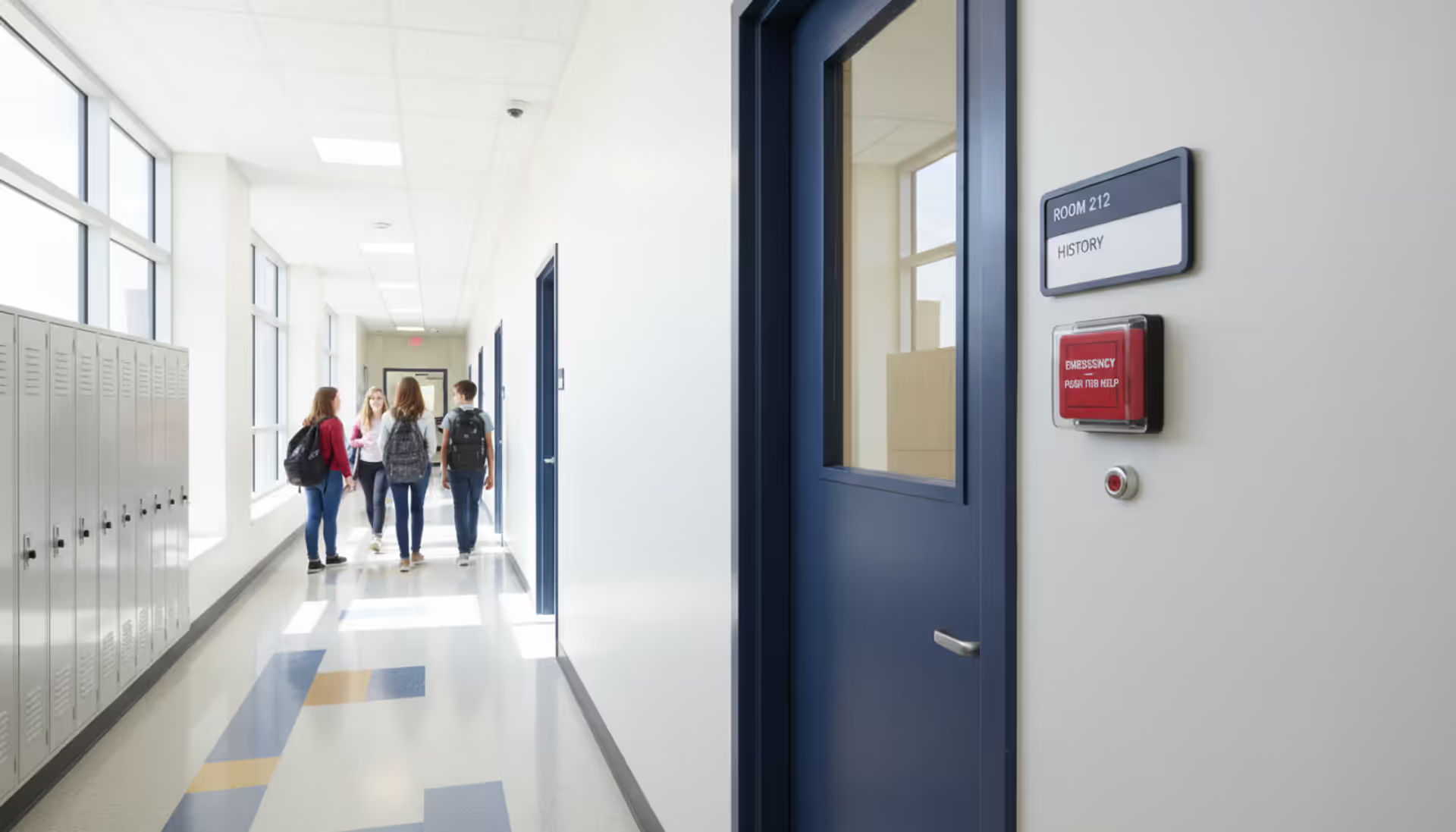
Most versions of these Alyssa's Law requirements specify that panic systems can't be limited to front offices or administrative areas. Classrooms need them. So do gyms, cafeterias, libraries, and anywhere else staff supervise students. Some states insist on physical buttons in every classroom. Others accept mobile apps that teachers carry on school-provided smartphones or tablets.
Panic Alert System Technology Standards
The panic alert system legislation doesn't endorse specific brands or technologies. Instead, it establishes functional benchmarks. Systems must meet these criteria:
Send notifications straight to law enforcement dispatch or designated emergency personnel
Identify which school triggered the alarm and ideally pinpoint the specific location inside the building
Operate even when internet connections fail (most use cellular networks as backup)
Connect with whatever security infrastructure already exists—cameras, door locks, access controls
Confirm to whoever pressed the button that their alert went through successfully
Prevent accidental triggers while staying simple enough to use when you're terrified
Many schools split the difference between different approaches. They mount physical panic buttons beside classroom doors where any staff member can spot and reach them. At the same time, they give teachers mobile apps on their devices for flexibility in hallways, outdoor supervision areas, or even field trips on school grounds.
Schools sometimes make a critical mistake: selecting systems with complicated activation sequences. A panic button requiring you to hold it for three seconds, punch in a PIN, or confirm through multiple screens defeats the entire purpose. The most effective systems activate with one press or tap. If you triggered it accidentally, you take a separate action to cancel.
Law Enforcement Response Integration
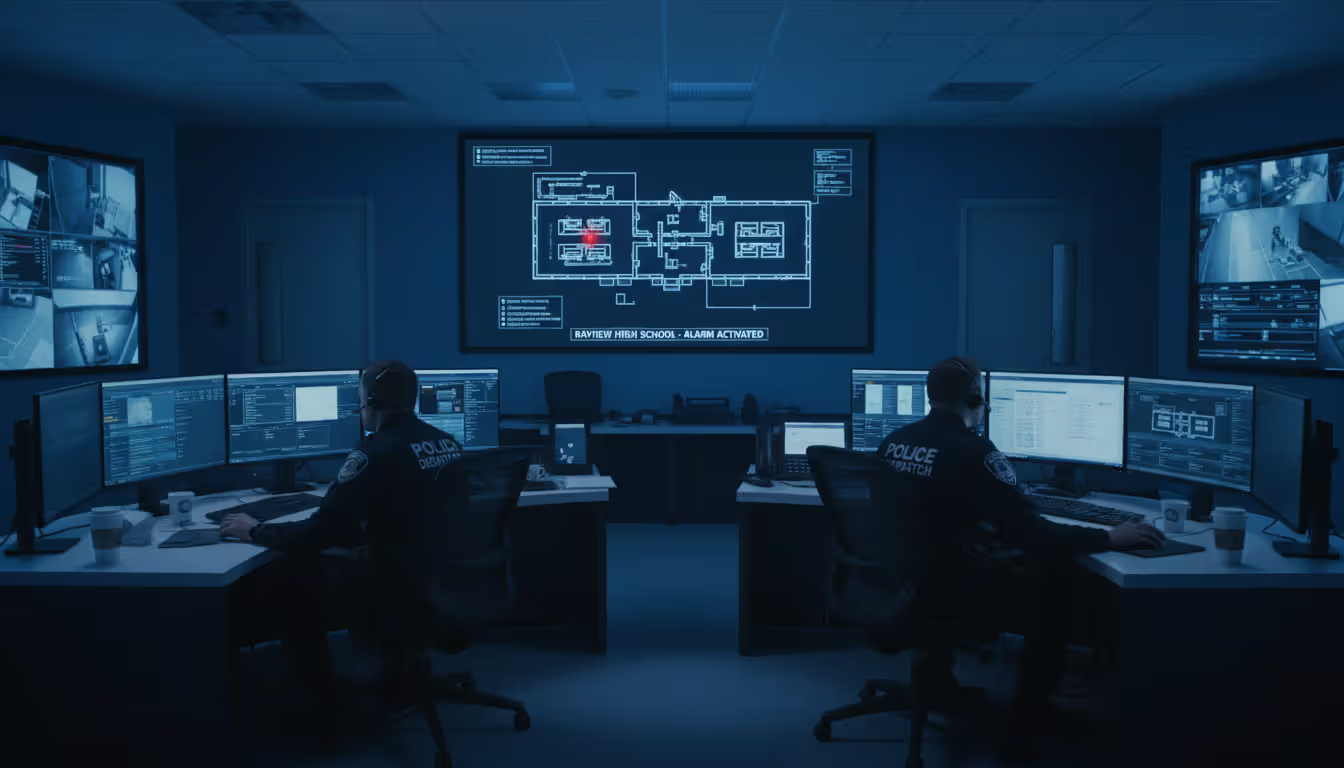
This school security law only works when law enforcement systems integrate seamlessly with school technology. Dispatchers need actionable information the moment someone presses that button. Advanced implementations provide:
GPS coordinates paired with detailed building floor plans
Camera feeds streaming live from wherever the alert originated
Context about whether schools are running scheduled drills versus facing real emergencies
Staff roster information identifying who activated the system
Historical records showing any previous alerts from that location
Author: Aaron Whitfield;
Source: sbardellaorchards.com
Police departments consistently report that panic button alerts dramatically outperform traditional 911 calls for school emergencies. A panicked caller might struggle to describe where they are or what's happening. Dispatchers must ask clarifying questions, eating up time. Panic buttons eliminate that entire communication bottleneck.
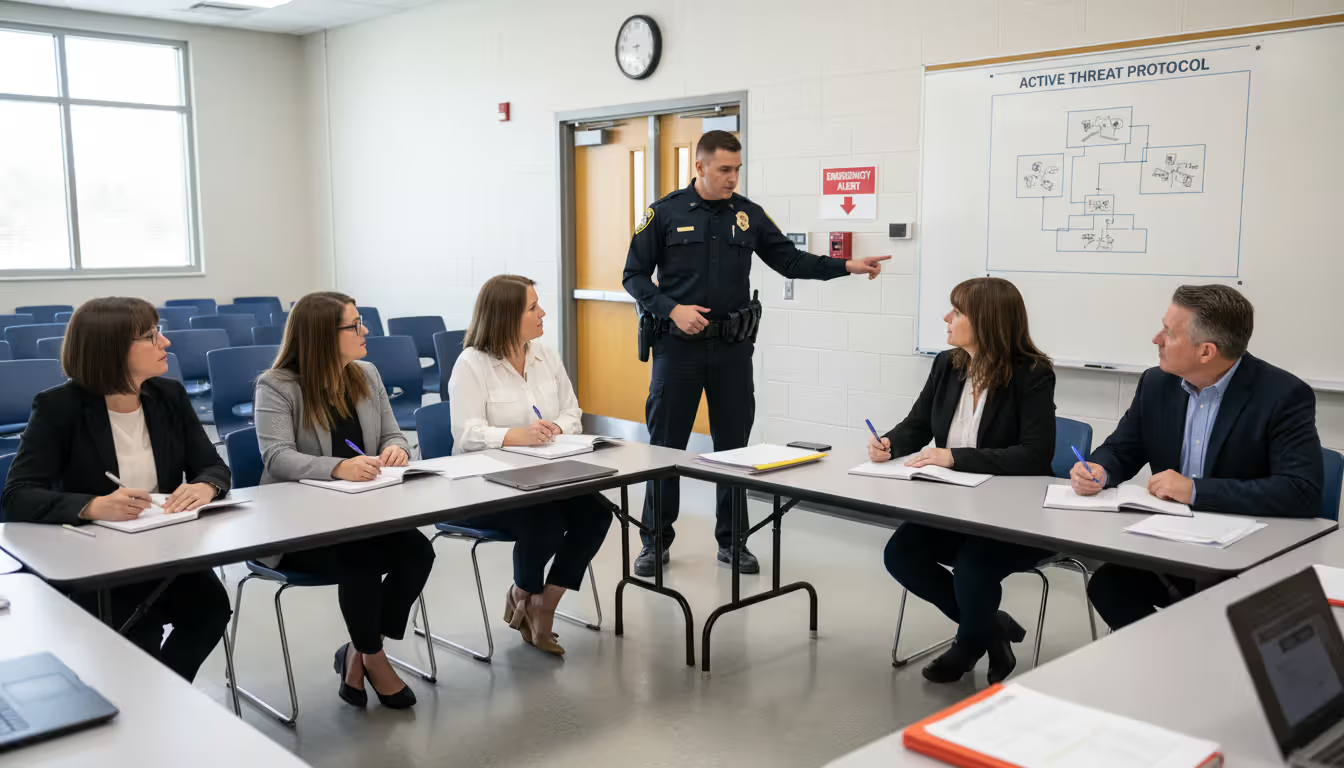
Integration takes planning, though. Police need training on whichever systems their local schools deploy. False alarm protocols must balance rapid response against resource management. Some districts faced waves of accidental activations early on, straining police capacity. Most states now mandate regular drills plus comprehensive staff training to minimize false alarms while keeping everyone genuinely prepared.
Which States Have Adopted Alyssa's Law
By 2026, several Alyssa's Law states have fully implemented this school emergency alert law, while others are still working through logistics or considering proposals. Here's where adoption currently stands:
State
Adoption Year/Status
Compliance Deadline
Budget Commitment
Notable Requirements or Variations
New Jersey
2019 (active)
2021
$2.5 million initial grants
All public schools must comply; districts choose between fixed buttons or mobile solutions
Florida
2023 (active)
2024-2025 academic year
$100 million across five years
Branded as "Alyssa's Alert"; connects with Fortify FL reporting app
New York
2022 (active)
2025-2026 academic year
$45 million commitment
Silent alarms required in every instructional space
Texas
2023 (active)
2026-2027 academic year
Competitive state grants
Mandates panic buttons without prescribing specific technology
Pennsylvania
2024 (active)
2027
School safety grant funding
Districts select mobile or fixed systems; must integrate with law enforcement
Arizona
2025 (proposed)
Pending approval
No funding allocated yet
Proposal bundles panic buttons with threat assessment requirements
Oklahoma
2024 (active)
2026-2027 academic year
$5 million startup funding
Systems must link directly to 911 centers
Tennessee
2025 (proposed)
Under legislative review
Pending
Proposal closely mirrors Florida's approach
State-by-state differences reflect varying approaches to funding mechanisms, technology preferences, and implementation schedules. Large states like Florida and New York set aside substantial budgets, recognizing the expense of equipping thousands of schools. Smaller states often create competitive grant programs where schools apply for limited funding by demonstrating need.
Some states expanded their safety legislation schools requirements beyond just panic buttons. Florida's law incorporates mental health services, facility hardening measures, and threat assessment protocols alongside the panic alarm mandate. New Jersey's version zeroes in specifically on panic button requirements while letting districts choose their preferred implementation approach.
How Alyssa's Law Differs from Other School Safety Legislation
School security law has shifted considerably since Columbine in 1999. Earlier legislation emphasized physical security: locked entry points, camera systems, armed school resource officers, visitor sign-in protocols. These measures are valuable, but they're primarily preventive or detective—they try stopping threats from entering schools or spotting suspicious behavior.
Alyssa's Law takes a different angle. This school safety panic button law accepts that despite your best prevention efforts, emergencies will still happen. When they do, survival often hinges on how quickly help arrives and how much information responders possess.
Other safety legislation schools have implemented includes:
Safe School Acts: Broad frameworks addressing everything from anti-bullying initiatives to emergency drill schedules, but usually lacking specific technology mandates
School Resource Officer requirements: Placing armed officers in schools addresses response capability but doesn't improve emergency communication
Anonymous reporting systems: Programs like Florida's FortifyFL or Colorado's Safe2Tell let students report threats anonymously, focusing on prevention rather than crisis response
Active shooter drill mandates: Required practice scenarios prepare everyone for emergencies but don't provide tools for actual crises
What makes Alyssa's Law unique is its mandate for specific technology designed for those critical moments when an emergency is already unfolding. You can't prevent violence with a panic button, but you ensure that when prevention fails, your response starts immediately.
There's a tradeoff. Installing panic buttons requires upfront spending, ongoing maintenance, continuous staff training, and coordination with law enforcement. Those same resources could alternatively fund counselors, security staff, or building improvements. Advocates counter that panic buttons complement rather than replace other safety investments, forming one layer in comprehensive security strategies.
Author: Aaron Whitfield;
Source: sbardellaorchards.com
Implementation Challenges and Costs for Schools
School districts encounter significant obstacles when implementing Alyssa's Law requirements. Money tops the list of concerns. Cost projections swing wildly based on school size, technology choices, and existing infrastructure:
Fixed panic button installations: Basic coverage runs $5,000–$15,000 per school; comprehensive installations with full security integration can hit $25,000–$75,000
Mobile app subscriptions: Annual licensing fees range from $2,000–$8,000 depending on user count; requires districts to provide devices for all staff
Hybrid approaches: Initial installation costs $10,000–$30,000 plus $1,000–$5,000 yearly for maintenance and licensing
Small rural districts feel the squeeze most acutely. A district operating three modest schools might need $50,000–$100,000 for compliance—a massive chunk of discretionary budgets. State grants help, sure, but they rarely cover complete costs. Many require matching funds that struggling districts simply don't have.
Technology infrastructure creates additional headaches. Older buildings often lack the electrical wiring or network connectivity modern panic systems demand. Retrofitting these facilities multiplies expenses significantly. Some rural schools struggle with spotty cellular coverage, complicating mobile app solutions that rely on wireless networks.
Training extends way beyond simple "push this button" instructions. Staff must understand appropriate circumstances for activation, strategies to avoid false alarms, and proper procedures after pressing the button. Should they evacuate? Lock down? Continue teaching to avoid alarming students? These protocols require development, practice, and regular reinforcement.
Timeline pressures compound other challenges. States typically allow schools 1-3 years for implementation. Districts must research vendors, allocate budgets, coordinate with police, install equipment, train staff, and conduct testing—all while managing normal school operations. Missing deadlines can trigger penalties or lost state funding.
One New Jersey superintendent shared a common pitfall: selecting the cheapest vendor without considering long-term support. Budget systems with poor customer service left schools unable to resolve technical glitches, creating compliance nightmares and potentially dangerous coverage gaps.
Author: Aaron Whitfield;
Source: sbardellaorchards.com
Impact of Alyssa's Law on School Safety and Emergency Response
Quantifying Alyssa's Law impact presents challenges because success often means preventing worst-case scenarios—events that resist easy measurement. Still, early data from states with several implementation years shows encouraging trends.
New Jersey law enforcement agencies documented that panic button alerts cut average response initiation times by 40-60 seconds compared to conventional 911 calls. Those seconds carry enormous weight. Consider a 2025 incident at a New Jersey middle school where a teacher pressed her panic button after an unauthorized person walked into her classroom. Police arrived within three minutes and apprehended the intruder before any harm occurred. The teacher later explained she couldn't have made a phone call without tipping off the intruder.
Florida's rollout revealed that panic buttons serve purposes far beyond active shooter response. Throughout the 2024-2025 school year, Florida schools activated panic alarms 847 times. Only 12 involved potential active threats. The vast majority addressed:
Medical emergencies needing immediate response (41%)
Unauthorized individuals on school property (28%)
Student fights or threatening situations (18%)
Domestic issues involving custody disputes or restraining orders (8%)
Various other emergencies (5%)
Alyssa's Law isn't just about preventing another Parkland. It gives teachers power to summon help instantly for any emergency. Every second counts when a child faces danger—whether from violence, medical crisis, or any other threat. These systems save lives daily in ways we never anticipated
— Robert Chen
Parent and administrator reactions vary. Most parents strongly back panic button systems, seeing them as common-sense safety tools. Some worry about creating prison-like school environments that increase children's anxiety. Administrators generally appreciate having additional safety options but note the implementation burden, especially around false alarm management and staff training.
A Texas high school principal described the system as "essentially a fire alarm for law enforcement." Just like fire alarms provide instant notification of potential fires, panic buttons provide instant notification of potential threats. The key lies in ensuring they're reliable, accessible, and woven into broader safety protocols.
Critics argue panic buttons create false security without addressing root causes of school violence—mental health support gaps, firearm access, social isolation. Supporters respond that Alyssa's Law never pretended to be a complete solution. It's one critical piece of multi-layered school safety strategies.
Frequently Asked Questions About Alyssa's Law
Is Alyssa's Law required in all US states?
Not yet. Seven states had enacted Alyssa's Law by 2026 (New Jersey, Florida, New York, Texas, Pennsylvania, Oklahoma, plus one additional state), with several more weighing similar proposals. There's no federal mandate, so adoption depends entirely on individual state legislatures. States without Alyssa's Law may still have schools voluntarily installing panic button systems, but there's zero legal obligation.
How much does it cost schools to implement Alyssa's Law?
Expenses fluctuate dramatically based on building size, technology selection, and existing infrastructure. Smaller schools might spend $5,000–$15,000 for basic implementations. Large high schools with comprehensive coverage could invest $50,000–$100,000. Mobile app solutions typically cost less initially but require ongoing subscriptions running $2,000–$8,000 annually. Most states with Alyssa's Law offer grants or funding support, though these rarely cover 100% of costs. Schools should plan for both initial installation and continuing maintenance, training, and system updates.
What technology qualifies under Alyssa's Law requirements?
Qualifying systems must transmit silent alerts straight to law enforcement without phone calls or convoluted procedures. Both fixed panic buttons (physical devices installed in classrooms and common areas) and mobile applications (software on school-issued devices) typically satisfy requirements. Systems must identify school location, ideally specifying the precise area within the building, and integrate with local law enforcement dispatch. States avoid mandating specific vendors, giving schools flexibility to select solutions matching their needs and budgets while meeting functional standards.
How quickly must law enforcement respond to panic alerts?
Alyssa's Law doesn't establish specific response time mandates—those depend on local law enforcement policies and available resources. However, panic button systems dramatically shrink the time gap between an emergency occurring and law enforcement receiving notification. Traditional 911 calls might consume 1-3 minutes from someone deciding to call until dispatch receives useful information. Panic buttons compress this to seconds. Actual officer arrival times depend on location, traffic, and other variables, but faster notification consistently produces faster response.
Can private schools opt out of Alyssa's Law?
In most states, Alyssa's Law specifically targets public schools, meaning private schools face no legal requirement to install panic button systems. Many private schools voluntarily implement similar technology, recognizing the safety advantages. Some states include provisions letting private schools access grant funding if they opt to participate. Charter schools, which receive public funding, typically fall under the same requirements as traditional public schools.
Has Alyssa's Law prevented school violence incidents?
Directly connecting violence prevention to panic button systems proves difficult because we can't know what might have happened without them. However, documented cases show panic buttons enabling faster law enforcement response to threats, medical emergencies, and unauthorized campus access. New Jersey and Florida schools have triggered panic alerts hundreds of times since implementation, with law enforcement crediting these systems with improving response effectiveness. The law's primary advantage is shrinking response time during emergencies rather than stopping emergencies from occurring. It's one component of comprehensive school safety approaches that also include threat assessment, mental health support, and physical security improvements.
Alyssa's Law grew from heartbreak but represents hope that technology can shrink the dangerous gap between when emergencies strike and when help arrives. By requiring schools to deploy panic alarm systems connecting directly to law enforcement, this legislation gives teachers and staff tools for summoning assistance instantly and silently—capabilities many schools simply lacked before 2019.
The law's expansion across multiple states shows growing recognition that school safety demands both prevention and rapid response. Panic buttons won't stop all violence or solve the complex challenges schools confront, but they deliver a practical, actionable tool improving emergency response capabilities. These systems prove valuable not just for worst-case active shooter scenarios but for far more common medical emergencies, unauthorized visitors, and other situations requiring immediate law enforcement assistance.
Implementation obstacles persist. Funding constraints burden smaller districts. Technology infrastructure needs upgrading in aging buildings. Staff require continuous training for effective system use. Yet schools that have implemented panic button systems—whether legally required or voluntarily—consistently report that the investment delivers tangible safety improvements and peace of mind for staff, parents, and students.
As additional states consider adopting Alyssa's Law, early implementers' experiences offer valuable guidance. Success requires adequate funding, thoughtful vendor selection, comprehensive training, law enforcement coordination, and integration into broader school safety strategies. The law functions best not as a standalone fix but as one critical layer in multi-faceted approaches to school security.
Lori Alhadeff's advocacy transformed her daughter's memory into legislation protecting students nationwide. While no law guarantees absolute safety, Alyssa's Law ensures that when emergencies strike, help is one button press away—a straightforward change that preserves precious seconds and, ultimately, saves lives.
Understanding same-sex marriage rights goes beyond knowing marriage is legal. This guide covers how same-sex marriage works legally, federal and state benefits, custody protections, divorce processes, ongoing challenges, and practical steps to protect your LGBTQ family in 2026
Families dealing with legal matters after a loved one's death or during domestic transitions often find themselves confused about which court handles what. The jurisdictional lines between probate court and family court blur in several scenarios, creating uncertainty about where to file petitions, which rules apply, and how long proceedings will take
The Marriage Equality Act, officially known as the Respect for Marriage Act, provides federal protections for same-sex marriages across the United States. This comprehensive guide explains the law's key provisions, historical context, and how it affects taxes, immigration, healthcare, and divorce rights for married couples
Kayden's Law represents a fundamental shift in family court custody decisions involving domestic violence and child abuse. Named after a child killed during court-ordered visitation despite warnings, this legislation prioritizes child safety over shared parenting when credible abuse evidence exists
The content on this website is provided for general informational and educational purposes only. It is intended to explain concepts related to family law, divorce, custody, child support, and related legal matters.
All information on this website, including articles, guides, and examples, is presented for general educational purposes. Legal processes may vary depending on jurisdiction, personal circumstances, and applicable laws.
This website does not provide legal advice, and the information presented should not be used as a substitute for consultation with qualified family law attorneys or legal professionals.
The website and its authors are not responsible for any errors or omissions, or for any outcomes resulting from decisions made based on the information provided on this website.