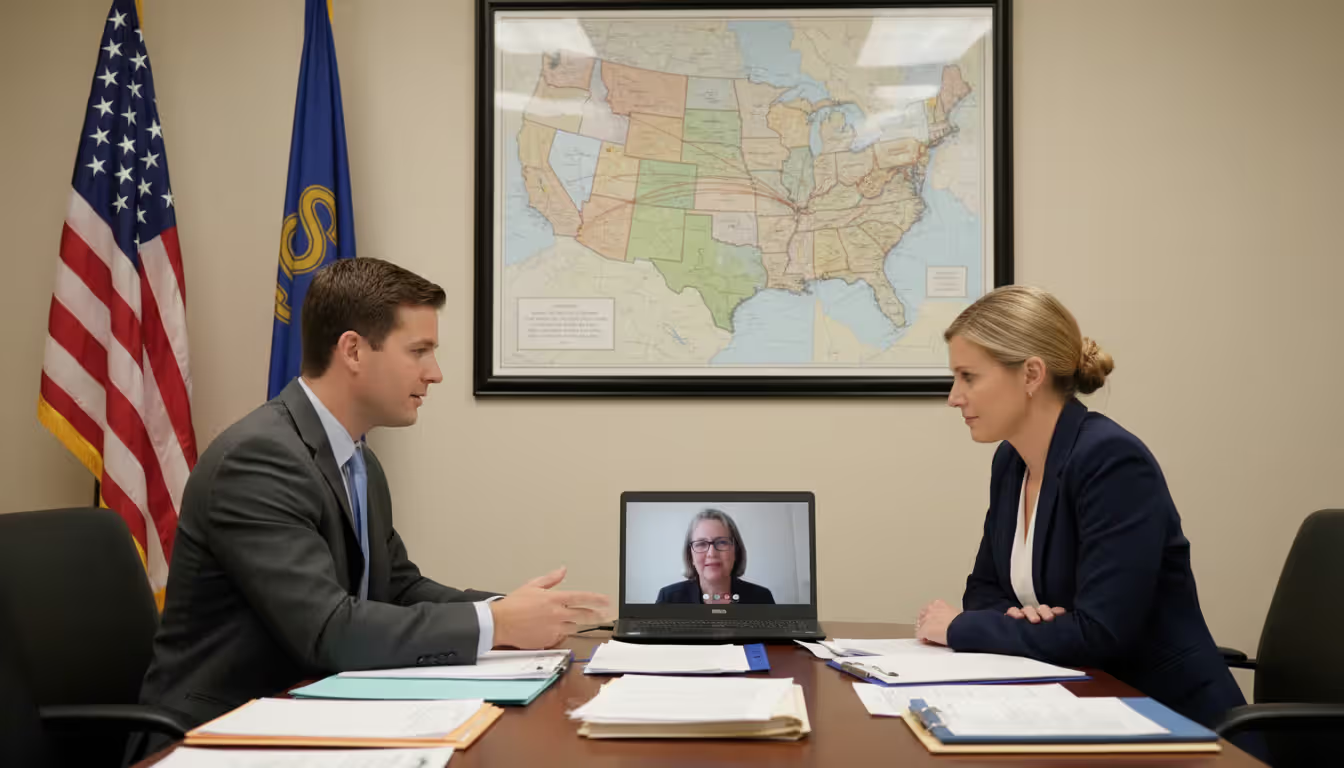
Moving a child across state lines for foster care or adoption isn't as simple as packing a suitcase and driving to a new home. The Interstate Compact on the Placement of Children (ICPC) governs these placements, creating a structured legal framework that protects children while respecting each state's authority. Whether you're a relative hoping to care for a niece in another state or a licensed foster family considering an out-of-state placement, understanding ICPC requirements can mean the difference between a smooth transition and months of frustrating delays.
What Is ICPC and Why It Matters for Foster Families
The Interstate Compact on the Placement of Children is a binding legal agreement between all 50 states, the District of Columbia, and the U.S. Virgin Islands. Enacted to ensure children placed across state lines receive proper supervision and care, ICPC establishes uniform procedures that both the sending state (where the child currently resides) and receiving state (where the prospective caregiver lives) must follow before placement occurs.
ICPC matters because it prevents unsafe placements and jurisdictional conflicts. Before this compact existed, children were sometimes moved across state lines without proper vetting, leaving them vulnerable and creating confusion about which state held legal responsibility. The compact ensures that receiving states evaluate prospective homes using their own licensing standards and that sending states retain legal authority until placement proves successful.
Not every child crossing state lines triggers ICPC requirements. The compact applies specifically to placements made by child welfare agencies, courts, or placement agencies. If you're moving with your own legal children or taking custody through a direct parental placement (in states where allowed), ICPC typically doesn't apply. However, once a state agency or court becomes involved in facilitating the placement, ICPC kicks in.
Certain situations fall outside ICPC's scope. Children visiting relatives for less than six months, placements resulting from parental custody orders (not involving agencies), and children moving for educational or medical purposes without changing legal custody generally don't require ICPC approval. These exceptions vary slightly by state interpretation, so confirming with your local ICPC office prevents costly assumptions.
Author: Olivia Marlowe;
Source: sbardellaorchards.com
When ICPC Approval Is Required
Understanding when ICPC approval becomes mandatory saves families from legal complications. Relative placements—even when a grandmother wants to care for her grandchild—require ICPC approval if a child welfare agency or court arranges the placement. This surprises many families who assume blood relationships exempt them from the process. The relationship doesn't eliminate the requirement; it may, however, influence priority and timeline.
Non-relative foster care placements always require ICPC approval when crossing state lines. If you're a licensed foster parent in Texas and wish to accept a child from California's foster system, both states must complete the ICPC process before the child can legally move into your home. Placing a child before receiving approval violates the compact and can result in the child's immediate removal, criminal charges against caregivers, and loss of foster license.
Pre-adoptive placements and interstate adoptions fall under ICPC jurisdiction when a child welfare agency participates. Private adoptions may involve ICPC or the Interstate Compact on Adoption and Medical Assistance (ICAMA), depending on circumstances. Adoptive families working with agencies should clarify which compact applies early in the process, as requirements differ.
Out-of-state foster placements for children with special needs or those requiring specific therapeutic services sometimes receive expedited consideration, but approval remains mandatory. Emergency placements—such as when a child's safety demands immediate removal from a home—may allow temporary placement pending ICPC approval, but only under specific conditions with both states' ICPC offices coordinating in real time.
ICPC Requirements and Documentation Needed
The receiving state evaluates prospective caregivers using its own licensing and safety standards, regardless of the sending state's requirements. This means a family licensed as foster parents in one state may need additional training, home modifications, or documentation to meet another state's standards.
Background checks form the foundation of ICPC applications. Expect FBI fingerprint-based criminal history checks for all adult household members, state criminal repository checks, and child abuse registry clearances from every state where household members have lived during the past five years. These checks must be current—typically completed within six months of application submission.
Financial documentation demonstrates the family's ability to provide for the child without creating hardship. Pay stubs, tax returns, bank statements, and proof of stable housing give reviewers confidence the placement won't collapse due to economic instability. States don't require wealth, but they do require financial stability proportionate to the family's size and the child's needs.
Medical clearances confirm household members' physical and mental health won't endanger the child. Physicians complete standardized forms addressing communicable diseases, physical limitations affecting caregiving ability, and mental health stability. Some states require tuberculosis testing for all household members.
Personal and professional references provide outside perspectives on the family's character and parenting capability. Most states require three to five references from non-relatives who've known the family for at least two years. References should speak to parenting skills, home environment, relationship stability, and community involvement.
ICPC Home Study Process
The ICPC home study resembles standard foster care home studies but focuses specifically on the interstate placement's appropriateness. A licensed social worker from the receiving state conducts the study, visiting the home, interviewing all household members, and assessing the family's readiness for the specific child being placed.
Home studies evaluate physical safety (smoke detectors, secure medication storage, age-appropriate sleeping arrangements), emotional preparedness (understanding of trauma-informed care, realistic expectations), support systems (family, friends, community resources), and cultural competency (ability to support the child's racial, ethnic, or religious identity).
The home study report compiles findings into a comprehensive document submitted to the receiving state's ICPC office. This report either recommends approval or identifies concerns requiring resolution before placement can proceed. Common concerns include insufficient bedroom space, incomplete training requirements, or unclear plans for meeting the child's educational or therapeutic needs.
Author: Olivia Marlowe;
Source: sbardellaorchards.com
State-Specific Requirements to Know
While ICPC provides a uniform framework, states retain authority to impose additional requirements. Some states require prospective caregivers to complete pre-service training before home study initiation, even for relative placements. Training hours range from 12 to 30 hours, covering topics like trauma, attachment, discipline strategies, and working with birth families.
Licensing requirements vary dramatically. States may require full foster care licensing for non-relative placements, provisional licensing pending ICPC approval, or exemptions for relative caregivers. California, for example, maintains different standards for resource families versus relative caregivers, while Texas distinguishes between verified and licensed placements.
Financial support availability differs by state and placement type. Some states extend foster care maintenance payments to out-of-state placements; others don't. Adoption subsidies generally transfer across state lines under ICAMA, but foster care payments may not. Families should clarify financial arrangements before committing to placement, as assumptions about payment continuation lead to financial strain.
Step-by-Step ICPC Approval Process
The ICPC process follows a structured sequence designed to ensure thorough evaluation while maintaining reasonable timelines. Understanding each stage helps families navigate the system effectively.
Step 1: Initial Request and Packet Preparation The sending state's caseworker initiates ICPC by completing the ICPC-100A form, which provides basic information about the child, proposed placement, and reasons for interstate placement. Supporting documents—court orders, case plans, medical records, educational assessments—accompany this form. Incomplete packets get rejected immediately, restarting the clock.
Step 2: Sending State Review The sending state's ICPC office reviews the packet for completeness and appropriateness. This office determines whether the proposed placement serves the child's best interests and whether all required documentation is present. If the sending state identifies deficiencies, the packet returns to the caseworker for corrections. Once satisfied, the sending state forwards the packet to the receiving state's ICPC office.
Step 3: Receiving State Review and Home Study The receiving state's ICPC office assigns the case to a local agency or social worker who conducts the home study. This stage consumes the most time, as it involves scheduling home visits, completing background checks, interviewing references, and writing the comprehensive report. The local worker submits findings to the state ICPC office with a recommendation for approval or denial.
Author: Olivia Marlowe;
Source: sbardellaorchards.com
Step 4: ICPC Decision The receiving state's ICPC office reviews the home study and either approves the placement (issuing ICPC-100B approval), requests additional information, or denies the request. Approval doesn't guarantee placement will occur—it simply confirms the receiving state finds the home suitable. The sending state makes the final placement decision.
Step 5: Placement and Ongoing Supervision After receiving ICPC approval, the sending state can proceed with placement. The receiving state assumes supervision responsibility, conducting regular visits and submitting progress reports to the sending state. Legal custody remains with the sending state until adoption finalizes or the case closes. If problems arise, the sending state can request the child's return, though this rarely happens once placement stabilizes.
Step 6: Case Closure ICPC supervision continues until legal permanency is achieved (adoption finalization, guardianship establishment) or the child returns to the sending state. Once permanency occurs, both states' ICPC offices formally close the case, transferring all legal authority to the receiving state.
ICPC Approval Timeline and What Affects It
Families often ask, "How long does ICPC take?" The honest answer is: it depends. Statutory requirements establish timeframes, but real-world timelines vary based on multiple factors.
The ICPC regulations specify that receiving states should complete home studies and issue decisions within 60 business days of receiving a complete packet. For priority cases—such as placements with relatives or children in emergency situations—states should respond within 20 business days. These timeframes represent goals, not guarantees.
In practice, ICPC approval takes anywhere from 30 days to six months. Relative placements with cooperative families and complete documentation often clear in 45-60 days. Non-relative foster placements requiring full licensing typically take 90-120 days. Complex cases involving children with significant special needs or families requiring extensive home modifications can stretch to 180 days or longer.
Several factors influence timeline length. State workload plays a significant role—states with high volumes of ICPC requests and limited staff experience backlogs. Budget cuts affecting child welfare agencies directly impact ICPC processing speed, as fewer workers handle the same volume of cases.
Completeness of initial paperwork dramatically affects timelines. Packets missing required documents, containing expired background checks, or lacking necessary signatures get returned to the sending state, adding weeks or months to the process. Experienced caseworkers who know their state's ICPC office preferences submit cleaner packets that move faster.
Urgency and placement type affect prioritization. Children in emergency situations, sibling groups at risk of separation, or teens aging out of care may receive expedited review. States generally prioritize relative placements over non-relative foster care, recognizing the importance of family connections.
Author: Olivia Marlowe;
Source: sbardellaorchards.com
Communication quality between states matters more than families realize. States with established relationships and regular communication resolve questions quickly. When states lack direct contacts or experience philosophical differences about placement standards, processing slows as formal correspondence replaces quick phone calls.
ICPC Timeline by Placement Type
Placement Type
Typical Approval Timeframe
Priority Level
Common Delays
Relative (emergency)
20-45 business days
High
Incomplete background checks, housing issues
Relative (non-emergency)
45-90 business days
Medium-High
Training requirements, home study scheduling
Non-relative foster care
90-120 business days
Medium
Licensing requirements, capacity issues
Pre-adoptive placement
60-120 business days
Medium-High
Legal clearances, subsidy negotiations
Therapeutic/specialized
90-180 business days
Varies
Provider availability, service coordination
Common ICPC Mistakes and How to Avoid Them
Families and caseworkers make predictable mistakes that delay or derail ICPC approvals. Learning from others' errors saves time and frustration.
Placing children before approval arrives tops the list of serious violations. Desperate to remove a child from an unsafe situation or convinced approval is "just a formality," well-meaning relatives sometimes allow children to move in before receiving the ICPC-100B approval. This violates the compact, exposes the family to legal liability, and may result in the child's immediate removal. No matter how urgent the situation feels, wait for written approval.
Assuming approval is guaranteed sets families up for disappointment. Biological relationships don't guarantee approval—grandparents, aunts, and uncles face denial if their homes don't meet safety standards or if background checks reveal disqualifying issues. Families should approach ICPC as a genuine evaluation, not a rubber stamp, and prepare accordingly.
Submitting incomplete applications wastes everyone's time. Before sending the packet, verify that all required documents are included, signatures are present, and dates are current. Create a checklist based on the receiving state's specific requirements and confirm each item. One missing form can add six weeks to the timeline.
Failing to communicate proactively with both states' ICPC offices creates information gaps. Families should establish contact with the receiving state's ICPC coordinator early, asking about specific requirements, typical timelines, and preferred communication methods. When questions arise or circumstances change, reaching out immediately prevents misunderstandings.
Neglecting home preparation until after home study scheduling causes unnecessary delays. Families should address obvious safety issues—installing smoke detectors, securing cleaning supplies, repairing broken stairs—before the social worker arrives. Waiting until after an initial visit to make required modifications extends the timeline unnecessarily.
Misunderstanding financial arrangements creates hardship. Families should clarify whether foster care payments will continue, who pays for the home study, and what financial support will be available after placement. Getting these details in writing prevents surprises when the first month's expenses arrive without expected reimbursement.
ICPC exists to protect children, not to create barriers for loving families. The families who navigate it most successfully are those who view it as a partnership with both states rather than an obstacle to overcome. Patience, thorough preparation, and open communication transform ICPC from a frustrating bureaucratic process into a meaningful safeguard ensuring children enter homes truly prepared to meet their needs
— Jennifer Martinez
Frequently Asked Questions About ICPC in Foster Care
Can I bring a foster child across state lines without ICPC approval?
No. Taking a foster child across state lines without ICPC approval violates the Interstate Compact and can result in criminal charges, immediate removal of the child, and loss of your foster care license. Even brief visits to relatives in another state technically require ICPC approval if the child will stay more than a few days, though enforcement varies. Weekend trips or short vacations typically don't trigger ICPC requirements, but any placement lasting more than 30 days absolutely requires approval. If you're unsure whether your situation requires ICPC, contact your state's ICPC office before making travel plans.
How long does ICPC approval take for relative placements?
Relative placements typically take 45-90 business days for non-emergency situations and 20-45 business days for priority cases. The timeline depends on how quickly you complete required background checks, training, and home study requirements, as well as your receiving state's current workload. You can expedite the process by submitting complete, accurate paperwork, responding quickly to requests for additional information, and maintaining regular communication with both states' ICPC offices. Emergency situations involving immediate safety concerns may receive faster review, but "emergency" has a specific legal meaning—contact your caseworker to determine if your situation qualifies.
What happens if ICPC denies my application?
Denial means the receiving state determined your home doesn't meet safety or licensing standards for the proposed placement. The denial letter should explain specific reasons—perhaps background checks revealed disqualifying criminal history, the home failed safety standards, or you couldn't demonstrate financial stability. You have the right to appeal the decision through the receiving state's administrative process, typically within 30 days of receiving the denial. You can also address the identified concerns and reapply. For example, if denial resulted from inadequate bedroom space, you might add a bedroom and submit a new application. Denials aren't always permanent barriers, but they do require honest assessment of whether you can resolve the identified issues.
Does ICPC apply to adoptions across state lines?
Yes, when a child welfare agency participates in the adoption. If you're adopting a child from another state's foster care system, ICPC governs the pre-adoptive placement period until finalization occurs. Private infant adoptions may involve ICPC or fall under the Interstate Compact on Adoption and Medical Assistance (ICAMA), depending on the circumstances. International adoptions don't require ICPC since the child enters the country directly into your custody. The key factor is whether a state agency or court facilitates the placement across state lines. Adoption agencies should clarify which compact applies to your specific situation during the initial consultation.
Who pays for the ICPC home study?
Payment responsibility varies by state and placement type. Many states cover home study costs for relative placements as part of their child welfare services. Non-relative foster care placements may require the prospective family to pay, particularly if they're initiating the placement request rather than responding to an agency's recruitment. Costs range from $1,000 to $3,000 depending on the state and complexity of the evaluation. Some states offer fee waivers for low-income families. Clarify payment responsibility with both states' ICPC offices before beginning the process, and get the agreement in writing to avoid billing surprises later.
Can ICPC approval be expedited in emergencies?
Yes, but "emergency" has a specific definition in ICPC regulations. True emergencies—situations where a child faces immediate danger and no safe in-state placement exists—may receive priority processing with decisions in 20 business days or less. Some states allow provisional placements pending full ICPC approval in genuine emergencies, with both states' ICPC offices coordinating in real time. However, convenience, preference for a particular relative, or desire to avoid in-state foster care don't constitute emergencies under ICPC standards. If you believe your situation qualifies as an emergency, work with the sending state's caseworker to document the urgent circumstances and request expedited review through proper channels.
Interstate foster care and adoption placements succeed when families approach ICPC as a protective process rather than an administrative burden. The compact exists because children deserve thorough evaluation of any home they'll call their own, regardless of which state that home happens to be in.
Start early. If you know an interstate placement might become necessary, begin conversations with ICPC coordinators in both states before crisis forces rushed decisions. Ask about specific requirements, gather necessary documents, and complete any required training before formally initiating the ICPC process.
Stay organized. Create a binder or digital folder containing all ICPC-related documents—applications, background checks, training certificates, correspondence with ICPC offices, and timeline notes. This organization helps you respond quickly to requests for additional information and provides a reference if questions arise months later.
Communicate consistently. Establish regular check-ins with your caseworker and the receiving state's ICPC office. A brief email every two weeks asking about status keeps your case visible without being pushy. When circumstances change—you move, household composition shifts, or the child's needs evolve—notify both states immediately.
Prepare realistically. ICPC approval means the state finds your home suitable, but it doesn't guarantee placement will be easy. Children crossing state lines for placement have experienced trauma, loss, and instability. They'll need patient, informed caregiving and access to appropriate services. Use the waiting period to educate yourself about trauma-informed parenting, connect with local support groups, and identify community resources you'll need after placement.
The ICPC process tests patience and persistence, but it serves a vital purpose. Children deserve homes that have been thoroughly evaluated and approved by the state that will supervise their care. Families who embrace this reality, prepare thoroughly, and communicate effectively find that ICPC, while sometimes frustrating, ultimately protects everyone involved in the placement.
Understanding same-sex marriage rights goes beyond knowing marriage is legal. This guide covers how same-sex marriage works legally, federal and state benefits, custody protections, divorce processes, ongoing challenges, and practical steps to protect your LGBTQ family in 2026
Families dealing with legal matters after a loved one's death or during domestic transitions often find themselves confused about which court handles what. The jurisdictional lines between probate court and family court blur in several scenarios, creating uncertainty about where to file petitions, which rules apply, and how long proceedings will take
The Marriage Equality Act, officially known as the Respect for Marriage Act, provides federal protections for same-sex marriages across the United States. This comprehensive guide explains the law's key provisions, historical context, and how it affects taxes, immigration, healthcare, and divorce rights for married couples
Kayden's Law represents a fundamental shift in family court custody decisions involving domestic violence and child abuse. Named after a child killed during court-ordered visitation despite warnings, this legislation prioritizes child safety over shared parenting when credible abuse evidence exists
The content on this website is provided for general informational and educational purposes only. It is intended to explain concepts related to family law, divorce, custody, child support, and related legal matters.
All information on this website, including articles, guides, and examples, is presented for general educational purposes. Legal processes may vary depending on jurisdiction, personal circumstances, and applicable laws.
This website does not provide legal advice, and the information presented should not be used as a substitute for consultation with qualified family law attorneys or legal professionals.
The website and its authors are not responsible for any errors or omissions, or for any outcomes resulting from decisions made based on the information provided on this website.