Group therapy session room with chairs arranged in a circle, a facilitator standing with a folder, and several participants seated, soft lighting, serious atmosphere
Got slapped with a court order to attend domestic violence classes? You're probably confused, maybe angry, definitely wondering what the hell you just signed up for. These programs have about five different names depending on who's talking, run anywhere from six months to over a year, and work completely differently depending on which state you're in. Nobody hands you a manual explaining this stuff—you just get a court date and a list of approved providers. Here's what actually happens in these programs, what you'll pay, how long you'll spend there, and whether they do anything beyond keeping you out of jail.
What Are Domestic Violence Classes?
Think of these as mandatory group therapy sessions focused specifically on intimate partner abuse. You'll sit in a room once a week with other people who've been arrested or convicted for hurting someone they were dating, married to, or living with. The sessions run about two hours, led by certified counselors who've seen every excuse and rationalization imaginable.
The stated goal? Help you understand why you became abusive, take actual responsibility (not the "I'm sorry you felt that way" kind), and build skills for handling relationship conflicts without violence, threats, or controlling behavior. Programs dig into physical violence, sure, but also emotional abuse, financial control, sexual coercion, and psychological manipulation.
Here's the thing—courts don't order these classes purely as punishment. The underlying theory says people use abuse because they've learned it works for getting what they want, or they genuinely believe they're entitled to control their partner's behavior. Programs attempt to dismantle those beliefs through education, group challenges, and skill practice. Whether that actually happens varies wildly based on the participant's willingness to engage honestly.
Author: Olivia Marlowe;
Source: sbardellaorchards.com
About 85-90% of people in these rooms were court-ordered after arrest or as part of plea deals. Judges mandate attendance, probation officers monitor completion, and failure to finish means potential jail time. The remaining 10-15%? They walked in voluntarily, either because they recognized their relationship patterns were destructive or because a partner said "get help or I'm gone." These voluntary folks typically do better—they're already past the denial stage.
A lot of people assume domestic violence classes are just anger management with a different label. They're not. Anger management treats explosive emotions as the core problem—you "lose control" and lash out. Domestic violence intervention programs operate from a completely different premise: abuse isn't about losing control, it's about exerting control. Someone can emotionally abuse their partner while remaining perfectly calm. They can isolate their partner from friends through manipulation without raising their voice. The programs specifically address the power dynamics and entitlement thinking that drive intimate partner violence, which standard anger management classes don't touch.
Sessions happen in groups—usually 8-15 participants—because the peer dynamic matters. Hearing another participant justify his behavior with the same excuses you use makes the rationalization harder to maintain. Facilitators will push back when you minimize what happened, blame your victim for "provoking" you, or claim mutual combat when you were clearly the primary aggressor.
Types of Domestic Violence Intervention Programs
Your state certifies specific program models, and where you live determines which approach you'll encounter. The philosophy behind these models differs significantly—they disagree on why domestic violence happens and therefore how to fix it.
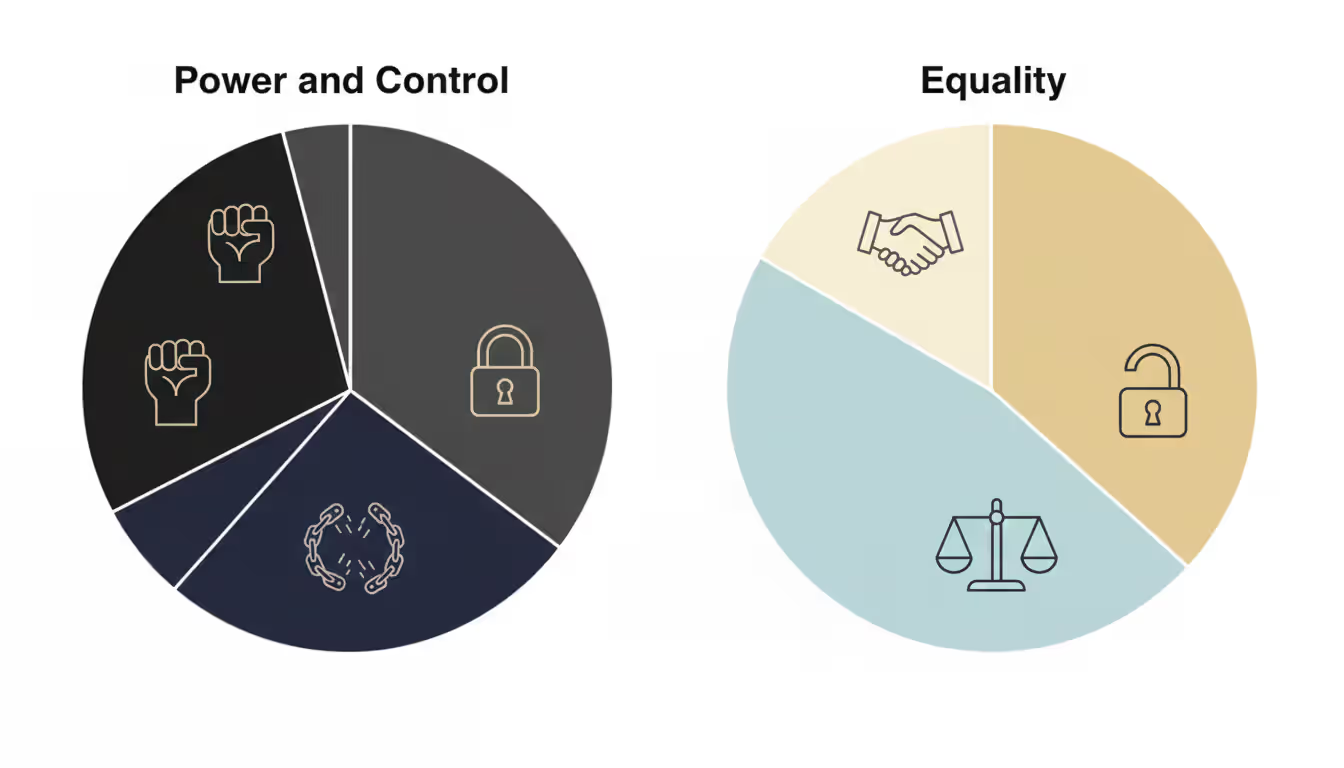
The Duluth Model dominates nationwide, especially for male offenders in heterosexual relationships. Created in Duluth, Minnesota during the 1980s, it's built around the "Power and Control Wheel"—a diagram showing tactics abusers use (intimidation, isolation, economic abuse, using children, minimizing and blaming). The model argues that domestic violence stems from societal attitudes about male entitlement and patriarchal beliefs about relationships. You'll spend sessions examining how you've used these tactics, what messages you absorbed about masculinity and relationships, and how to shift toward an "Equality Wheel" showing healthy partnership behaviors.
Critics point out Duluth was designed for a specific population and doesn't translate perfectly to same-sex relationships, female perpetrators, or couples from non-Western cultural backgrounds. The gender-specific focus bothers some people. But for its target demographic—men who assaulted female partners—the accountability framework proves effective when delivered by skilled facilitators.
CBT-based programs (Cognitive Behavioral Therapy) zoom in on thought patterns. The premise: distorted thinking drives abusive behavior. "She made me angry" (externalizing responsibility), "I had to do something" (false necessity), "What I did wasn't that bad" (minimization)—these cognitive distortions justify violence. The program teaches you to catch these thoughts, examine whether they're accurate, and replace them with realistic assessments. You'll practice communication skills, learn emotional regulation techniques, and work on identifying physical warning signs before you escalate (increased heart rate, tense muscles, intrusive thoughts). CBT approaches work well if you've got co-occurring depression, anxiety, or PTSD, since they're treating the thinking patterns underneath multiple issues.
Author: Olivia Marlowe;
Source: sbardellaorchards.com
Psychoeducational models blend information delivery with group processing. The facilitator presents content about domestic violence dynamics—cycle of violence theory (tension, explosion, honeymoon, calm), how witnessing violence affects kids, neurological impacts of trauma on victims, legal consequences of abuse. Then the group discusses it, sharing their own experiences within confidentiality boundaries. These programs rely heavily on the group holding each other accountable. When one participant starts making excuses, others who've progressed further call it out. The peer influence can be surprisingly powerful.
Most programs split participants by gender. Men attend groups with other men, allowing facilitators to address specific masculine socialization issues—beliefs about being "head of household," entitlement to sex, emotional suppression, peer pressure around dominance. Female-only groups exist but are rarer since women represent a smaller percentage of arrestees. The gender-specific format supposedly creates psychological safety for honest discussion.
Co-ed programs are controversial. Some experts argue mixed-gender groups better mirror actual relationships and reduce stereotyping. Others insist men won't speak honestly about entitlement beliefs with women present, and female participants may feel intimidated. Research doesn't clearly support one approach over the other, so jurisdictions make different choices.
You'll occasionally find specialized tracks—programs designed for military members (addressing deployment trauma, rank dynamics, gun access), LGBTQ+ individuals (examining power dynamics without heteronormative assumptions), or people with substance abuse problems (integrating recovery principles). These remain less common but acknowledge that cookie-cutter approaches miss important context.
Domestic Violence Class Requirements and Duration
There's no national standard, which creates chaos if you're trying to figure out what you're facing. Each state writes its own rules through legislation or certification boards. What satisfies court requirements in Texas might not count in California.
How Long Are Domestic Violence Classes?
Buckle up for a long haul. Most states require 26 to 52 weeks of weekly attendance, with each session lasting 90 minutes to two hours. The industry standard is 52 weeks, meeting once weekly for two-hour sessions—that's 104 total contact hours spread across an entire year. You'll see occasional 26-week programs for first offenses involving minimal injury, while cases with significant harm, weapon use, or repeat offenses might stretch to 18 months.
Some states set minimum hours instead of weeks. California requires 52 weeks minimum regardless of session length—so even if your program does three-hour sessions, you're still attending for a full year. Texas mandates 24 hours minimum of instruction but doesn't specify the weekly spacing. You can't game the system by attending daily sessions to finish in a month—the weekly format is deliberate, giving you time between classes to practice new skills and notice your actual behavior in relationships.
Attendance policies are rigid. Most programs allow one, maybe two excused absences during the entire year-long program, and you'll need to make those up. Excused means documented emergency—you're sick and have a doctor's note, you're required in court on a different case, a close family member died. Unexcused absences? The program terminates you and reports non-completion to the court. If you know you'll miss a session, contact your coordinator before the absence with documentation. Some programs let you attend a makeup session at another certified provider; others make you restart the entire program if you miss more than one class.
Court Ordered Domestic Violence Class Requirements
When a judge mandates classes, the court order includes specific conditions: you must attend a state-certified program (not just any therapist or anger management class), complete the full required duration, and ensure the provider submits progress reports to your probation officer.
You're paying out of pocket. Intake fees run $25-75, then per-session fees of $20-60. Over 52 weeks, budget $1,000-3,000 total. Programs sometimes offer sliding scale fees if you're low-income, but you'll submit pay stubs and tax returns to prove it. Don't expect insurance coverage—these are court sanctions, not medical treatment, so insurers don't pay.
Moving mid-program creates a nightmare. State certifications don't automatically transfer. If you relocate, you need written approval from both your original court and the new jurisdiction to continue in an equivalent program. Some states have reciprocity agreements; many don't. Document every session you've attended, get letters from your original provider showing progress, and hire an attorney to handle the interstate transfer if possible. Failing to get proper approval means the new state won't accept your attendance, and the original court will consider you non-compliant.
Completion demands more than showing up. You must actively participate—facilitators fail people for refusing to speak, disrupting group, or maintaining hostile attitudes even if they attend every session. Some programs assign homework (journaling, worksheets, reading). You'll typically have check-ins with probation throughout the program. At the end, assuming you've met all requirements, the program issues a certificate documenting your completion. You file this certificate with the court, which may then close your case, lift probation restrictions, or seal records depending on your plea agreement.
How to Enroll in a Batterer Intervention Program
Finding a state-approved provider is step one, and "approved" is the key word—enrolling in the wrong program wastes months and thousands of dollars. The court won't accept completion from non-certified providers no matter how qualified the therapist seems.
If you're court-ordered, your sentencing paperwork might include a list of approved programs, or your probation officer will direct you to the state registry. Most states maintain online databases—search "[your state] certified domestic violence intervention programs" or check your state's criminal justice website. In California, look for the BIPP (Batterer Intervention Program Provider) list; Texas maintains a directory through the Department of State Health Services; Florida lists certified batterers' intervention programs through individual judicial circuits.
Don't just pick the cheapest or closest option. Call multiple providers and ask: How long is your program? What's the total cost? Do you report to probation weekly or monthly? What happens if I miss a session? What model do you use? Facilitators' skill levels vary dramatically. A poorly run program with a checked-out facilitator makes for a miserable year; a good facilitator who challenges you respectfully can make the experience almost worthwhile.
Contact a provider and schedule intake. This initial assessment—sometimes one-on-one, sometimes in a group orientation—covers program logistics, evaluates your situation, and determines appropriate placement. Bring your court order (essential), government-issued ID, and payment for the intake fee. Some providers want copies of police reports, restraining orders, or criminal complaints to understand what happened. The intake counselor will ask about the arrest incident, your relationship history, substance use, mental health diagnoses, and prior domestic violence arrests or patterns. Answer honestly—lying surfaces later when the group discusses specifics, and dishonesty can get you terminated.
The assessment identifies immediate concerns. Are you still living with the victim? Is there an active protective order you're violating? Do you have untreated addiction or severe mental health issues requiring additional services before or during the program? Providers may require you to attend substance abuse treatment simultaneously or prohibit contact with the victim as a condition of enrollment.
Online programs have expanded significantly since COVID-19 forced virtual everything. As of 2026, roughly 30 states accept online attendance for at least part of the program, though many impose restrictions—maybe only the final half can be virtual, or you must attend in-person intake and quarterly check-ins. Online programs must still carry state certification, and you'll need consistent internet access plus a private space (you can't attend from your car in a parking lot or a coffee shop where others hear confidential group discussion).
Some participants find online classes easier—no commute, attend from home, less intimidating than sitting in a physical room with strangers. Others struggle with screen fatigue and feel disconnected from the group dynamic that drives accountability. If you're in a rural area with no local providers, virtual attendance might be your only realistic option. Confirm with your attorney or probation officer before enrolling that the court will accept online completion—don't assume.
State
Minimum Hours Required
Certification Body
Average Cost
Online Options Allowed
California
52 weeks (104 hours)
Probation departments by county
$1,800-$2,800
Limited; some counties allow hybrid formats
Texas
24-48 hours
TX Dept. of State Health Services
$900-$1,500
Yes, for up to 50% of sessions
Florida
29 weeks minimum (varies by circuit)
Florida Batterers' Intervention Program Certification
$1,200-$2,500
Yes, with provider approval
New York
26-52 weeks
NYS Office for Prevention of Domestic Violence
$1,500-$3,000
Limited; primarily in-person required
Arizona
26 weeks (52 hours)
AZ Department of Health Services
$1,000-$1,800
Yes, state-approved virtual providers exist
Washington
52 weeks minimum
WA State Department of Social & Health Services
$1,400-$2,600
Yes, expanded during pandemic
What to Expect During Domestic Violence Education Programs
Walking into session one feels awful for most people. You're sitting with strangers, everyone knows everyone else did something bad enough to get arrested, and nobody wants to be there. The room typically holds 8-15 participants at folding tables or chairs in a circle. Two facilitators usually lead groups—sometimes one male and one female, sometimes same-gender pairs.
First session covers ground rules, and programs take these seriously: confidentiality is mandatory (what's shared stays in the room, with legal exceptions for immediate threats, child abuse, or new crimes), no interrupting when someone's speaking, no cell phones during session, respectful language required, attendance is non-negotiable. You'll sign documents acknowledging rules and consequences for violations. Facilitators introduce themselves, explain the program model, and ask participants to briefly state why they're there. Expect most people to minimize—"got into an argument that got out of hand," "my ex called the cops over nothing," "she hit me first but I'm the one who got arrested." Facilitators let it slide initially but will circle back to these statements in later weeks.
Author: Olivia Marlowe;
Source: sbardellaorchards.com
Early curriculum establishes basic definitions. What counts as domestic violence? It's not just hitting—it includes screaming in someone's face, punching walls to intimidate them, controlling all the money, threatening to take the kids, forcing sex, destroying their belongings, isolating them from family. You'll see the Power and Control Wheel showing tactics you might not have recognized as abusive. Most participants feel defensive during these sessions—"I never did that," "well she did some of those things to me too." Hold onto that feeling; facilitators will address it.
Week by week, topics progress:
Recognizing abusive behaviors you've used. Get specific—not "sometimes I got mad," but "I punched the bedroom door next to her head to scare her into stopping the argument" or "I tracked her phone location and questioned everywhere she went."
Understanding impact on victims and children. Programs show research on trauma effects, testimonials from survivors, information about how witnessing violence affects child development. This section is designed to break through the "she's fine now" or "the kids didn't see anything" rationalizations.
Examining your excuses. "I was drunk"—plenty of drunk people don't assault their partners. "I was stressed"—stress doesn't cause violence. "She provoked me"—nobody can make you violent; you chose violence. Facilitators will dissect every justification participants offer.
Identifying your escalation pattern. What happens physically and mentally before you become violent? Increased heart rate, intrusive thoughts, tunnel vision? Learning your personal warning signs helps you recognize when to walk away.
Developing healthy communication skills. Active listening, using "I" statements, expressing feelings without blame, negotiating disagreements, taking time-outs effectively.
Exploring cultural and family messages. What did you learn about relationships from your parents? What cultural or religious beliefs do you hold about gender roles, power in relationships, acceptable behavior?
Creating safety plans. Concrete strategies for preventing future violence—who you'll call when escalating, where you'll go, how you'll manage contact with your ex-partner or new partners.
Sessions mix lecture, video clips (showing abusive interactions and asking the group to identify problems), group discussion, and occasional role-playing. Homework is common—journaling about conflicts that arose during the week, practicing time-out techniques, completing worksheets about your abuse history. Facilitators collect and review homework, sometimes reading excerpts (anonymously) to the group to spark discussion.
Confidentiality has clear limits. If you disclose new criminal activity, plans to harm someone specific, child abuse, or vulnerable adult abuse, facilitators must report it. If you mention ongoing contact with a protected party in violation of a restraining order, that information goes to probation. Most programs require you to sign releases allowing the provider to communicate with probation officers, the court, and sometimes victim advocates about your attendance and progress.
Progress tracking varies. Some programs submit monthly reports to probation noting attendance and participation quality. Others provide reports only at program start, midpoint, and completion. Your probation officer might randomly contact the provider to check on you. Negative reports can trigger probation violations even if you've attended every session—participation matters, not just physical presence.
Group dynamics shift over the program's duration. Initial weeks are tense, silent, everyone performing minimal compliance. By month four or five, a few participants start engaging genuinely, sharing real examples, admitting to more serious behaviors than they initially disclosed. Others remain resistant the entire year, viewing every session as something to endure. Your experience depends partly on your own willingness to engage and partly on the specific group composition and facilitator quality. A skilled facilitator manages group dynamics, prevents participants from dominating conversation, challenges minimization without shaming people, and creates enough safety that honest reflection becomes possible.
Completing Domestic Violence Classes Successfully
The single biggest factor separating participants who change from those who don't isn't the program model we use—it's whether someone shifts from 'I'm here because the court forced me' to 'I'm here because I don't want to be that person anymore.' That internal shift doesn't happen in week one. For some participants it never happens at all. But when it does occur, usually somewhere around the middle of the program, we see genuine transformation instead of just compliance theater. You can tell the difference immediately in how someone discusses their case—they stop using passive voice and victim-blaming language, they start using specific examples with actual accountability
— Dr. Maria Gonzalez
Finishing isn't just a matter of showing up 52 times. Programs terminate people regularly for non-compliance that goes beyond missing sessions.
Common challenges: maintaining attendance over a full year (work schedule changes, transportation breakdowns, family emergencies), staying engaged when material feels repetitive or preachy by month eight, managing the emotional discomfort that comes from genuinely examining your worst behavior, dealing with facilitators who confront your excuses every single week.
Many people enter the program believing they're not really abusers—what happened was an isolated incident, mutual combat, or an overreaction by police. Facilitators won't accept that framing. They'll push back every time you minimize, externalize blame, or claim victim status. This feels infuriating, especially early on. "They don't understand my situation" or "they're biased against men" or "this is feminist propaganda" are common reactions. That resistance is precisely what the program targets.
How to actually complete successfully:
Treat attendance like a job that fires you after one no-show. Arrange everything else around your weekly class time—work shifts, childcare, social plans. If something unavoidable arises (court appearance, medical emergency), notify the program immediately with documentation and ask about makeup options before you miss.
Participate even when you don't want to. You don't need to share your deepest trauma, but you must answer questions, contribute to discussions, complete assignments. Sitting silently for 52 weeks results in termination or negative reports to the court.
Listen when facilitators or group members point out your excuses without immediately arguing. If someone says "you're blaming your victim right now," pause and consider whether they're right before defending yourself. Automatic defensiveness suggests you're not ready to hear feedback, which is the whole problem that led to the program.
Actually use the tools outside of class. Try time-outs when you feel conflict escalating with anyone—your new partner, roommate, parent. Practice "I feel" statements instead of "You always" accusations. Notice when you're trying to control rather than communicate. The curriculum only matters if you apply it in real situations.
Document everything obsessively. Keep attendance records, completion certificates for each phase, any correspondence with the program. If there's a dispute about your participation later, you'll need proof. Don't rely on the provider keeping perfect records—administrative errors happen.
Author: Olivia Marlowe;
Source: sbardellaorchards.com
What happens if you fail? The program notifies the court that you didn't meet requirements. You'll face probation violation proceedings. Consequences vary by jurisdiction and judge but typically include jail time (anywhere from 30 days to the full suspended sentence from your original case), extended probation, additional fines, and possibly having to restart the program from week one. Some judges give one chance to re-enroll; others impose immediate custody. The financial cost of failure is substantial when you add attorney fees, lost wages from jail time, and restarting the program. Commit to finishing the first time.
After completing all requirements, the program issues a certificate of completion. You or your attorney files this with the court. Depending on your case, this might close probation, satisfy plea agreement terms, or allow record sealing. Some programs offer alumni groups or ongoing support sessions, though attendance is voluntary.
Do these programs actually change behavior long-term? Research shows mixed outcomes. Studies indicate completion reduces recidivism compared to no intervention at all, but re-offense rates still range from 20-50% within three years depending on the population studied and how recidivism is measured (re-arrest versus victim reports versus protective order violations). Programs work best for participants who enter with some readiness to change, have stable housing and employment, aren't dealing with active addiction, and don't have extensive criminal histories or personality disorders. They're least effective for people with antisocial traits, those who've been repeatedly violent across multiple relationships, or participants forced into programs while maintaining complete denial about their behavior.
Completion doesn't guarantee you'll never be abusive again. It provides awareness and skills that weren't there before. Long-term success depends on continued practice and genuine commitment to different relationship patterns, not just satisfying court requirements.
Program Model
Duration
Approach
Best For
Typical Cost Range
Duluth Model
26-52 weeks
Power and control dynamics, examines gender-based entitlement beliefs
Men arrested for assaulting female intimate partners, first-time offenders
Populations whose context significantly impacts their violence patterns
$1,200-$3,000
Frequently Asked Questions About DV Intervention Programs
Are domestic violence classes the same as anger management?
No—they're built on completely different theories about why violence happens. Anger management assumes you have an impulse control problem and lose your temper. Domestic violence intervention programs recognize that intimate partner abuse is usually about power and control, not anger. Someone can calmly and deliberately emotionally abuse their partner, isolate them from friends, control all finances, or coerce sex without ever "losing their temper." Courts won't accept anger management certificates as substitutes for court-ordered domestic violence classes because they don't address the core issues driving intimate partner abuse.
Can I take domestic violence classes online?
Depends entirely on your state and whether attendance is court-mandated. About 30 states currently allow virtual participation for some or all of a domestic violence program, though restrictions often apply—maybe only the second half can be online, or you need quarterly in-person check-ins. If you're court-ordered, get explicit written approval from the judge or probation officer before enrolling online. Just because a provider offers virtual classes doesn't mean your jurisdiction accepts them. The program must still carry state certification specifically for domestic violence intervention, not just general counseling credentials.
What happens if I fail to complete court-ordered classes?
The program reports your non-completion to the court, triggering probation violation proceedings. You'll typically face jail time (could be 30 days, could be your full original suspended sentence), extended probation, additional fines, and possibly restarting the entire program from the beginning. Some judges allow one chance to re-enroll after failure; others impose immediate custody. The outcome depends on your specific jurisdiction, the judge's approach, whether you have prior violations, and whether you failed due to repeated absences or behavioral termination. Don't gamble on this—failure costs way more than the inconvenience of attending weekly for a year.
How much do batterer intervention programs cost?
Budget $1,000-$3,000 for a complete 52-week program. You'll pay intake fees ($25-75) plus weekly session fees ($20-60). Costs vary significantly by location—urban areas tend toward the higher end, rural programs may cost less. Some providers offer sliding scale fees based on income, but you'll need to document your financial situation with pay stubs and tax returns. Payment plans exist, though falling behind on payments can result in program termination. Health insurance won't cover these costs since they're court sanctions rather than voluntary medical treatment. Ask about total program cost upfront so you can budget accordingly.
Can I transfer my domestic violence class credits to another state?
Transferring is complicated and often impossible without proper legal procedures. State certifications don't automatically transfer across borders. If you must relocate mid-program, immediately notify your attorney and probation officer. You'll need written approval from both your original sentencing court and the new jurisdiction to continue in an equivalent program. Some states have reciprocity agreements making transfers smoother; many don't. Document every session you've completed, obtain progress letters from your current provider, and hire an attorney to handle the interstate transfer if possible. Without proper approval, your new state won't count your previous attendance, and your original court will consider you non-compliant—meaning you face probation violations in one state while trying to enroll in another.
Do domestic violence classes actually work?
Results are inconsistent. Research shows program completion reduces repeat offenses compared to no intervention, but re-arrest rates still hit 20-50% within three years depending on the study methodology and population. Programs work best for first-time offenders who engage genuinely rather than just marking time, have stable housing and jobs, and aren't battling severe addiction or untreated mental illness. They're less effective for repeat offenders, people with antisocial personality disorder, or participants who maintain complete denial throughout the program. Completion doesn't guarantee behavior change—it provides tools and accountability that increase the likelihood of healthier relationships if you actually apply what you learn. Whether the program "works" depends as much on your willingness to engage honestly as it does on the program model or facilitator quality.
Completing a year-long domestic violence intervention program represents a significant investment of time, money, and emotional energy. For those facing court mandates, there's no way around it—finish or face jail time. But beyond satisfying legal requirements, these programs offer something that many participants have never experienced: structured examination of relationship patterns, honest feedback about harmful behavior, and specific skills for managing conflict without control tactics or violence.
Success requires more than physical attendance. You need honesty about what you actually did (not the sanitized version you tell yourself), willingness to hear uncomfortable feedback without immediately rejecting it, and commitment to practicing new approaches even when they feel awkward. The year will drag, especially during the first few months when you're resentful and defensive. But program failure carries consequences—legal, financial, and relational—that make persistence worthwhile.
Your attitude shapes your experience. Participants who show up purely resentful, counting weeks until freedom, often complete the program without meaningful change. They satisfy the letter of the court order while learning nothing, then sometimes find themselves back in the system when old patterns resurface with new partners. Those who engage with even grudging curiosity about their behavior patterns—"okay, maybe some of this applies to me"—tend to gain insights that extend beyond avoiding additional legal trouble.
The programs don't promise relationship perfection. They offer awareness of warning signs, tools for taking accountability without excuses, and different response options when conflict arises. That's achievable, but only if you treat the process as something more substantial than a bureaucratic hoop to jump through.
A Protection From Abuse order is a civil court order protecting individuals from domestic violence and abuse by someone with whom they share a specific relationship. Understanding how to obtain a PFA, what happens during hearings, and the consequences of violations can help you take the first step toward safety
A no contact order can reshape daily life by restricting communication and proximity. This guide explains how these court-issued directives work in criminal prosecutions and divorce cases, the consequences of violations, and the critical differences from restraining orders
Medical neglect occurs when parents fail to provide necessary healthcare, causing serious harm to children. This comprehensive guide explains recognition signs, legal definitions, investigation processes, and reporting requirements to protect vulnerable children
California Penal Code 273.5 addresses inflicting corporal injury on a spouse or cohabitant, carrying significantly harsher penalties than simple battery. Understanding the legal definition, required elements, and differences from related charges matters for anyone navigating domestic violence accusations
The content on this website is provided for general informational and educational purposes only. It is intended to explain concepts related to family law, divorce, custody, child support, and related legal matters.
All information on this website, including articles, guides, and examples, is presented for general educational purposes. Legal processes may vary depending on jurisdiction, personal circumstances, and applicable laws.
This website does not provide legal advice, and the information presented should not be used as a substitute for consultation with qualified family law attorneys or legal professionals.
The website and its authors are not responsible for any errors or omissions, or for any outcomes resulting from decisions made based on the information provided on this website.