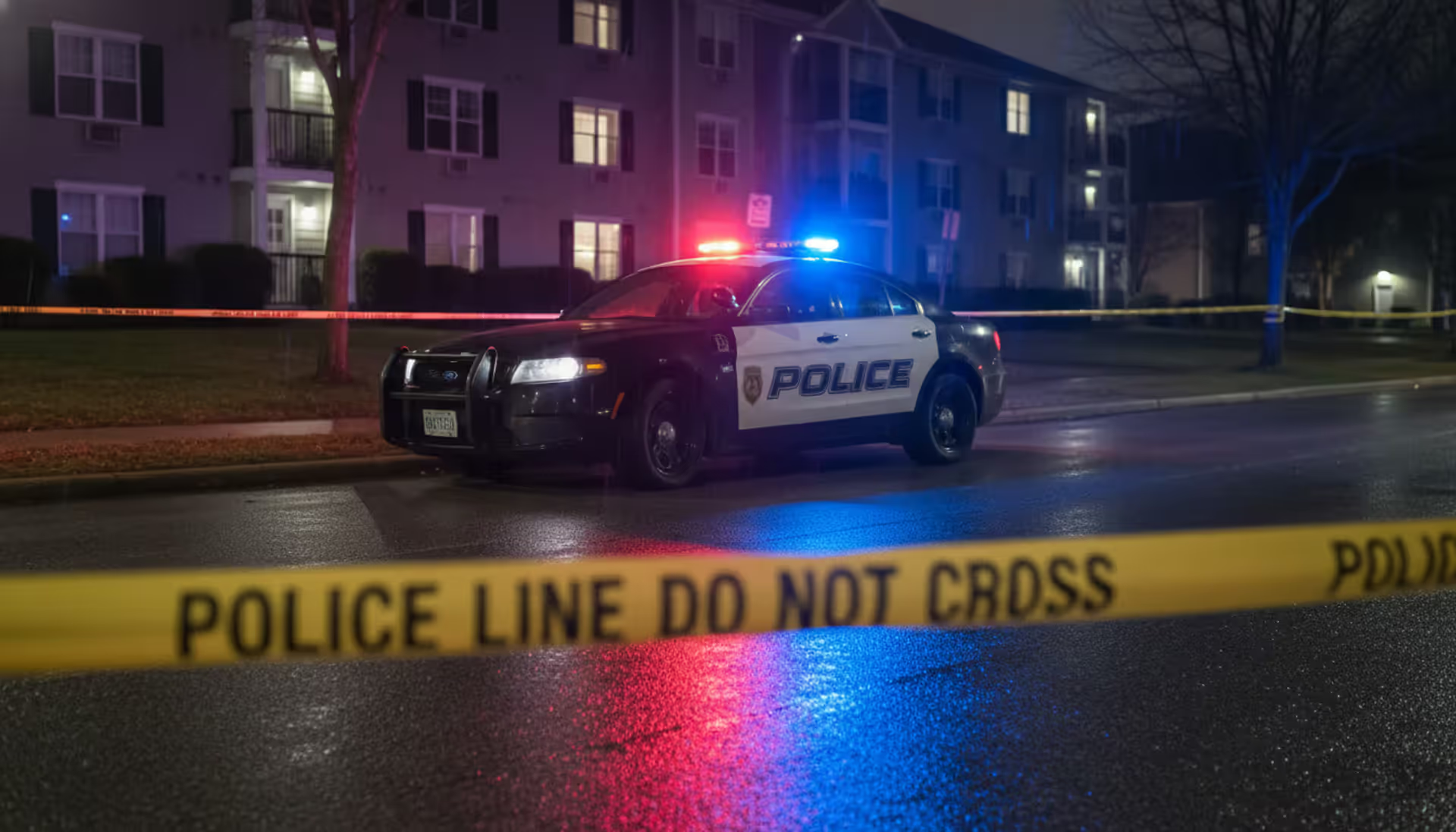
Your ex keeps showing up at your job. He's sent 47 texts in two days. Last week, he shoved you against the kitchen counter hard enough to leave bruises. You're scared, exhausted, and unsure where to turn.
There's a legal tool designed exactly for this situation. Courts can issue Protection From Abuse orders—PFAs—that put the full weight of law enforcement between you and someone who's hurting you. Unlike simply asking someone to leave you alone, these court orders carry real consequences: arrest, jail time, criminal records.
But getting one requires understanding how they work, who qualifies, and what happens when you walk into that courthouse.
Understanding PFA Meaning in Law
Think of a PFA as a legal fence. Courts use these civil orders to separate people in domestic situations where violence, threats, or abuse have occurred. The person who's been harmed asks a judge to intervene, and if the evidence supports it, the judge issues enforceable restrictions.
Here's what makes PFAs different from other legal remedies: they focus on prevention. Criminal charges punish someone for what they've already done. A protection from abuse order tries to stop what might happen next.
The burden of proof sits lower than criminal cases. Prosecutors must prove guilt "beyond a reasonable doubt"—that's a high bar. For a PFA, you need "preponderance of evidence," which essentially asks: is it more likely true than not? Did abuse probably happen? Are you probably in danger?
The pfa meaning law varies somewhat by state, but most jurisdictions restrict who can file. You can't get a PFA against your mail carrier or a rude neighbor (different orders exist for those situations). Courts designed PFAs specifically for domestic violence situations.
Author: Dylan Fairmont;
Source: sbardellaorchards.com
Who qualifies? The list depends on where you live, but generally includes:
Anyone married to the respondent, currently or previously
Someone who's shared a home as romantic partners
Parents of the same child, regardless of whether they dated
Blood relatives and in-law relationships
People who've been in sexual or romantic relationships
Pennsylvania's statute uses the phrase "intimate or have had a sexual relationship." That's intentionally broad—you don't need to have lived together or gotten engaged. A few dates followed by stalking behavior might qualify. Meanwhile, states like West Virginia require either marriage or cohabitation, setting a higher threshold.
Same-sex relationships got complicated treatment historically. Federal protections now ensure LGBTQ+ individuals can access PFAs, but some states were slow to update their statutes. By 2026, most jurisdictions recognize that abuse occurs across all relationship types.
Once granted, these orders pack substantial power. The judge might:
Bar all contact—calls, texts, emails, social media messages, or third-party communications
Require the respondent to leave a shared home immediately
Prohibit coming within specified distances of your residence, workplace, or your children's school
Order surrender of all firearms and ammunition
Award temporary custody of children, sometimes with supervised visitation only
Federal law adds teeth here. Anyone subject to a qualifying PFA becomes prohibited from possessing firearms under 18 U.S.C. § 922(g)(8). That's federal prison time if violated.
A PFA is often the first line of defense for someone experiencing domestic violence. It's not just a piece of paper—it's a court order backed by the full force of law, and violating it carries serious criminal consequences that can include immediate arrest and jail time
— Jennifer Martinez
States handle the specifics differently—duration, renewal processes, exact remedies available—but they're all solving the same problem: how to legally create space between someone being hurt and the person hurting them.
How to Get a PFA Order
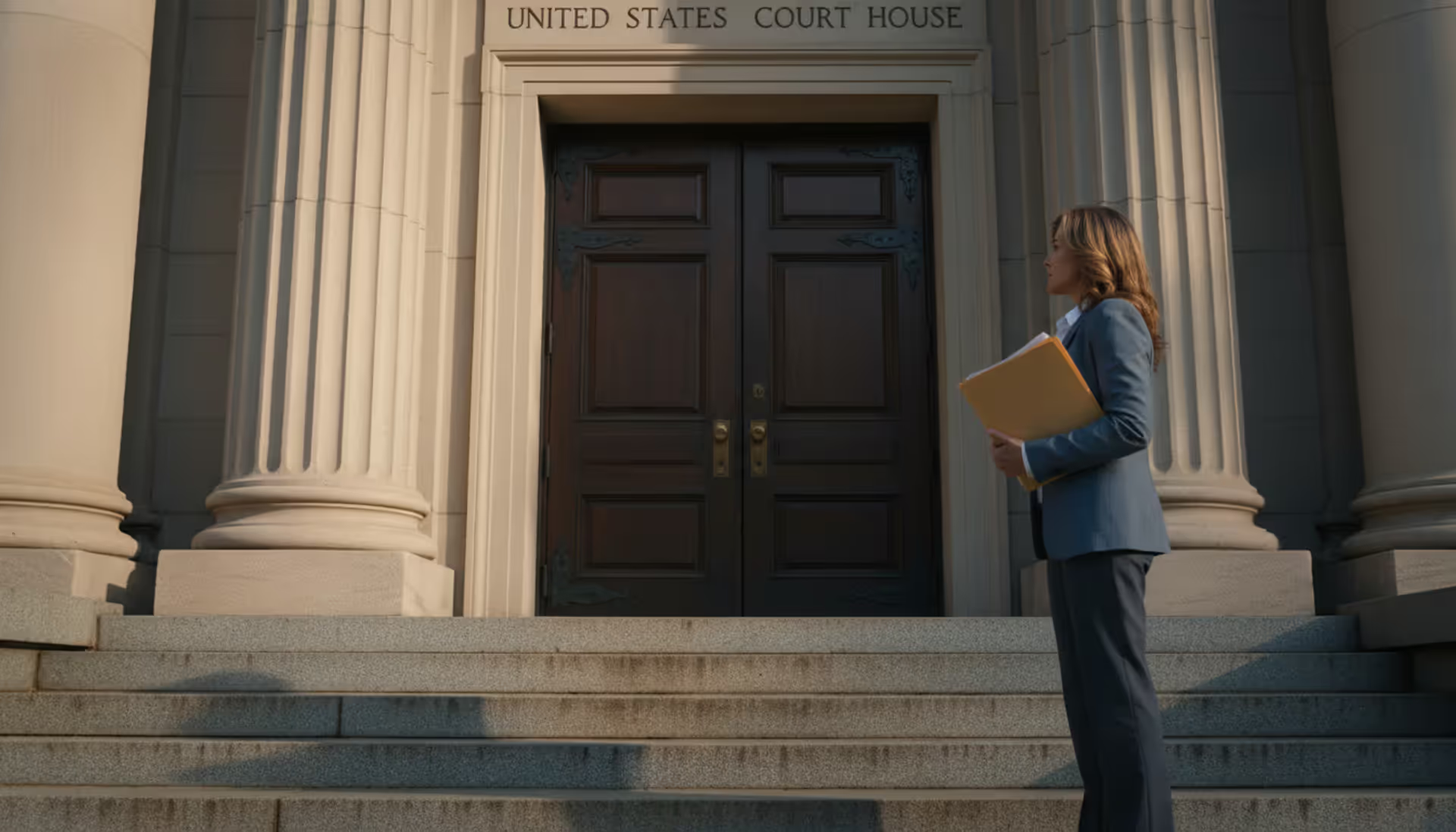
Walk into your county courthouse. Look for signs pointing to "Family Court," "Domestic Relations," or sometimes "Prothonotary." Every jurisdiction handles PFA filings slightly differently, but you'll eventually reach a clerk who hands you forms.
Those forms matter more than people realize. You're building a legal case on paper, often while emotionally overwhelmed. The petition asks you to describe what happened—and here's where many people stumble.
"He's abusive" won't cut it. "He yells at me" probably won't either. You need specificity that a judge can evaluate. Instead: "On February 3, 2026, at approximately 9 PM in our kitchen, he grabbed my wrist, twisted my arm behind my back, and said 'I'll break it if you try to leave again.' I photographed the bruising on my wrist the next morning."
See the difference? Dates anchor events. Locations make them concrete. Direct quotes matter. Physical details count.
Gather whatever evidence exists:
Photos showing injuries, damaged property, or threatening letters
Screenshots of text messages or social media threats
Medical records documenting treatment for injuries
Police reports from previous incidents
Emails, voicemails, or video recordings
Written statements from people who witnessed abuse or whom you told about it
Don't panic if you lack documentation. Testimony under oath constitutes evidence. But physical proof strengthens your position considerably.
Most courts waive filing fees for protection orders—legislators recognized that abusers often control finances. You won't pay $200 to $400 like you might for other civil filings. The process is free.
Author: Dylan Fairmont;
Source: sbardellaorchards.com
Do you need an attorney? No, legally speaking. Thousands of people obtain PFAs without lawyers every year. Should you get one if possible? Absolutely. Representation dramatically improves outcomes, especially if the respondent shows up with their own lawyer. Check for free legal aid through:
Domestic violence shelters and advocacy organizations
Legal aid societies (income-based eligibility)
Law school clinics
Bar association pro bono programs
Many courthouses station victim advocates in the filing area. They'll walk you through paperwork, explain confusing legal terms, and sometimes accompany you to hearings. Advocates can't represent you in court, but they're invaluable guides.
Filing for a Temporary PFA
Submit your completed petition. A judge reviews it that same day, usually within a few hours. You're not in the courtroom yet—the judge reads your written allegations and decides whether immediate danger exists.
If the judge finds reasonable grounds to believe you're at risk, they'll sign a temporary order right then. This ex parte order (meaning the other side hasn't been heard yet) takes effect immediately for you, but only becomes enforceable against the respondent after they're served with papers.
Temporary orders typically last 10 business days to two weeks, bridging the gap until a full hearing where both sides present evidence. During that window, the order might specify:
Zero contact through any medium whatsoever
The respondent must vacate shared housing within 24 hours
Children stay with you exclusively
Guns must be surrendered to law enforcement or a licensed dealer within 24 hours
Staying at least 500 feet (or whatever distance the judge specifies) from you at all times
Law enforcement serves the papers. Until the sheriff or police hand those documents to the respondent, they're not legally bound by the restrictions—though you are protected. Service can take a few hours or a few days depending on how easy the person is to locate.
One critical point: if the judge declines to issue even a temporary order, it doesn't mean your case is over. You can still request the full hearing. Temporary denials sometimes happen when the petition lacks detail or the relationship doesn't clearly qualify.
Preparing for Your PFA Hearing
The hearing date appears on your temporary order paperwork. Mark it everywhere. Miss this hearing and your temporary protections expire.
This is your trial, essentially. You'll testify. The respondent can testify. Both sides can call witnesses and present evidence. A judge decides whether to issue a final PFA that lasts one to three years (sometimes longer).
Preparation separates successful petitions from unsuccessful ones:
Organize evidence chronologically. Create a timeline document: "March 2025 - October 2025" with dated entries for each incident. Judges appreciate clear narratives.
Line up witnesses if you have them. The neighbor who called 911 during a fight. Your sister who saw the black eye. Your friend who received a screenshot of his threatening message. These people need to either attend the hearing or provide notarized written statements (check local rules on whether statements are admissible).
Rehearse your testimony, but don't memorize a script. You need to answer questions directly while staying focused. Some attorneys recommend talking through your story with a trusted friend beforehand—it helps you process trauma and identify which details matter legally.
A visitation schedule that protects you (exchanges at police stations, supervised contact, etc.)
Temporary financial support if you shared expenses
Return of specific property (your car, your laptop, your birth certificate)
Payment of your legal fees if you hired an attorney
Don't downplay what happened because you're afraid of making him angry. Some victims minimize abuse during testimony—"it wasn't that bad" or "maybe I'm overreacting." You're under oath. Tell the truth, even when it's hard.
Author: Dylan Fairmont;
Source: sbardellaorchards.com
The PFA Hearing Process Explained
Arrive early. Court hearings run late constantly, but showing up 30 minutes before your scheduled time means you're not frantically searching for parking when they call your case.
You'll present your side first. The judge swears you in and asks you to explain why you need protection. This is direct examination if you have a lawyer, or simply your testimony if you're representing yourself.
Stick to relevant facts. Yes, he cheated on you three years ago—but unless that connects to current abuse or threats, it doesn't belong in your testimony. Focus on:
What violent or threatening behavior occurred
When these incidents happened
Whether they're escalating in frequency or severity
Why you believe you're still in danger
How this affects any children involved
Hand your evidence to the judge. You should have brought three copies of everything: one for the judge, one for the respondent or their attorney, and one for your own reference. Courts get testy when people show up with a single copy of a critical text message screenshot.
The judge asks questions. They're not attacking you—they're trying to understand the situation. Common judicial questions include: "Why didn't you report this to police immediately?" "Did you ever strike him?" "Why are you filing now instead of when the first incident occurred?"
Answer honestly. If you didn't call police because he threatened to kill you if you did, say that. If you slapped him once during a fight (after he'd hit you repeatedly), admit it. Judges recognize that abuse dynamics are complicated. Lying destroys your credibility.
Then the respondent gets their turn. They might deny everything. They might admit some incidents but claim self-defense. They might argue you're exaggerating to gain advantage in a custody dispute. Their attorney, if they have one, will cross-examine you.
Cross-examination feels hostile because it is. The respondent's lawyer is trying to undermine your credibility and poke holes in your story. Stay calm. Answer only the question asked. If you don't know or don't remember something, say so—guessing invites problems.
Here's what judges evaluate when deciding how pfa works in your specific situation:
Does a pattern of abuse exist, or was this an isolated argument that got out of hand?
How severe was the violence? Pushing versus strangulation makes a difference.
Who seems more credible? Inconsistent testimony raises red flags.
Is there ongoing danger, or has significant time passed without incident?
How will this affect children if they're involved?
The evidentiary standard is preponderance—you must show abuse more likely occurred than not. That's roughly 51% probability versus 49%. Much more achievable than criminal court's "beyond reasonable doubt."
If the judge grants a final order, it generally lasts one to three years depending on state law and case severity. Pennsylvania allows up to three years. New Jersey permits permanent restraining orders when violence was particularly severe. Some states mandate two-year terms for final orders.
Denied petitions can be appealed, though appeals are complex and time-sensitive (usually 30 days). Alternatively, if new abuse occurs, you can file a fresh petition.
PFA vs Restraining Order: Key Differences
People use these terms interchangeably at dinner parties. Courts don't. The distinction matters because filing the wrong type of order can get your petition dismissed, leaving you unprotected while you refile correctly.
Feature
PFA (Protection From Abuse)
Restraining Order
What It's Designed For
Stopping domestic violence between people in intimate or family relationships
Preventing harassment, stalking, or threatening behavior from anyone
Relationship Required
Yes—must be current/former intimate partner, spouse, family member, or share a child
No—can be a stranger, acquaintance, coworker, neighbor, or anyone else
What Behavior Qualifies
Physical abuse, sexual assault, threats, stalking within a domestic context
One to three years initially, sometimes permanent in severe cases
Six months to one year typically, varies significantly by state
What Happens If Violated
Immediate arrest; criminal contempt charges; jail time likely
May require filing contempt motion; arrest practices vary by jurisdiction
Cost to File
Free in virtually all jurisdictions
Often $100 to $400 unless waived for indigency
Can It Address Custody
Yes—judges can issue temporary custody and visitation orders as part of PFA
No—custody requires separate family court action
Gun Restrictions
Federal law prohibits firearm possession under qualifying domestic violence PFAs
Depends on state law; not automatically prohibited federally
The relationship requirement creates the biggest practical difference. Your ex-husband who won't stop calling at 3 AM making threats? That's PFA territory—you were married. Your former roommate who keeps showing up at your workplace demanding money? Probably a harassment restraining order—you weren't in an intimate relationship.
Some states blur these lines with overlapping statutes. California uses "domestic violence restraining orders" for what Pennsylvania calls PFAs. New Jersey's "restraining orders" function identically to other states' PFAs. Always verify your jurisdiction's specific language.
Enforcement mechanisms differ substantially. Federal law 18 U.S.C. § 922(g)(8) makes gun possession a federal crime for anyone subject to a qualifying protection order involving an intimate partner. That same prohibition doesn't automatically attach to non-domestic restraining orders, though some states impose their own firearm restrictions.
Violating a PFA usually triggers automatic arrest policies. Police show up, verify the order exists and was violated, and make an arrest without extensive investigation. Restraining order violations sometimes require the victim to file contempt paperwork and wait for a court date—though this varies widely.
If you're uncertain which to file, describe your situation to the courthouse clerk or a victim advocate. They'll point you toward the correct forms. Filing the wrong type wastes time and leaves you vulnerable while you start over.
PFA Orders and Child Custody Arrangements
Children complicate everything in family law. When you add domestic violence to the equation, custody becomes even more fraught with difficult decisions.
A judge issuing a PFA has authority to include temporary custody provisions. This can immediately override existing custody arrangements—even formal court orders from previous cases. The pfa and child custody intersection creates emergency protections while longer-term custody cases proceed.
Why? Courts recognize that kids who witness domestic violence suffer psychological harm even when they're not the direct targets. You screaming while he throws dishes might not leave visible bruises on your five-year-old, but it's still trauma. Many states legally classify witnessing domestic violence as a form of child abuse.
PFA custody provisions might include:
You get sole physical custody while the order remains in effect
The respondent gets no contact with children at all (in extreme cases)
Supervised visitation only, conducted at a licensed facility with trained monitors
Exchanges happen at police stations to prevent direct contact between you
The respondent pays for supervision costs, which run $50 to $200 per session depending on location
Supervised visitation centers operate nationwide. A professional monitor observes every interaction between the respondent and the children. If concerning behavior occurs, they document it and can terminate the visit. These facilities protect children while preserving some parental relationship.
One critical limitation: PFAs provide temporary custody solutions. They're not permanent custody orders. When your PFA expires in two years, the custody provisions expire with it unless you've filed a separate custody action in family court.
Smart practice? File for custody simultaneously with or shortly after obtaining a PFA. Evidence presented during your PFA hearing—testimony about violence, police reports, medical records—carries weight in custody proceedings. Judges determining "best interests of the child" consider domestic violence history heavily.
Don't assume a PFA automatically terminates the other parent's rights. It doesn't. Termination of parental rights is an extremely high legal bar, typically requiring abandonment, severe abuse of the child directly, or unfitness so extreme that any contact harms the child. A PFA restricts contact; it doesn't sever the legal parent-child relationship.
Document everything involving the children. If he shows up drunk to a supervised visit, write down the date, time, facility name, and what happened. If he pumps the kids for information about your whereabouts during his visitation, record their report. If he misses scheduled visits repeatedly, note each instance.
This documentation becomes ammunition in custody court. Parents who disregard court orders, endanger children, or use visitation inappropriately lose custody privileges. Build your record methodically.
Author: Dylan Fairmont;
Source: sbardellaorchards.com
Consequences of Violating a PFA Order
He texts you at 11 PM: "I know I'm not supposed to contact you, but I just want to talk." That single text message is a crime.
PFA violation consequences are swift and severe precisely because domestic violence escalates quickly. Courts can't wait for contempt hearings and drawn-out proceedings when someone's safety hangs in the balance.
Most jurisdictions maintain "mandatory arrest" or "probable cause arrest" policies for PFA violations. Translation: if you call 911 and report a violation, police will almost certainly arrest the respondent immediately. They don't need to witness the violation themselves. Your credible report establishes probable cause.
Criminal penalties vary by state and by violation number:
First violation (misdemeanor contempt): up to six months jail, fines ranging from $500 to $1,000
Second violation (often elevated to misdemeanor with higher penalties): up to one year jail, fines up to $2,500
Third violation (felony in many states): one to five years prison, fines up to $10,000
If new abuse occurred during the violation: additional charges for assault, terroristic threats, stalking, burglary, etc.
Violations stack. If he sends you five text messages in one evening, that's potentially five separate criminal violations. If he drives past your house every day for a week, seven violations. Prosecutors can charge each instance individually.
Judges don't accept excuses. Common defenses that fail:
"She told me it was okay to contact her." Doesn't matter—the court issued the order, not her.
"I was just trying to see my kids." Should have filed a motion to modify custody provisions through proper channels.
"I didn't mean to go near her house; I got lost." GPS evidence often disproves this, and ignorance isn't a defense anyway.
"This is violating my First Amendment rights." Courts have consistently held that PFA restrictions survive constitutional scrutiny.
Third-party contact counts as a violation too. Having your brother call her to relay a message? Violation. Sending a letter through your mother? Violation. Posting vague threats on social media that don't name her but she clearly recognizes? Courts often find that's a violation.
If you're the victim and the respondent contacts you, don't respond. This is hard advice to follow. You might want to tell him to stop. You might want to argue. You might want to explain why his text is illegal.
Don't. Any response can be twisted into evidence that you welcomed the contact or that the order isn't really necessary. Instead:
Screenshot or photograph the evidence
Save voicemails without responding
Write down details of in-person encounters (date, time, location, what was said)
Call police non-emergency line (or 911 if you feel threatened) to report the violation
Request that the responding officer document the violation in a report
Beyond immediate criminal consequences, violations damage the respondent's position in related legal matters. Family court judges deciding custody see violation convictions as evidence of poor judgment and disregard for legal authority. Divorce courts factor them into asset division and spousal support. Criminal courts considering sentencing for unrelated offenses view PFA violations as aggravating factors.
Some abusers cycle through violations and short jail stays without changing behavior. If violations continue, petition the court for a contempt hearing in addition to criminal charges. The judge can impose additional penalties, extend the PFA duration, or modify terms to provide stronger protection.
Frequently Asked Questions About PFA Orders
How long does a PFA order last?
Temporary orders remain in effect for roughly 10 to 14 business days until your full hearing. Final orders typically last one to three years depending on your state's statutes and the judge's assessment of your situation. Pennsylvania caps most final PFAs at three years. California allows five-year domestic violence restraining orders. Some states, including New Jersey, permit permanent orders when violence was particularly egregious. You can file for an extension before your PFA expires. Courts generally grant extensions if evidence shows continued danger—the respondent violated the order, made new threats, or hasn't completed anger management or substance abuse treatment. Extensions often run another one to three years.
Can a PFA be dropped or dismissed?
You can ask the judge to dismiss your PFA, but the court makes the final decision. Judges don't automatically grant dismissals just because you've changed your mind or reconciled with the respondent. They'll schedule a hearing where you testify under oath about why you want dismissal. The judge considers whether you're being pressured or threatened into dropping protection, whether children remain at risk, and whether dismissal serves justice. If you appear in court with bruises and claim everything's fine now, expect skepticism. Courts sometimes deny dismissal requests when they believe the victim faces coercion. Also critical: the respondent cannot force you to drop a PFA. Pressuring you to dismiss the order constitutes a separate violation and potentially witness tampering.
Does a PFA show up on a background check?
Yes, though context matters. The PFA itself is a civil order appearing in public court records that background checks may reveal, especially comprehensive checks for jobs in education, healthcare, law enforcement, or positions working with vulnerable populations. More significantly, federal law requires PFAs to be entered into the National Instant Criminal Background Check System (NICS), which flags the respondent during any firearm purchase attempt. If the respondent violated the PFA and got convicted of criminal contempt, those convictions definitely appear on criminal background checks permanently. Some employers conduct limited background checks that might miss civil orders, but thorough screenings will find them.
Can I get a PFA if we don't live together?
Absolutely, in most states. Older statutes sometimes required cohabitation, but legislators recognized that dating violence occurs regardless of living arrangements. You'll need to prove you had an intimate or sexual relationship with the respondent. Former dating partners qualify even if you only dated briefly. On-and-off relationships count. People who were engaged but never married qualify. However, friendships without romantic or sexual involvement generally don't meet the threshold—if your relationship was platonic, you'd need a different type of restraining order for harassment or stalking. The specific language varies by jurisdiction. Some states use "substantial dating relationship" and look at factors like length of relationship, type of interaction, and frequency of contact. If you're unsure whether your relationship qualifies, describe it honestly to a victim advocate or the court clerk.
What if the abuser lives in a different state?
Your PFA follows you across state lines, and law enforcement in other states must enforce it. The Violence Against Women Act's Full Faith and Credit Clause requires all states to recognize and enforce valid protection orders from other jurisdictions. If you got a PFA in Pennsylvania and the respondent lives in Maryland, Maryland police will arrest him for violations just as Pennsylvania police would. Practical tip: register your PFA in any state where you plan to spend significant time or where the respondent lives. While registration isn't legally required for enforcement, it gets the order into that state's database and makes police response faster. Carry certified copies of your order whenever you travel, and provide copies to local police in any jurisdiction where you're staying.
Will I need a lawyer to get a PFA?
Legally, no. Courts allow self-representation, and thousands of people successfully obtain PFAs without attorneys every year. Practically speaking, though, legal representation significantly improves your odds of success—especially if the respondent hires their own lawyer. Free legal help is available through domestic violence organizations, legal aid societies (income-based eligibility), law school clinics, and bar association pro bono programs. Many areas also have "PFA clinics" where volunteer attorneys help people prepare petitions and hearings. If you absolutely can't find an attorney, victim advocates can guide you through the process, help you complete forms, and explain court procedures. Just understand they can't give legal advice ("you should ask for sole custody") or speak for you in court. They can sit next to you for support and help you stay organized.
Protection From Abuse orders exist because words alone don't stop violence. They transform "please leave me alone" into a legally enforceable boundary backed by arrest warrants and jail time. For someone trapped in domestic violence, that transformation can mean the difference between escalating danger and breathing room to rebuild a safe life.
The process isn't easy. You'll complete paperwork while emotionally raw. You'll testify about traumatic experiences in a courtroom. You might face an angry ex-partner and their attorney trying to discredit you. It takes courage to walk into a courthouse and ask for protection, especially when abusers have spent months or years convincing you that you're overreacting, that no one will believe you, that leaving will make things worse.
But PFAs offer real protection. Immediate restrictions on contact. Potential custody arrangements that shield children from harm. Criminal consequences that give the order actual teeth. And perhaps most importantly, a clear message from the legal system that what's happening to you is wrong and serious enough to warrant judicial intervention.
If you're weighing whether to file, don't wait for violence to escalate into something worse. Abuse follows predictable patterns, and those patterns typically intensify over time. Courts understand this. Early intervention isn't overreaction—it's smart risk management.
Collect evidence now: photograph injuries, screenshot threats, save voicemails, document incidents with dates and details. Reach out to local domestic violence organizations even if you're not ready to file—they'll help you understand options and create a safety plan. When you do file, bring everything you've gathered and be ready to tell the truth, even when it's difficult.
If you've been served with a PFA, take it seriously. Violation means arrest and criminal charges, full stop. If you believe the allegations are false, hire an attorney and contest it at the hearing through proper legal channels. What you don't do is contact the petitioner to argue about it, drive past their house to prove something, or ignore the order's restrictions because you think they're unfair.
Whether you're seeking protection or responding to allegations, understanding how PFAs work—the eligibility rules, the hearing process, the enforcement mechanisms, the consequences—helps you navigate this difficult legal terrain with clarity. The stakes are too high for guesswork.
A no contact order can reshape daily life by restricting communication and proximity. This guide explains how these court-issued directives work in criminal prosecutions and divorce cases, the consequences of violations, and the critical differences from restraining orders
Medical neglect occurs when parents fail to provide necessary healthcare, causing serious harm to children. This comprehensive guide explains recognition signs, legal definitions, investigation processes, and reporting requirements to protect vulnerable children
California Penal Code 273.5 addresses inflicting corporal injury on a spouse or cohabitant, carrying significantly harsher penalties than simple battery. Understanding the legal definition, required elements, and differences from related charges matters for anyone navigating domestic violence accusations
Restraining order costs range from $0 to $400+ depending on your state and circumstances. Many states waive all fees for domestic violence cases, and fee waiver programs help low-income petitioners access protection regardless of financial situation. This guide covers filing fees, service costs, attorney expenses, and practical ways to obtain a restraining order for free
The content on this website is provided for general informational and educational purposes only. It is intended to explain concepts related to family law, divorce, custody, child support, and related legal matters.
All information on this website, including articles, guides, and examples, is presented for general educational purposes. Legal processes may vary depending on jurisdiction, personal circumstances, and applicable laws.
This website does not provide legal advice, and the information presented should not be used as a substitute for consultation with qualified family law attorneys or legal professionals.
The website and its authors are not responsible for any errors or omissions, or for any outcomes resulting from decisions made based on the information provided on this website.