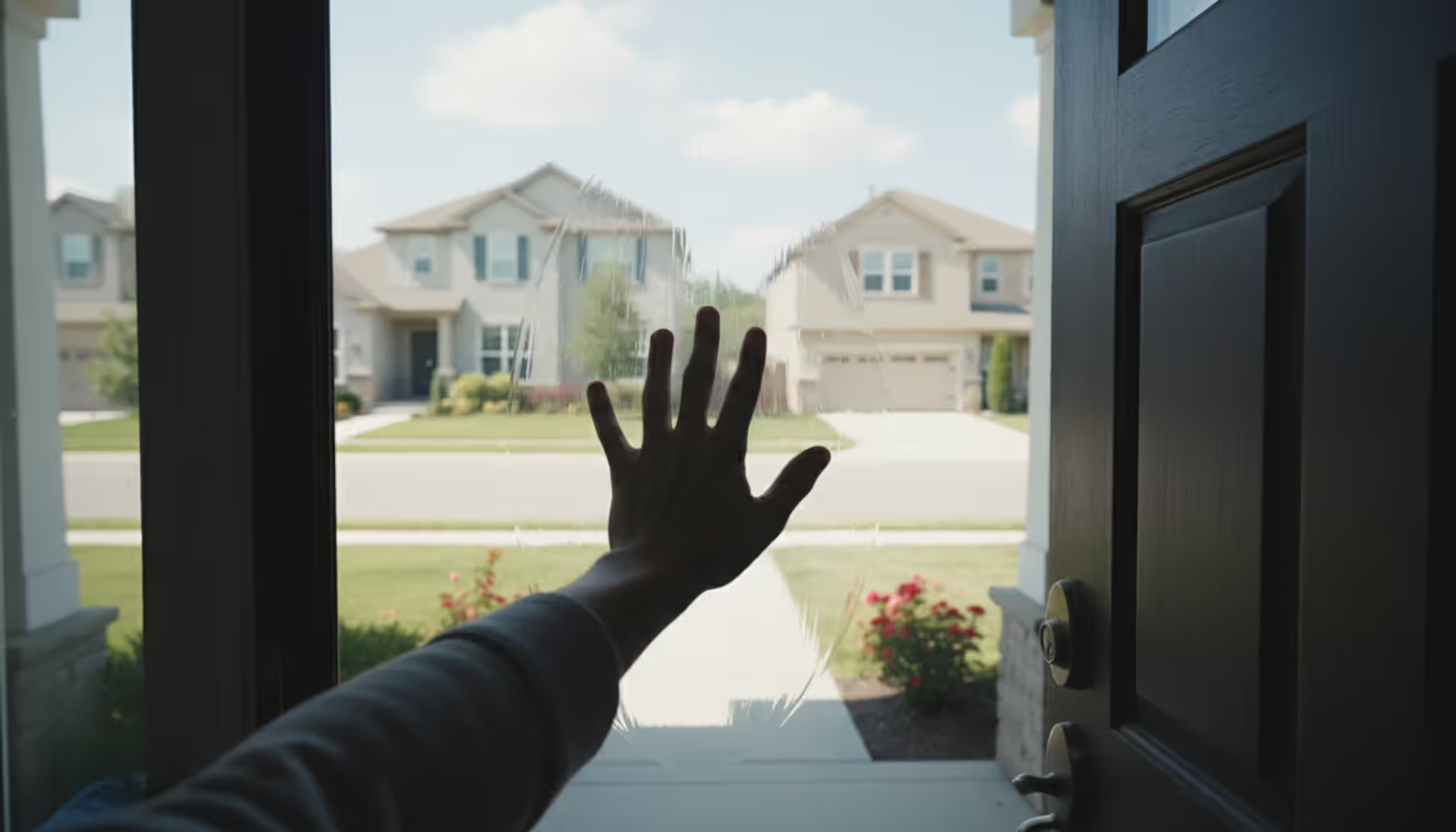
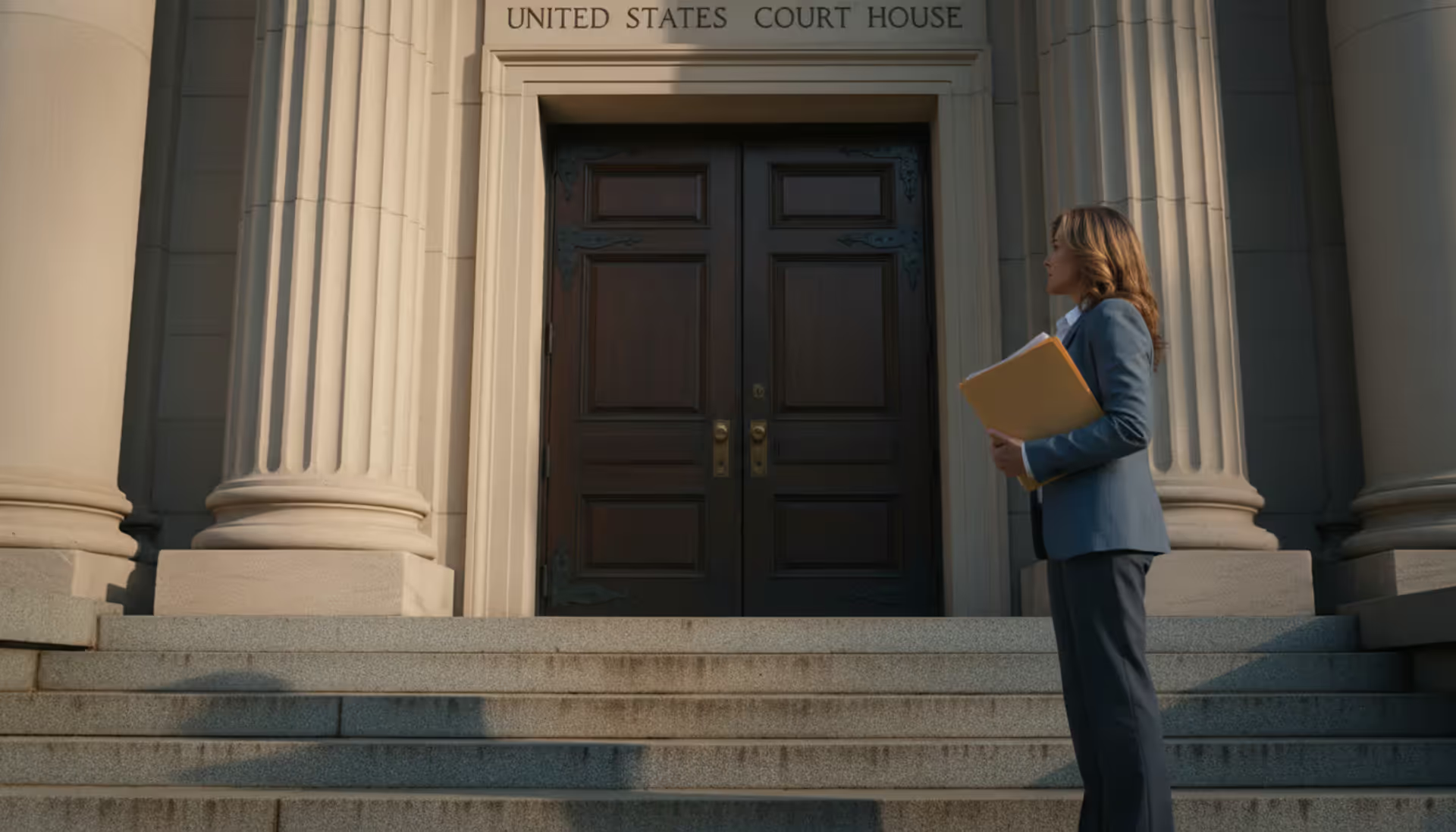
Picture this: you wake up one morning and discover you're legally prohibited from texting your spouse, driving down your own street, or picking up your kids from school. That's the reality for thousands of Americans living under no contact orders right now.
These court directives don't just limit communication—they can completely reorganize your routine. Where you work, shop, worship, even which route you take home from the grocery store may suddenly be off-limits. I've seen clients forced to move out of their homes within 24 hours, change their gym memberships, and find new churches because their ex attends the old one.
The confusing part? Most people don't understand these orders until they're already subject to one. If criminal charges just landed you in front of a judge, you're going through a divorce, or you need protection from someone threatening you, here's what you actually need to know.
What Is a No Contact Order?
Think of a no contact order as an invisible legal fence the court builds around someone. Cross that fence—even accidentally—and you're looking at handcuffs.
Courts issue written directives prohibiting all contact between two specific people. And "contact" means more than you'd think. You can't call, text, email, or send messages through Facebook. You can't ask your mom to pass along a message. You can't mail a letter. You can't drive by their house "just to see if they're home." You can't like their Instagram posts.
Here's what surprises people: these orders also create physical boundaries. Most specify exact distances you must maintain—picture one to five football fields between you and the protected person at all times. Your ex's workplace? You can't go within 300 yards of the building's entrance. Their gym, church, favorite coffee shop? All potentially off-limits.
Now, where do these orders come from? Two completely different court systems:
Criminal court orders happen after arrests. Get arrested for domestic assault, stalking, or making threats? The prosecutor will almost certainly ask the judge to issue a no contact order at your first court appearance. The district attorney drives this process, not the alleged victim. Once the judge signs that order, it stays in place whether the other person wants it or not.
Family court orders emerge during divorces and custody battles. One spouse files paperwork directly with the family court judge, usually claiming harassment, intimidation, or fear. These follow different rules than criminal orders, though they're equally binding.
Here's the biggest misconception I encounter: people think the protected person controls the order. "She said she wants to talk to me, so it's fine if I text her back." Wrong. Dead wrong.
In criminal cases especially, the order belongs to the court system. The alleged victim could send you a hundred text messages begging you to respond. If you send even one reply, you've just committed a new crime. The judge—not the protected person—decides when that order gets lifted.
Another dangerous myth? "If we both want to talk, the order doesn't apply." The law doesn't care what both of you want. The restricted person bears 100% of the legal responsibility to maintain zero contact. Period.
Author: Natalie Brookstone;
Source: sbardellaorchards.com
How a No Contact Order Works
Let's walk through exactly how these orders go from a prosecutor's request to an enforceable legal document that can land you in jail.
Who asks for it? In criminal cases, the prosecuting attorney files the motion. The alleged victim doesn't petition the court directly—they tell the prosecutor what happened, and the prosecutor decides whether to request protective measures. In divorce cases, either spouse can file the paperwork asking for a no contact directive.
When does it kick in? The moment a judge signs the order and you receive proper notice. If you're standing in court when the judge announces it, that order is live right then. Leave the courthouse and text the protected person on your way to your car? You just violated it before you even got the written copy.
If you weren't in court, law enforcement has to serve you the paperwork—usually a sheriff's deputy hands you the documents and confirms your identity. Until that happens, technically you can't violate an order you don't know exists. But good luck convincing a prosecutor you didn't know about it if you've been dodging the deputy trying to serve you for a week.
What does it actually prohibit? Here's a real example from a case I reviewed last month:
Zero phone calls, texts, emails, voicemails, or letters
No social media contact whatsoever (comments, likes, shares, tags, follows, DMs)
No messages passed through third parties—friends, family, coworkers, anyone
Must stay 500 feet from her residence on Oak Street
Cannot come within 500 feet of her workplace at Memorial Hospital
Cannot go within 500 feet of her vehicle (a silver 2022 Honda CR-V, license plate ABC-1234)
No monitoring her location, activities, or communications
Must surrender all firearms within 24 hours
Some orders carve out narrow exceptions. Maybe the court allows communication through your divorce attorneys about splitting up property. Perhaps supervised child exchanges require brief, logistics-only conversations ("I'm five minutes away"). But unless the written order explicitly permits specific contact, you cannot make that contact.
Here's what catches people off guard: "indirect contact" violations. You can't have your brother call her. You can't create a fake Facebook account to check her posts. You can't sit in your car across from her office to see when she leaves work. All violations.
No Contact Order vs Restraining Order
People use these terms interchangeably at dinner parties. In court? They're completely different animals with different rules, different courts, and different consequences.
Feature
No Contact Order
Restraining Order
Which court issues it
Criminal court judge (or family court during divorce)
Civil court judge
What triggers it
Criminal charges like assault or stalking; divorce filing
Direct petition from someone seeking protection
Who initiates the process
Prosecuting attorney (criminal context) or divorcing spouse
The person seeking protection files directly
How long it lasts
Through the criminal case; extends through probation if convicted
One to five years typically; renewable
What happens if you violate it
Immediate arrest; new criminal charge filed
Civil contempt initially; can escalate to criminal
How to modify it
Prosecutor must agree or you need a contested hearing
File motion directly with the court that issued it
Restraining orders are civil court remedies. Someone experiencing harassment files paperwork with the civil courthouse, describes what's happening, and asks a judge for protection. After a hearing where both sides present their case, the judge decides whether to grant an order lasting one to five years.
The person seeking protection controls the process. They file it, they can dismiss it (usually), and they can request modifications. It's their case.
Criminal no contact orders exist because a prosecutor filed criminal charges. The defendant hasn't been convicted yet—they're presumed innocent. But the judge still imposes protective boundaries while the legal process grinds forward. These stick around through trial and often through years of probation if there's a conviction.
The practical difference that matters most? Violate a restraining order and police might issue a citation for civil contempt. Violate a criminal no contact order and you're going to jail that night. New charges get filed. Your bail on the original case gets revoked. You sit in a cell until your attorney can sort it out.
Author: Natalie Brookstone;
Source: sbardellaorchards.com
In divorce cases, family courts issue what they label "no contact orders" or "restraining orders" depending on your state's terminology. These function as civil orders but come with enforcement teeth similar to criminal orders. A Texas family court might issue a "protective order" during divorce proceedings. A California family court might issue a "domestic violence restraining order." Different names, similar function.
The No Contact Order Process
In Criminal Cases
Your path to living under a no contact order usually starts in the back of a police car.
Arrest and first appearance: After police arrest you for assault, domestic violence, stalking, or harassment, you'll see a judge within 24 to 48 hours. They call this arraignment or first appearance. You're standing there in handcuffs or jail scrubs, and the prosecutor's already reviewing your case file.
The prosecutor files their request: Before your hearing even starts, the DA has usually prepared a motion requesting a no contact order. This document names who needs protection—the alleged victim, sometimes their family members, sometimes witnesses. The motion asks the judge to prohibit all contact and specify geographic boundaries.
Your attorney responds: If you have a lawyer (and you better have a lawyer), they can argue against the order. Maybe you and the alleged victim live together and share three kids under age five. Maybe you both own the house. Maybe the allegations don't justify such broad restrictions. Your lawyer makes these arguments on the record.
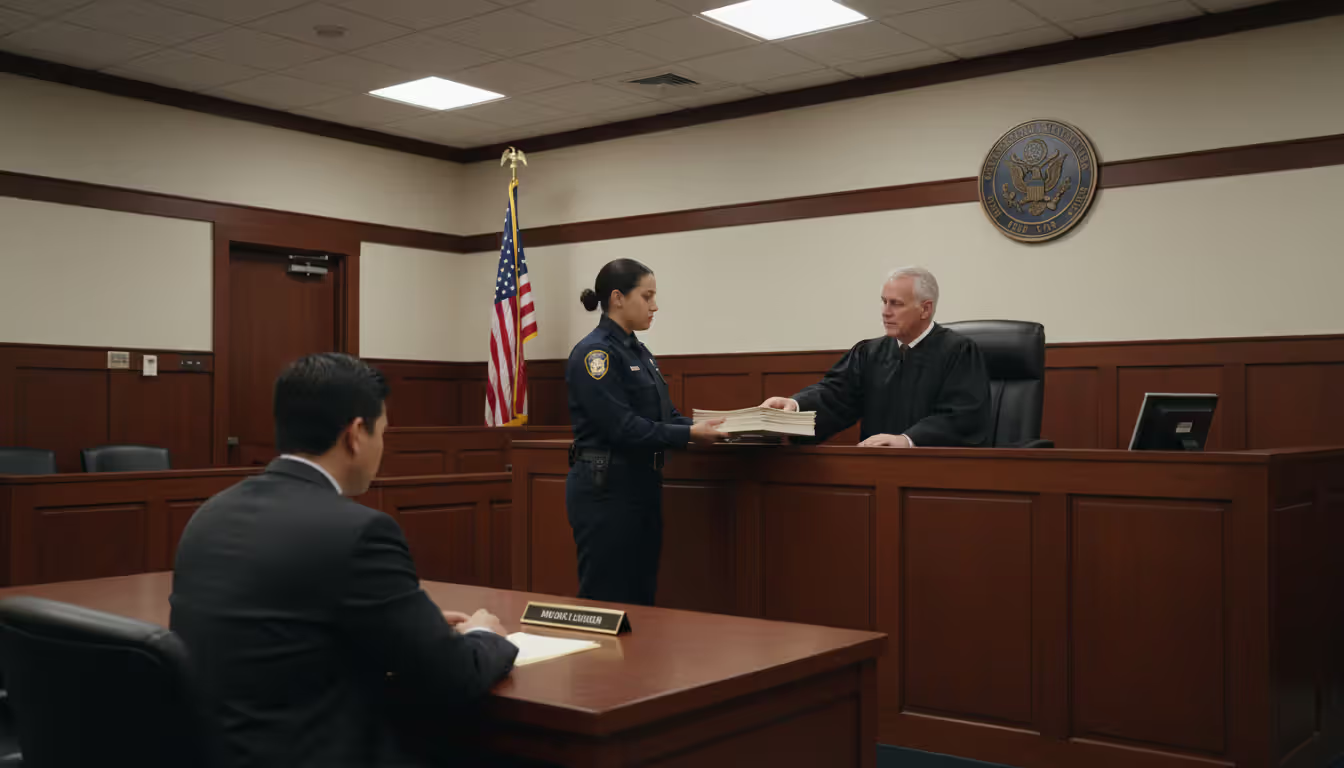
Judge issues the order: Judges almost always grant these requests in domestic violence cases. They view it as a safety precaution—better safe than sorry. The order gets issued from the bench, meaning the judge announces it in court. Court staff prepare the written paperwork spelling out every restriction.
You get served: If you're standing in court, you receive your copy right there. The judge might even ask, "Do you understand this order? Do you have any questions about what it means?" Now you're on notice. If you weren't in court, a deputy has to track you down and hand you the paperwork.
The order stays active throughout your case. Preliminary hearing, motions, trial preparation, trial itself—the order continues. Get convicted? The judge typically extends it through your entire probation period. I've seen orders last three, five, even ten years post-conviction.
Charges dismissed or acquitted at trial? The order usually dissolves immediately, though prosecutors sometimes request continuation if there are related civil cases pending.
Author: Natalie Brookstone;
Source: sbardellaorchards.com
In Divorce and Family Law Cases
Family court no contact orders follow a completely different procedure—one that either spouse can trigger.
Filing the petition: The spouse seeking protection completes court forms describing specific incidents. "On March 15, 2025, he showed up at my workplace and screamed threats in the parking lot. On March 22, he sent 47 text messages in three hours despite me asking him to stop." Many courthouses provide fill-in-the-blank forms, but you're essentially telling the judge a story about why you need legal protection.
Emergency temporary orders: If the situation seems dangerous, judges can issue temporary orders immediately without the other spouse present. These "ex parte" orders provide instant protection but only last until the court can schedule a full hearing—usually ten to twenty-one days out.
Notice and full hearing: The court notifies the other spouse and schedules a hearing. Both sides show up with evidence. Text message screenshots, police reports, witness testimony, photos of damage, medical records from injuries—whatever supports your position. The spouse seeking the order explains why it's necessary. The other spouse argues why it's not.
Judge decides: After hearing both sides, the judge determines whether to issue the order and what restrictions to impose. In divorce cases, judges try to balance protection against practical realities. You share custody of twin toddlers? The order might allow brief, logistics-only communication during supervised custody exchanges. You jointly own a business? The order might permit contact through attorneys only regarding business operations.
Integration with divorce case: The order becomes part of the broader divorce file. It might show up in temporary orders while the divorce is pending. Sometimes provisions get incorporated into the final divorce decree. Need modifications later? You file motions with the same family court judge handling your divorce.
Family court orders often address unique divorce issues: Who keeps the house during the separation? How do you split bank accounts when you can't speak to each other? What happens during school events when you both want to watch your daughter's soccer game? The order might grant exclusive possession of the marital home to one spouse, require the other to stay away, and establish detailed protocols for child-related communications.
Duration and Conditions of a No Contact Order
How long are we talking here? The answer ranges from "a few months" to "the rest of your natural life," depending on the circumstances.
Criminal case timeline: At minimum, the order lasts until your case resolves. Simple assault case that settles with a plea deal after four months? The order lasts at least four months. More serious domestic violence charge that goes to trial after eighteen months? You're looking at eighteen months minimum.
Here's the kicker: conviction usually extends the order through your entire probation or parole period. Domestic violence conviction with three years of probation? That order likely continues for three years after sentencing. Felony assault with five years of parole? Five more years of no contact.
Even after probation ends, some jurisdictions allow judges to impose permanent no contact orders as part of sentencing for serious domestic violence crimes. "Permanent" might mean ten years, twenty years, or genuinely forever.
Temporary vs. longer-term family court orders: Emergency ex parte orders in divorce cases usually last ten to twenty-one days—just long enough to get both parties in front of a judge. After the full hearing, if the judge grants a longer order, it might run through the entire divorce process. Some specify expiration dates (one to three years is typical), while others remain active until someone petitions for modification.
"Permanent" orders aren't actually permanent: In legal speak, "permanent" just means "not temporary." A permanent restraining order might last five years. A permanent criminal no contact order might last through a ten-year probation period. You can petition to modify or lift these orders, but you need compelling reasons and often the judge's approval.
Standard restrictions you'll encounter:
Every order I've reviewed prohibits direct communication: calls, texts, emails, letters, voicemails, faxes (yes, people still try faxing), social media messages. Business communications too, even if you previously worked together.
Geographic stay-away zones appear in nearly every order: 100 to 500 yards from the protected person's home, workplace, school, gym, church, vehicle, and anywhere else they regularly go. One order I saw prohibited the defendant from entering a specific Walmart because the protected person worked there.
Third-party contact restrictions prevent you from using friends, relatives, or coworkers as message services. You can't ask your sister to tell your ex that you're sorry. You can't have your buddy pass along a note. You can't post cryptic Facebook messages you know she'll see.
Surveillance and monitoring bans stop you from tracking the protected person's whereabouts, following them, sitting outside their house, checking their social media, or using GPS trackers on their car. All prohibited.
Child custody provisions get complicated when you share kids. The order might require all parenting communication to flow through apps like OurFamilyWizard or TalkingParents that create records. Or maybe all exchanges happen at a supervised facility where staff document everything. Some orders designate a third party—a grandparent, perhaps—to handle custody transfers.
Getting orders modified or lifted:
Want changes? You need to file formal motions with the court. In criminal cases, your attorney files the motion, and you'll probably need the prosecutor's blessing or a contested hearing where you prove circumstances changed. Judges rarely modify criminal no contact orders while cases are pending—you typically need to wait until after your case concludes.
In family court, either spouse can petition for modifications. The protected person might want to add restrictions if harassment continues. The restricted person might want narrower terms if they can show they've complied perfectly, completed anger management classes, or other positive changes.
Completely lifting an order requires convincing the judge that protection is no longer necessary. After completing probation successfully in a criminal case, you might petition to lift the order. In civil divorce cases, if both parties agree and circumstances have genuinely improved, the judge might dissolve the order—but the judge makes the final call, not the parties.
Author: Natalie Brookstone;
Source: sbardellaorchards.com
Violating a No Contact Order: Consequences and Enforcement
One text message. That's all it takes to go from complying with your order to sitting in jail on new charges.
Courts don't care if the message was friendly ("Hope you're doing well!"), apologetic ("I'm so sorry for everything"), or even helpful ("The kids' school called about early dismissal tomorrow"). Send it, and you've violated the order.
What counts as a violation?
Any prohibited contact or proximity triggers violations. Real examples from cases I've seen:
Sending a single "Happy Birthday" text at midnight
Driving down the street where the protected person lives because it's your normal route home
Walking into a Target and spotting the protected person three aisles over but not leaving immediately
Commenting "Cute dog!" on the protected person's public Instagram post
Asking your mom to tell your ex that you finished the tax paperwork
Mailing a letter to their attorney's office addressed to the protected person
Standing outside the coffee shop where you know they get their morning latte
Intent doesn't matter in most jurisdictions. "I didn't know she'd be at that restaurant!" might be true, but once you saw her there, you should have left. Staying for your meal? Violation.
Criminal penalties:
First-time violations usually bring misdemeanor charges. We're talking up to a year in county jail and fines reaching $1,000 or more. Some states classify these as gross misdemeanors with enhanced penalties—up to 364 days instead of the typical 90-day misdemeanor maximum.
Second and third violations? Many states escalate these to felonies. Now you're facing multiple years in state prison, not county jail. Fines jump to $5,000, $10,000, or higher.
Violate while you're out on bail? Your bail gets revoked immediately. You're arrested on the spot and held without bail until trial on both the original charges and the new violation charge.
Already on probation when you violate? You've just breached your probation conditions. The judge can revoke probation entirely and impose the original suspended sentence that was hanging over your head. Had five years suspended, served none of it, and were on probation instead? Violate the no contact order and you might serve all five years.
Non-citizens face immigration nightmares. Domestic violence-related violations can constitute deportable offenses. Even permanent residents risk removal proceedings for these violations.
How violations get discovered and prosecuted:
The protected person reports it. They screenshot your text, save your voicemail, film you driving past their house, or call 911 when you show up at their workplace. Police respond, investigate, and if evidence supports a violation, they arrest you.
Sometimes witnesses report violations. The protected person's friend sees you at the same bar and calls police. Surveillance cameras catch you parking outside the protected person's apartment. Phone records subpoenaed in the original case reveal calls or texts.
Evidence prosecutors use includes:
Phone company records showing call times and durations
Actual text message content from screenshots
Email server logs and message content
Social media posts, comments, likes, and message timestamps
Witness statements from people who saw in-person contact
Security camera footage from businesses or homes
Cell tower location data
GPS tracking from phones or vehicle systems
Police body camera footage from welfare checks
Impact on your underlying case:
Violate a no contact order while your assault case is pending? The prosecutor will use it against you. "Your Honor, the defendant can't even follow a simple court order. He poses a risk to the victim and the community." Judges hand down harsher sentences when defendants demonstrate disrespect for court authority.
In custody battles, violations destroy your credibility. The judge views order violations as evidence of poor judgment and inability to follow rules. Expect reduced parenting time, supervised visitation only, or even suspension of custody rights.
Defense strategies:
Attorneys challenge violations by questioning whether prohibited contact actually occurred, whether you knew about the order, or whether service was proper. Some defendants successfully argue they were in a public place first and the protected person approached them—though this rarely works unless you immediately left.
The "she texted me first" defense almost never succeeds. You're still responsible for maintaining zero contact regardless of who initiated.
These orders walk a constitutional tightrope. We're restricting someone's liberty—their freedom to travel, communicate, even be in certain public places—often before any conviction. The restriction is justified by public safety and preventing witness tampering, but we must impose only the limitations genuinely necessary. I've seen orders that prohibited a father from attending his daughter's high school graduation because his ex-wife would be there. That's too broad. The order should specify seating arrangements or time-separated attendance, not complete exclusion from major life events. Precision matters. Overly broad orders invite violations, breed resentment, and undermine respect for the judicial process
— Maria Hernandez
Frequently Asked Questions About No Contact Orders
Can a no contact order be dropped by the victim?
In criminal cases? No. Once the judge signs that order, the alleged victim has no power to dismiss it. I've watched alleged victims testify in court that they want the order lifted, and judges refuse. The order protects the integrity of the criminal process, not just the individual. Prosecutors decide whether to request modifications, and judges make final decisions.
Family court works differently. The protected party can file papers asking the judge to dissolve the order. But judges retain authority to keep restrictions in place if they believe danger persists, even if the protected party says everything's fine now.
What happens if both parties want to communicate?
The law doesn't care what you both want. If she sends you ten text messages and you reply to one, you've violated the order. The entire legal burden sits on the restricted person's shoulders—you must maintain zero contact even if the other person is begging you to respond.
Want to communicate? Both of you need to petition the court for modification before a single text gets sent. Attempting to communicate based on mutual desire can land you in jail, even if the protected person later testifies she wanted to talk.
Does a no contact order show up on a background check?
Court records are generally public. Criminal background checks often reveal no contact orders issued in criminal proceedings because they're part of your criminal court file. Civil orders from family court may appear in civil record searches.
Employment background checks might flag these orders. Firearm purchase background checks definitely will—domestic violence no contact orders prohibit gun possession under federal law. Landlords running tenant screening reports may discover the orders through court record databases.
The underlying criminal charges or convictions that prompted the order will absolutely appear on any standard criminal background check.
Can I be in the same public place as the protected person?
Intentionally going somewhere because you know they'll be there? Definite violation. Accidentally running into them at Costco? You need to leave immediately.
Most orders prohibit intentionally being in the protected person's presence. If your daily routines naturally overlap—you work in the same office building or attend the same church—petition the court for clarification before these encounters happen. Don't assume coincidental presence is okay.
See them across the grocery store? Turn around, abandon your cart, and leave. Remaining in the store, even if you're avoiding eye contact, can constitute a violation. Yes, it's inconvenient. Yes, you lose time and disrupt your errands. But it's better than going to jail.
How do I get a no contact order lifted or modified?
Your attorney files a formal motion with the court that issued the order. In criminal cases, you typically need the prosecutor's agreement or must present compelling evidence at a hearing that circumstances changed significantly and protection is no longer necessary.
Judges rarely modify criminal no contact orders during pending cases. Your best chance comes after case resolution—charges dismissed, acquittal, or completion of probation.
For civil family court orders, file a petition for modification explaining why the order should change or dissolve. If the protected party agrees, get their written consent to attach to your motion. The court schedules a hearing where you present evidence: perfect compliance with the existing order, completion of counseling or anger management, changed living situations, or whatever supports modification.
What should I do if I'm falsely accused of violating an order?
Call your attorney before talking to police. Don't text or call the protected person trying to clear things up—that's another violation. Don't explain yourself to witnesses or try to gather evidence on your own by contacting people.
Start collecting evidence supporting your defense: GPS data from your phone showing you weren't where the alleged violation occurred, surveillance footage proving you were somewhere else, witness statements from people who were with you, phone records showing no calls or texts at the relevant times.
Give this evidence to your attorney, not to police or prosecutors directly. If police arrest you, exercise your right to remain silent until your lawyer arrives. False accusations do happen. Defendable cases exist. But you need professional legal help to navigate the system.
Don't post about the situation on social media. Don't discuss it with mutual friends. Don't try to "tell your side of the story" publicly. These attempts usually backfire and create additional evidence prosecutors use against you.
Understanding no contact orders isn't optional when you're subject to one or protected by one. The difference between compliance and violation often comes down to split-second decisions: do you reply to that text, do you stay in that restaurant, do you drive down that street?
These orders wield significant power—they can separate families, disrupt employment, and limit basic freedoms. They also provide genuine protection for people facing real threats. Courts issue them for legitimate safety reasons, and violations undermine judicial authority while potentially endangering protected individuals.
The stakes are too high for guesswork. If you're living under a no contact order, treat every decision through the lens of "could this possibly be construed as contact or proximity?" If the answer might be yes, don't do it.
If you're protected by one of these orders, understand that it continues regardless of your current wishes. You can't give permission for contact. You can't waive the order. You can only petition the court for formal modification.
Every situation involves unique facts. Jurisdictions apply these principles differently. What works in Texas family court might fail in New York criminal court. Local rules, individual judges, and specific order language all affect how these restrictions operate in practice.
The consequences of getting it wrong—new criminal charges, bail revocation, probation violations, immigration problems, custody losses—are too severe to navigate alone. Anyone dealing with no contact orders in any capacity should consult an attorney familiar with their jurisdiction's specific procedures and requirements.
Documentation protects you. Restricted parties should document their compliance: GPS history proving they weren't near prohibited locations, phone records showing zero contact attempts, witness statements confirming adherence to restrictions. Protected parties should document violations: screenshots of prohibited messages, photos of the restricted party near prohibited locations, witness accounts of contact attempts.
The legal system takes these orders seriously. So should you.
A Protection From Abuse order is a civil court order protecting individuals from domestic violence and abuse by someone with whom they share a specific relationship. Understanding how to obtain a PFA, what happens during hearings, and the consequences of violations can help you take the first step toward safety
Medical neglect occurs when parents fail to provide necessary healthcare, causing serious harm to children. This comprehensive guide explains recognition signs, legal definitions, investigation processes, and reporting requirements to protect vulnerable children
California Penal Code 273.5 addresses inflicting corporal injury on a spouse or cohabitant, carrying significantly harsher penalties than simple battery. Understanding the legal definition, required elements, and differences from related charges matters for anyone navigating domestic violence accusations
Restraining order costs range from $0 to $400+ depending on your state and circumstances. Many states waive all fees for domestic violence cases, and fee waiver programs help low-income petitioners access protection regardless of financial situation. This guide covers filing fees, service costs, attorney expenses, and practical ways to obtain a restraining order for free
The content on this website is provided for general informational and educational purposes only. It is intended to explain concepts related to family law, divorce, custody, child support, and related legal matters.
All information on this website, including articles, guides, and examples, is presented for general educational purposes. Legal processes may vary depending on jurisdiction, personal circumstances, and applicable laws.
This website does not provide legal advice, and the information presented should not be used as a substitute for consultation with qualified family law attorneys or legal professionals.
The website and its authors are not responsible for any errors or omissions, or for any outcomes resulting from decisions made based on the information provided on this website.