Thinking about filing a restraining order? You're probably wondering what it'll cost you. Here's the short answer: maybe nothing, maybe $400, possibly thousands if lawyers get involved.
Most people I've talked to worry about money when they're already dealing with harassment or threats. That's completely understandable. But here's what's actually happening across the country—about half of all restraining orders get filed with zero upfront costs because of fee waivers or state policies that eliminated charges for domestic violence cases.
Filing fees represent just one piece of the puzzle. You've also got service costs (getting those papers to the person you're filing against), potential attorney bills, and little expenses like parking or taking time off work. Some people walk out having spent nothing. Others drop $3,000 or more.
What determines where you land on that spectrum? Your state, your income level, whether domestic violence is involved, and how contested your case becomes. I'll walk you through every expense you might encounter and show you exactly how to access the programs that can reduce or wipe out these costs completely.
Understanding Restraining Order Costs by State
Here's something that surprises people: your neighbor in the next state over might pay $200 while you pay nothing for the exact same type of protection order.
Take California and Texas—both eliminated filing fees entirely for domestic violence restraining orders. Meanwhile, Alabama charges around $150, though they'll waive it if money's tight. Oregon? Free. Louisiana? Depends which parish you're in—could be free, could be $150.
Why such wild differences? State legislatures set these fees based on court funding models and policy debates about whether protective orders should function as a public safety service (like calling 911) or a court service that costs money to administer.
The type of protection you're seeking matters too. A domestic violence order might cost nothing while a civil harassment order in the same courthouse runs $435. Emergency orders often skip fees because you need protection today, not after you've figured out financing.
County matters within states. Los Angeles and rural Kern County both follow California law, but their local courts sometimes have different payment systems or processing speeds. Urban areas with dedicated domestic violence courts might move faster than small-town courthouses where one judge handles everything.
Want to know your exact cost? Call your local courthouse. Not the state court website—your specific county clerk. Those folks know exactly what your situation will cost on Monday morning when you walk in their door.
Breaking Down Restraining Order Expenses
Let's talk about where your money actually goes. Three main buckets: court fees, service fees, and attorney costs.
Court Filing Fees
This fee opens your case file. Think of it as the administrative charge for accessing the court system—clerks processing paperwork, judges reviewing petitions, computers generating case numbers, schedulers booking courtrooms.
The range hits $0 to $400 depending on location and order type. New York charges around $45 for some protective orders. Illinois eliminated fees across the board. Michigan sits around $50 unless you're filing for domestic violence protection.
Most courts want payment when you hand over your petition. Cash, check, money order, sometimes credit cards. A few courthouses offer payment plans—split $300 into three monthly installments—but that's relatively rare and you'd need to ask specifically.
Civil harassment orders typically cost more than domestic violence protective orders. Why? Policy choice. Lawmakers decided that people fleeing abusive partners deserve free access while workplace harassment or neighbor disputes can carry a fee.
One surprise: courts charging fees often waive them faster than courts with "free" policies process the paperwork. I've seen Alabama grant fee waivers in 20 minutes while a theoretically free California order took three hours to process because of system backlogs.
Author: Dylan Fairmont;
Source: sbardellaorchards.com
Service of Process Costs
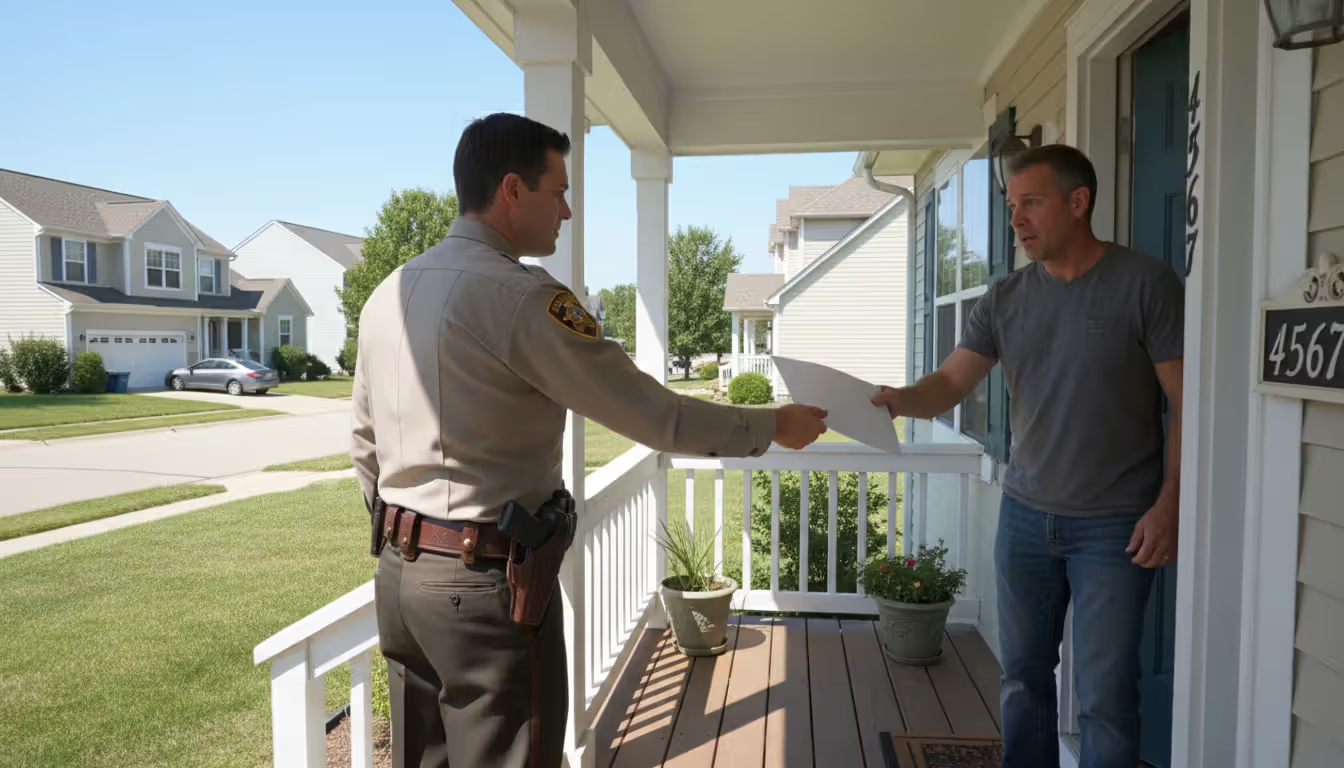
After filing, someone must physically hand your paperwork to the respondent. Can't skip this—it's a constitutional due process requirement. They need to know about the allegations and hearing date so they can defend themselves.
Sheriff's departments charge $40 to $75 typically. Private process servers run $75 to $150 or more. Why hire private? Speed, mostly. Sheriffs might take five days. Private servers sometimes complete service within hours.
But what if the person dodges service? Hides when they see the sheriff coming? Costs multiply fast. You might pay for three attempts at $50 each before succeeding. Some people hire specialized servers who stake out workplaces or use skip-tracing databases—figure $200 to $400 for those services.
When personal service proves impossible after multiple attempts, courts allow "substitute service"—leaving papers with someone at their home or workplace, then mailing copies. Sometimes you can post notice at their last address. Both methods require additional court filings, which might trigger more fees depending on your jurisdiction.
Attorney Fees and Legal Representation
You can absolutely file without a lawyer. Courts designed these forms for regular people. But representation increases your success rate significantly, especially if the other side shows up ready to fight.
Limited scope representation—paying an attorney to review your forms and coach you for one hour—might run $300 to $800. That's often enough for straightforward cases.
Full representation through a contested hearing? Expect $1,500 to $5,000 depending on your market. San Francisco or Manhattan attorneys charge $400+ per hour. Rural Kansas might be $175 per hour. Most restraining order hearings take four to eight hours of attorney time when you factor in preparation, travel, and court appearance.
Some lawyers offer unbundling—you pay $750 for them to appear at your hearing while you handle everything else yourself. That middle-ground approach gives you professional advocacy at the critical moment without paying for full representation.
Here's what matters: attorney fees dwarf all other expenses combined. A $100 filing fee pales next to $3,000 in legal bills. That's exactly why legal aid and pro bono programs focus on restraining order cases—the need is massive and the impact is immediate.
How to Get a Restraining Order for Free
Good news: financial obstacles shouldn't and don't have to block you from protection. Multiple systems exist to provide free access.
Fee waivers work in every state. You complete a form listing your income, assets, monthly bills, and dependents. Courts review this financial declaration and grant or deny your waiver. Simple as that.
Qualifying thresholds hover around 125% to 150% of federal poverty guidelines. For 2026, that's roughly $21,000 annually for a single person, $36,000 for a family of three. Some states set higher limits—200% of poverty in particularly generous jurisdictions.
Documentation requirements vary wildly. Some courts want two months of pay stubs plus your last tax return. Others accept your signed declaration without verification unless something seems fishy. Rural courts tend to trust applicants more than big-city systems dealing with fraud concerns.
Author: Dylan Fairmont;
Source: sbardellaorchards.com
Processing speed matters when you're scared. Most courts decide fee waiver requests same-day—sometimes within an hour. You submit your petition and fee waiver together, the clerk or judge reviews your income, and you walk out with approval (or denial). Occasionally courts need additional documentation and give you a week to provide it while granting a temporary waiver in the meantime.
Domestic violence cases get special treatment almost everywhere. Roughly 40 states eliminated all filing fees for protective orders involving intimate partner abuse, dating violence, or family violence. Texas, California, Florida, Pennsylvania, Illinois, Washington, Colorado—these states and many more charge zero dollars regardless of your income when domestic violence is involved.
Why this exception? Advocates convinced legislators that abusers often control household money, leaving victims literally unable to pay a $300 filing fee. Charging fees trapped people in dangerous situations. Eliminating fees saved lives. Pretty straightforward policy logic.
Legal aid organizations represent another path to free help. These nonprofits employ attorneys who handle cases at no cost for qualifying low-income clients. Eligibility requirements mirror fee waiver standards—usually 125% to 200% of poverty guidelines.
The catch? Legal aid groups face overwhelming demand. Many have waiting lists. But they prioritize restraining order cases, particularly domestic violence situations. Some legal aid offices operate same-day restraining order clinics where you can walk in and get help immediately.
Finding legal aid requires some homework. Start with your state bar association's website—they maintain referral lists. The National Domestic Violence Hotline (1-800-799-7233) can connect you to local programs. Court self-help centers keep updated resource lists too.
Victim advocates provide different but equally valuable assistance. These professionals don't practice law, so they can't give legal advice or represent you in court. But they'll help complete forms, explain procedures, accompany you to court, and connect you to resources. Services are free regardless of income.
Many courts now station victim advocates right in family law departments. You literally walk into the courthouse, ask for the restraining order clerk, and they direct you to an advocate who spends the next hour helping you. Domestic violence shelters also employ advocates who help whether or not you're staying at the shelter.
Law school clinics operate in most mid-sized and large cities. Students handle real cases under licensed attorney supervision. You get competent representation for free. Cases might move slightly slower because students are learning, but the supervision requirement ensures quality work. Search "[your city] law school legal clinic" to find options.
Who Pays for a Restraining Order
Standard rule: the person seeking protection pays all costs upfront. That's you if you're filing. You cover the filing fee, service charges, and your attorney if you hire one.
But courts can flip that script when they grant your order. Judges routinely include provisions requiring the restrained person to reimburse your expenses—filing fees, service costs, even attorney fees. This recognizes that their behavior created the need for legal protection in the first place.
Getting reimbursement ordered and actually collecting that money are entirely different challenges. Courts don't cut you a check. You must enforce the judgment through collection mechanisms—wage garnishment if they're employed, bank levies if they have accounts, property liens if they own real estate.
Many people never collect despite having court orders for reimbursement. The person might be unemployed, might hide assets, or might be judgment-proof (owning nothing that creditors can seize). Pursuing collection often costs more than it recovers, especially for amounts under $1,000.
Still, ask for reimbursement in your initial petition. Even if you never collect, the court order establishes that they bear financial responsibility. Sometimes that matters for related cases—divorce proceedings, custody battles, or criminal prosecution.
Restraining order violations carry separate financial consequences entirely. If someone violates your order, they face criminal charges. They'll pay for their own defense attorney, court fines, and any restitution ordered. Those violation-related costs don't affect your initial expenses, but they pile onto the consequences facing anyone who ignores the order.
Some jurisdictions let judges order ongoing expenses paid—your costs to relocate, change locks, install security cameras, or attend therapy. These provisions remain relatively rare and typically appear only in extreme cases involving serious threats or violence.
Step-by-Step Filing Process and Associated Costs
Knowing when expenses hit helps you prepare. Here's the typical timeline with costs attached at each stage.
Step 1: Grab the forms (Cost: $0). Visit the courthouse or download forms from your court's website. Takes 30 minutes. Most courts offer packets specifically for domestic violence, harassment, stalking, or workplace violence—grab the right one. Court self-help centers will review your situation and point you to the correct forms.
Step 2: Complete your petition (Cost: $0, but budget 2-4 hours). Fill out every blank. Write your factual statement describing what happened and why you need protection. Be specific—dates, times, exact threats or actions. This paperwork determines whether you get protection, so accuracy matters. Many people spend a whole evening on this step.
Step 3: File with the court (Cost: $0-$400). Hand your completed forms to the clerk. If requesting a fee waiver, submit that financial declaration simultaneously. Pay the filing fee if required and not waived. The clerk stamps your documents, assigns a case number, and sends your petition to a judge.
Step 4: Judge reviews for temporary order (Cost: $0, wait time: 1 hour to 1 day). A judge reads your petition and decides whether to issue an immediate temporary restraining order (TRO) based on the danger you've described. If granted, the TRO takes effect right then—before the other person even knows you filed. No extra fee for the TRO.
Author: Dylan Fairmont;
Source: sbardellaorchards.com
Step 5: Arrange service (Cost: $40-$100). The court schedules your full hearing (typically 10 to 21 days out) and you must arrange for the respondent to receive notice. Contact the sheriff or hire a process server. This must happen well before your hearing date—if service fails, your hearing gets postponed.
Step 6: Attend your hearing (Cost: $0 or $500-$2,000 for attorney representation). Both sides appear before the judge. You present your evidence—testimony, texts, photos, witnesses. They present their defense. The hearing lasts 15 minutes to 2 hours depending on complexity. Judge decides whether to grant a permanent order (lasting one to five years depending on state law).
Step 7: Receive your final order (Cost: $0). If granted, the judge issues the permanent restraining order. You receive certified copies to keep with you. The court enters the order into state and federal databases so law enforcement can see it if called. No additional fees.
Total timeline: one day to three weeks from walking into the courthouse to having your final order. Emergency situations compress faster—you can have a temporary order within hours.
Total cost range: $0 if you're broke and qualify for waivers, represent yourself, and everything goes smoothly. $40-$100 if you can't waive service fees. $500-$2,500 if hiring an attorney for the hearing. $3,000-$5,000+ if you need full representation through a contested case with complications.
Ways to Reduce Restraining Order Costs
We've seen tremendous progress eliminating filing fees for domestic violence protective orders across most states, which represents a real victory for access to justice.But survivors still face significant hidden costs that fee waivers don't address—missing two days of work for court appearances, gas money for multiple trips to the courthouse, childcare while attending hearings, even relocation expenses after obtaining an order. One client recently told me the $0 filing fee was great, but missing work cost her $400 in lost wages and nearly got her fired. Our comprehensive support programs now address these broader economic barriers because courtroom access alone isn't enough to ensure safety
— Jennifer Martinez
Even without qualifying for complete fee waivers, you can significantly cut expenses through smart strategies.
Represent yourself and you've eliminated the biggest cost—attorney fees. Courts specifically designed restraining order procedures for non-lawyers. Forms use plain language. Instructions walk you through each section. Millions of people obtain protection orders every year without lawyers.
Self-help centers exist in most courthouses now. Staff (sometimes attorneys, sometimes trained clerks) review your paperwork, explain procedures, and answer questions. They can't represent you or give legal advice, but they'll tell you if you've completed forms incorrectly or missed required information. Free service, no appointment needed in most locations.
Pro bono programs connect you with volunteer attorneys handling cases without charge. Every state bar association operates pro bono initiatives. Many private law firms require attorneys to take pro bono cases annually. Domestic violence situations typically jump to the front of pro bono waiting lists.
Finding pro bono help requires persistence. Contact your county bar association's pro bono coordinator. Call legal aid offices even if you're slightly over their income limits—they maintain pro bono referral lists. Some courts host pro bono clinics on specific days where volunteer attorneys provide immediate help.
Nonprofit organizations beyond legal aid also assist with restraining orders. Domestic violence agencies, women's law centers, immigrant rights groups, LGBTQ+ legal services—many organizations handle protective orders within their focus areas. Services might be completely free or offered on sliding-scale fees based on income.
Some attorneys offer payment plans instead of requiring full fees upfront. Rather than paying $1,500 before your hearing, you might arrange $500 down and $200 monthly for five months. Not every lawyer offers this, but it's worth asking. Attorneys handling restraining orders understand that clients often face financial constraints due to the circumstances that necessitated filing.
Partial fee waivers exist in certain jurisdictions for people whose income sits just above waiver thresholds. Maybe you make $24,000 annually—too much to qualify for a full waiver but not exactly rolling in cash. Some courts offer reduced fees—pay $75 instead of $300. You won't know unless you ask the clerk whether partial waivers are possible in your court.
Sheriff service versus private process servers saves $30 to $80. Yes, private servers might complete service faster. But sheriffs provide legally valid service at lower cost. Unless you face a deadline crunch or the person has proven especially evasive, stick with sheriff service and pocket the difference.
Author: Dylan Fairmont;
Source: sbardellaorchards.com
Skip the attorney for simple, uncontested cases. If you're filing against someone who probably won't show up to contest your order, and your situation involves clear-cut harassment or threats, representing yourself makes financial sense. Save legal representation for complex cases—contested hearings, situations involving child custody, cases where you'll face a lawyer on the other side.
Restraining Order Filing Fees by State
State
Standard Filing Fee
Fee Waiver Available
Domestic Violence Policy
California
$0 for DV orders, $435 for civil harassment
Yes, for those who qualify
Eliminated fees for domestic violence orders
Texas
$0
Yes
No fees charged for family violence protective orders
Florida
$0
Yes
Free filing for domestic violence injunctions
New York
$0-$45 depending on order type
Yes
Family offense petitions carry no fees
Pennsylvania
$0
Yes
Protection from Abuse orders are free
Illinois
$0
Yes
All protective order types eliminated fees
Ohio
$0-$80 depending on county
Yes
Varies by local court
Georgia
$0-$80
Yes
Family violence petitions waived statewide
North Carolina
$0
Yes
Domestic violence protective orders are free
Michigan
$0-$50
Yes
Personal protection orders waived in many counties
Arizona
$0-$100
Yes
Orders of protection carry no fees
Massachusetts
$0-$40
Yes
Abuse prevention orders waived
Washington
$0
Yes
Domestic violence orders eliminated fees
Colorado
$0-$97
Yes
Protection orders are free
Alabama
$150
Yes
Fee waivers granted based on income
Louisiana
$0-$150 depending on parish
Yes
Local policies vary significantly
South Carolina
$0-$25
Yes
Domestic violence orders waived
Kentucky
$0
Yes
Domestic violence protective orders free
Oregon
$0
Yes
Restraining orders carry no fees
Nevada
$0-$100
Yes
Domestic violence protective orders waived
Current as of 2026. Always verify exact amounts with your local courthouse since county-level policies affect actual costs.
Frequently Asked Questions About Restraining Order Costs
Can I get a restraining order without paying?
Absolutely, through three main pathways. First, many states eliminated filing fees entirely for domestic violence protective orders—you pay nothing regardless of your income. Second, fee waivers cover all costs if you're low-income, typically qualifying when you earn less than 125-150% of poverty guidelines (around $21,000 for individuals, $36,000 for small families). Third, legal aid organizations and pro bono programs provide free attorney representation if you meet their income requirements. I'd estimate 60-70% of restraining orders get filed without the petitioner paying anything out of pocket.
What happens if I can't afford the filing fee?
Fill out a fee waiver application the same day you file your restraining order petition. This financial declaration asks about your income, assets, bills, and household size. Most courts decide these applications within an hour or two, letting you proceed immediately if approved. Bring documentation—recent pay stubs, benefit statements, or your last tax return—though some courts accept your sworn statement without verification. If your waiver gets denied but you genuinely can't afford the fee, ask the clerk about payment plans or partial waivers. Courts have mechanisms to prevent fees from blocking access to protection.
Does the abuser have to pay my legal costs?
Sometimes, but collecting is another story. When judges grant restraining orders, they can order the respondent to reimburse your filing fees, service costs, and attorney fees. You must specifically request this in your initial petition. Even with a court order requiring payment, you're responsible for collecting—the court won't automatically transfer money to you. Many respondents lack income or assets worth pursuing. Others drag out collection through appeals or hiding assets. Request reimbursement, but don't count on receiving it when budgeting for your case.
How long does a fee waiver take to process?
Usually same-day, often within one to two hours. You submit your restraining order petition and fee waiver application together. A clerk or judge reviews your financial information and either approves or denies the waiver before you leave the courthouse. This quick processing recognizes the urgent nature of restraining orders—you need protection now, not after bureaucratic delays. Rarely, courts request additional documentation and grant temporary waivers while you gather the required papers. Processing might extend to several days only in unusual circumstances involving complex financial situations.
Are restraining orders free in domestic violence cases?
In about 40 states, yes—filing fees have been eliminated entirely for domestic violence protective orders. California, Texas, Florida, Pennsylvania, Illinois, New York, Washington, Colorado, Michigan, and Oregon are among states charging zero dollars for domestic violence orders regardless of your income level. Some states still charge fees but process waivers quickly. Even in fee-charging states, domestic violence cases receive priority for waivers. You might still pay for service of process ($40-$100) unless your fee waiver covers that expense too. Attorney fees remain separate—you'd need legal aid or pro bono services for free representation.
Can filing fees be refunded if the order is denied?
No, filing fees are non-refundable regardless of outcome. The fee covers administrative costs—processing paperwork, scheduling hearings, judge time reviewing your petition, maintaining case files. Courts incur these expenses whether your petition succeeds or fails. Even if denial results from procedural problems rather than the merits of your case, you won't get money back. This standard policy applies across civil court proceedings, not just restraining orders. It's one more reason to pursue fee waivers if finances are tight—you're not risking money on an uncertain outcome if you've paid nothing to begin with.
Restraining orders cost anywhere from absolutely nothing to several thousand dollars. Where you land depends on your state's policies, your income level, and whether you hire legal representation. Most people filing for domestic violence protection pay zero dollars thanks to eliminated fees and waiver programs.
Money shouldn't prevent you from getting protection—full stop. Too many systems exist specifically to eliminate financial barriers. Fee waivers cover court costs for low-income filers. Legal aid provides free attorneys to qualifying individuals. Pro bono programs connect you with volunteer lawyers. Victim advocates help navigate the process without charging a dime.
If you're sitting there worried about whether you can afford a restraining order, stop calculating and start calling. Contact your local courthouse and ask about fee waivers. Reach out to domestic violence organizations in your area. Call your county bar association's pro bono coordinator. These resources exist for exactly your situation.
Your physical safety carries more value than any filing fee or attorney bill. Courts recognize this, which is why they've built numerous pathways around financial obstacles. Use them. Protection is available regardless of what's in your bank account.
Need immediate help? National Domestic Violence Hotline: 1-800-799-7233. They'll connect you to local resources that can assist with restraining orders and related safety planning—all free, all confidential.
A Protection From Abuse order is a civil court order protecting individuals from domestic violence and abuse by someone with whom they share a specific relationship. Understanding how to obtain a PFA, what happens during hearings, and the consequences of violations can help you take the first step toward safety
A no contact order can reshape daily life by restricting communication and proximity. This guide explains how these court-issued directives work in criminal prosecutions and divorce cases, the consequences of violations, and the critical differences from restraining orders
Medical neglect occurs when parents fail to provide necessary healthcare, causing serious harm to children. This comprehensive guide explains recognition signs, legal definitions, investigation processes, and reporting requirements to protect vulnerable children
California Penal Code 273.5 addresses inflicting corporal injury on a spouse or cohabitant, carrying significantly harsher penalties than simple battery. Understanding the legal definition, required elements, and differences from related charges matters for anyone navigating domestic violence accusations
The content on this website is provided for general informational and educational purposes only. It is intended to explain concepts related to family law, divorce, custody, child support, and related legal matters.
All information on this website, including articles, guides, and examples, is presented for general educational purposes. Legal processes may vary depending on jurisdiction, personal circumstances, and applicable laws.
This website does not provide legal advice, and the information presented should not be used as a substitute for consultation with qualified family law attorneys or legal professionals.
The website and its authors are not responsible for any errors or omissions, or for any outcomes resulting from decisions made based on the information provided on this website.