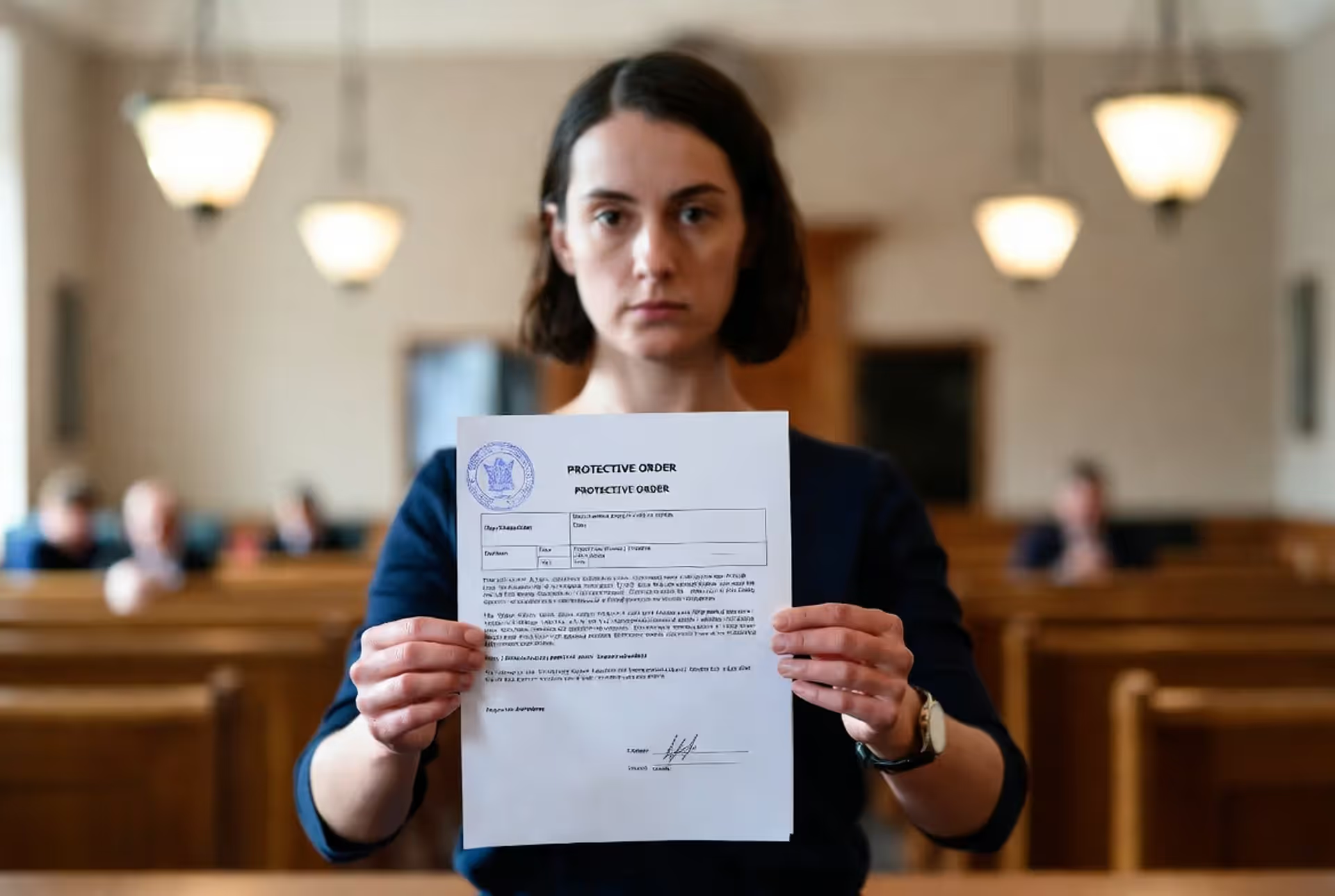
Your ex keeps showing up at your job. Your partner's threats are escalating. A family member won't stop harassing you despite your pleas. In situations like these, a Domestic Violence Protective Order—commonly shortened to DVPO—gives you legal recourse. Think of it as a court-mandated boundary that carries real teeth: violate it, and the consequences range from arrest to jail time.
But here's what many people don't realize: getting a DVPO isn't as complicated as it sounds, and you don't need a lawyer to start the process. Let's break down exactly what these orders do, how they differ from other protective measures, and what you can expect from filing through enforcement.
What Is a DVPO and When Is It Used?
A DVPO is essentially a civil court directive that tells an abuser to stay away from you and stop specific harmful behaviors. Unlike criminal charges that punish someone for what they've already done, protective orders focus on preventing what might happen next.
So what is DVPO authority actually capable of? Once a judge signs off, the order can:
Ban all communication—calls, texts, emails, even messages passed through mutual friends
Require the abuser to maintain physical distance from your home, job, your kids' school, or other places you frequent
Force them to move out of a shared living space
Mandate they turn over any firearms to law enforcement
Stop them from posting about you on social media or other indirect harassment
The domestic violence protective order meaning gets specific about who qualifies for this protection. You'll typically meet the criteria if the person harming you is:
Someone you're married to now or were married to previously
A current or former live-in partner (you shared a home at some point)
The other parent of your child, even if you never married or lived together
A blood relative or someone related through marriage
Someone you've dated or had a romantic relationship with
Now here's something important: courts define abuse more broadly than just getting hit. You might qualify based on:
Physical attacks or attempts to cause bodily harm
Sexual assault or coercion
Threats that make you genuinely afraid for your safety
Stalking behaviors—following you, showing up unannounced repeatedly
Harassment that creates fear of imminent physical harm
Destroying your property specifically to scare or control you
Who can actually file? In most jurisdictions, the victim files directly. Parents or legal guardians can file on behalf of children. Some states let adult household members petition for elderly or disabled relatives who can't file themselves. Occasionally, prosecutors will file when a victim is unable to do so due to incapacity or extreme fear.
Real-world scenarios that warrant filing include: your boyfriend shoved you during an argument last week and yesterday punched a hole in your wall while screaming threats; your ex-girlfriend has sent 47 text messages in two days demanding to know where you are and threatening to "make you sorry"; your roommate threw a glass at your head, and you've documented three similar incidents in the past month; or your estranged spouse has shown up at your office five times despite you asking them to stop.
Author: Natalie Brookstone;
Source: sbardellaorchards.com
DVPO vs Restraining Order: Key Differences
People mix up these terms constantly, and honestly? It's understandable given how states use different labels for similar protections.
Here's the practical distinction: DVPOs target abuse within intimate or family relationships—the categories we just covered. Regular restraining orders (sometimes called civil harassment orders) handle threats from people outside those domestic connections: neighbors, coworkers, acquaintances, or complete strangers.
The legal foundation differs too. Domestic violence laws acknowledge that abuse between intimate partners or family members creates unique dangers—patterns of control, financial entanglement, shared children, and statistically higher risks of escalating violence. These laws often provide stronger protections and faster court processes. General harassment statutes just address threatening behavior without those relationship-specific considerations.
Duration varies by order type and state. Emergency DVPOs usually hold for 10-14 days until your full hearing. Final orders commonly last one or two years, though states like California allow up to five years, and some jurisdictions grant permanent orders when violence was particularly severe. Standard restraining orders might run six months to three years depending on circumstances and state law.
Here's where it gets confusing: what North Carolina calls a DVPO, California labels a Domestic Violence Restraining Order (DVRO). Pennsylvania uses Protection From Abuse (PFA) order. Illinois says Order of Protection. Different names, same basic function—legally mandated separation from an abuser.
One crucial difference affects your immediate safety: break a DVPO, and police can typically arrest the violator on the spot without needing a warrant. That's not always true for general restraining orders, where you might need to go back to court and file contempt motions before enforcement kicks in (though this varies—some states treat all protective order violations as arrestable offenses).
How to File a DVPO: Step-by-Step Process
You don't need thousands of dollars or a law degree to get a protective order. The DVPO process is designed for people representing themselves, though having help certainly doesn't hurt.
Step 1: Confirm You Meet the Requirements
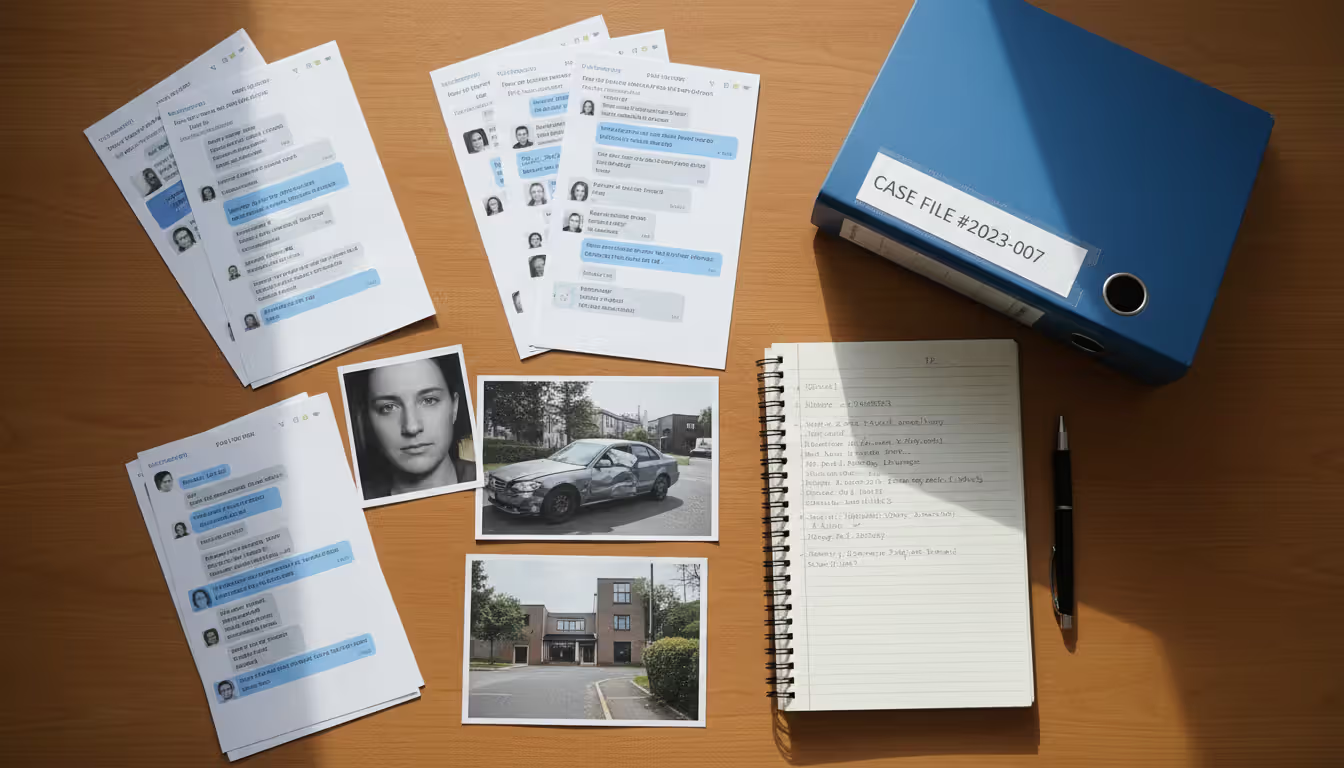
DVPO requirements boil down to two things: you have a qualifying relationship with the abuser (covered earlier), and you've experienced abuse under your state's definition. Before heading to court, gather documentation. You're building a record:
Dates and times of specific incidents (even approximate dates help)
Photos of injuries, property damage, or threatening messages
Screenshots of harassing texts, emails, or social media posts
Medical records if you sought treatment
Police reports from previous incidents
Names and contact information for anyone who witnessed the abuse
Don't panic if you lack "perfect" evidence. Your testimony alone can suffice. But documentation strengthens your case considerably.
Author: Natalie Brookstone;
Source: sbardellaorchards.com
Step 2: Find the Right Courthouse
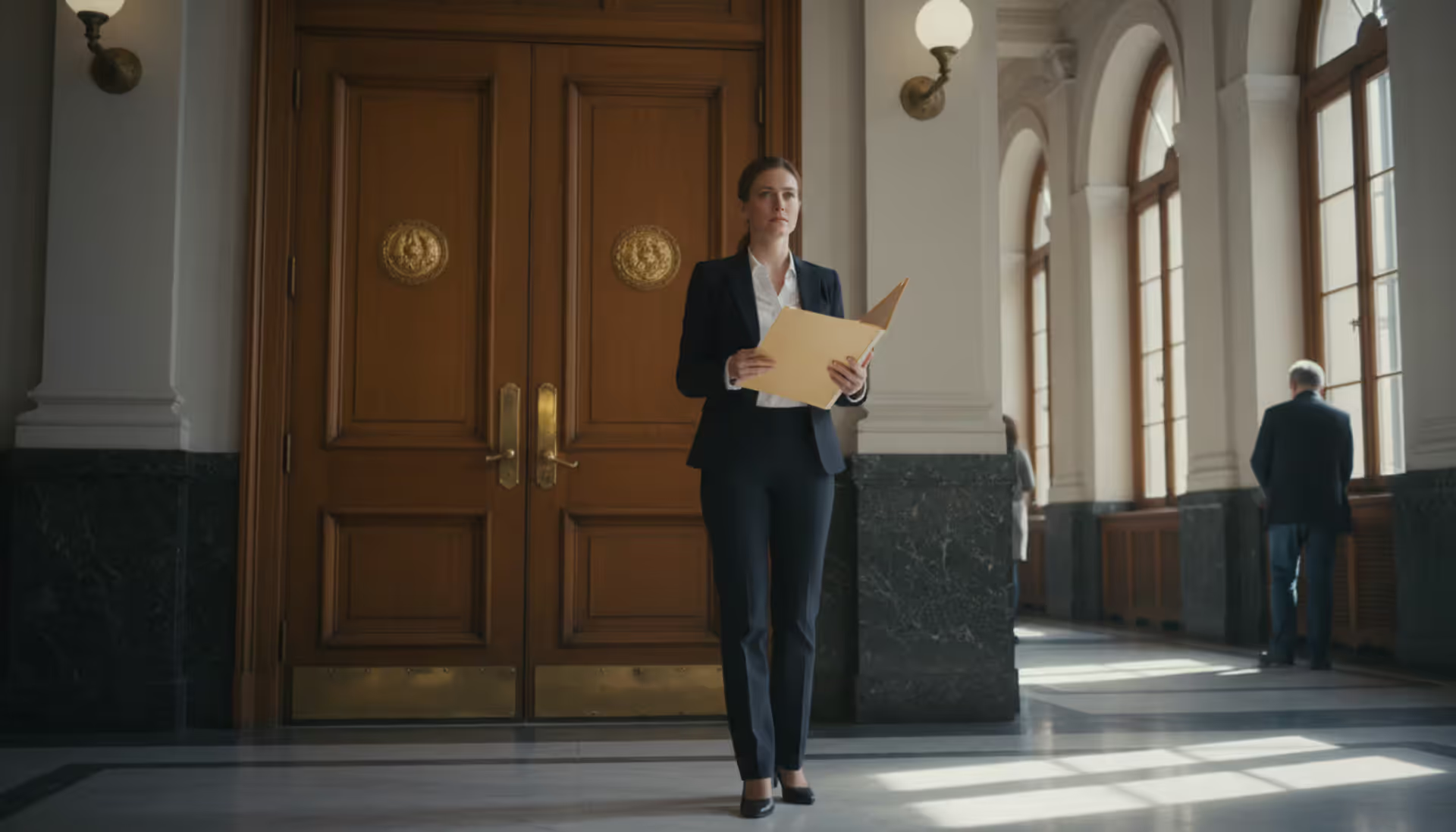
File in the county where you currently live, where the abuser lives, or where the abuse happened. Most courthouses now have dedicated family violence divisions or at least staff who regularly handle these cases. Call ahead or check the court's website—many provide specific instructions for DVPO filings.
Victim advocates are often available at courthouses during business hours. These advocates can walk you through paperwork, explain what to expect, and sometimes accompany you into the courtroom. Their services cost nothing.
Step 3: Fill Out the Paperwork
The petition form asks for detailed information. Be specific rather than vague. Compare these approaches:
Vague: "He's abusive and scares me."
Specific: "On January 15, 2026, after I said I wanted to end the relationship, he grabbed my arm, twisted it behind my back, and said, 'You're not going anywhere.' I had bruises on my upper arm for a week. On February 3, 2026, he sent 23 text messages between 11 PM and 2 AM saying he was watching my house and I'd 'regret leaving him.'"
See the difference? Dates, direct quotes, observable facts. That's what judges need.
You'll also indicate what protections you're requesting: no contact, stay-away provisions for specific locations, custody provisions if children are involved, firearm surrender, or residence exclusion.
Additional forms might include confidential address sheets (protecting your location from court records the abuser can access) and firearms prohibition orders.
Step 4: Submit Your Petition
Hand your completed forms to the court clerk. Filing fees exist in some states—typically $100-$150—but fee waivers are standard for domestic violence cases. Most jurisdictions charge nothing for DVPO filings.
A judge will review your petition that same day in most courts. If you've shown immediate danger exists, the judge can issue a temporary (ex parte) order without the abuser being present or even knowing you filed. This emergency order takes effect immediately and stays active until your full hearing, usually scheduled 10-14 days out.
Step 5: Get the Respondent Served
Legal service means officially delivering the court papers to the abuser. You cannot do this yourself. Ever. Either law enforcement serves them, or you hire a professional process server (costs vary, typically $50-$100, though some jurisdictions provide free service for protective orders).
Until the abuser receives these papers, the temporary order might not be fully enforceable in some states. Other states enforce it immediately upon issuance, even before service. Check your local rules.
Step 6: Prepare for Your Hearing Date
The countdown starts once you've filed. Use those 10-14 days to:
Organize all evidence chronologically
Write an outline of what you'll tell the judge
Line up witnesses if you have any
Consider consulting with a domestic violence attorney (many organizations provide free representation)
Create a safety plan in case the abuser contacts you despite the temporary order
Common mistakes sabotage cases before they start. Avoid these: giving general statements without specific examples; forgetting to request important provisions like custody modifications; skipping your hearing (automatic dismissal in most courts); and letting the abuser pressure you into dismissing the order before the hearing.
What Happens at a DVPO Hearing
Walking into court feels intimidating. Knowing what's coming reduces that anxiety.
Temporary vs. Final Hearings
The temporary hearing happened when you filed (or shortly after). A judge looked at your written petition, saw evidence of danger, and issued an immediate short-term order. You might not have even appeared in person for that step.
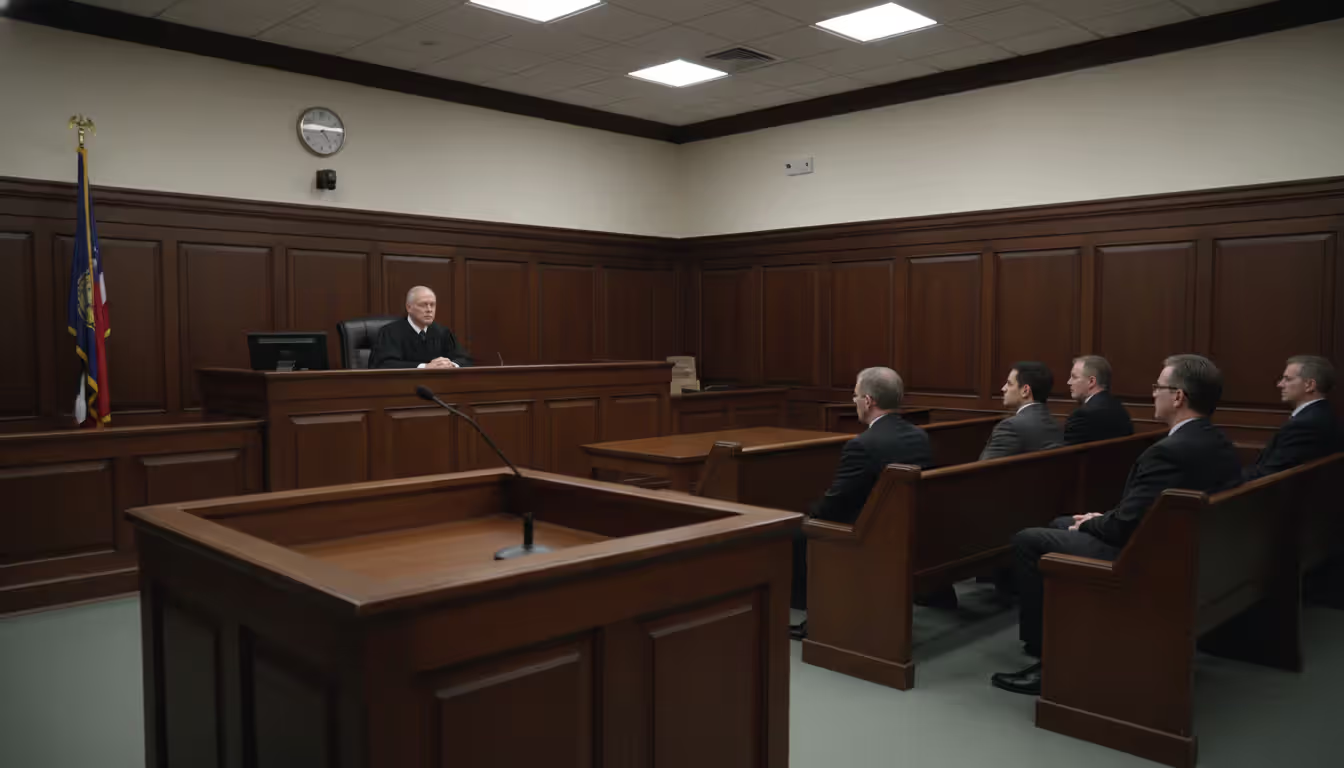
The final hearing is different. Both sides attend. You'll testify, the respondent can respond, and the judge weighs everything before deciding whether to issue a long-term final order. This hearing determines whether the protection continues or expires.
Courtroom Expectations
Show up at least 20 minutes early. Bring three copies of everything: your evidence, witness statements, medical records, photos, message screenshots. One for you, one for the judge, one for the respondent or their attorney.
Dress like you're going to a job interview. Turn your phone completely off—not on silent, off. Courts take disruptions seriously.
The judge will call your case. You'll take the witness stand and swear to tell the truth. Then you'll explain why you need protection. Stick to chronological facts. "On this date, this happened. Then on this date, this happened." Direct, clear, factual.
Expect questions from the judge. Answer what's asked—don't ramble or editorialize. If the respondent has an attorney, they'll cross-examine you. Stay calm. Answer truthfully. If you don't remember something exactly, say so rather than guessing.
Your witnesses testify next if you brought any. Effective witnesses saw the abuse, heard threats, or documented your injuries. Witnesses who merely say "they seemed like a nice couple" or "I never saw anything" don't help your case.
Evidence That Matters
Courts use the "preponderance of evidence" standard for DVPOs. That means you need to prove it's more likely than not that abuse occurred—basically a 51% threshold. Criminal cases require proof "beyond reasonable doubt" (more like 95% certainty), so the bar here is significantly lower.
Strong evidence includes:
Photos of injuries with visible timestamps or metadata
Medical records explicitly noting injuries consistent with abuse
Testimony from witnesses who directly observed incidents
Your own detailed, consistent account matching documentation
Judges look for patterns, not just single events. One argument probably won't justify a multi-year protective order. But repeated incidents showing escalation? Ongoing threats despite being asked to stop? A history of increasing violence? That's what convinces judges you need protection.
Whether You Need an Attorney
Plenty of people successfully obtain DVPOs without lawyers. Courts accommodate self-represented litigants in these proceedings. But legal representation absolutely helps, especially if the respondent shows up with an attorney.
Lawyers help by preparing you for difficult cross-examination questions, objecting when the other side violates court rules, presenting your evidence persuasively, ensuring your final order includes all necessary provisions, and addressing complicated issues like property division or custody modifications.
Finding affordable help: many domestic violence shelters and advocacy organizations connect victims with volunteer attorneys. Legal aid societies serve low-income individuals. Some bar associations run pro bono programs specifically for domestic violence victims.
How Judges Decide
Three main factors drive decisions: Did abuse occur as defined by state law? Does credible evidence support the petitioner's claims? Is future abuse likely without court intervention?
Credibility matters enormously. Does your timeline stay consistent under questioning? Does your evidence corroborate what you're saying? Do your witnesses' accounts align with yours? Conversely, does the respondent's explanation seem plausible or implausible?
If the judge grants your petition, the final DVPO typically lasts one to two years (state-dependent). The order specifies exactly what's prohibited: contact restrictions, distance requirements, firearm surrender, custody provisions, whatever the judge determines necessary for your safety.
Denial doesn't necessarily mean the judge disbelieved you. Sometimes the evidence doesn't quite meet legal standards, or the incidents fall outside statutory definitions. You can appeal, or file again if new abuse occurs.
A protective order often marks the first real boundary a victim has been able to enforce in months or years. Beyond the legal protections—and those matter tremendously—victims tell me they finally feel like someone with authority acknowledged the abuse was real and unacceptable. That validation shouldn't be underestimated as part of the healing process
— Sarah Mitchell
DVPO Enforcement and Violation Consequences
A protective order sitting in a drawer does nothing. Enforcement determines whether it actually protects you.
How Police Enforce These Orders
Once issued and served, your DVPO enters law enforcement databases nationwide. Any officer anywhere can pull it up during traffic stops, welfare checks, or emergency calls.
The abuser violates your order? Call 911 immediately. In most jurisdictions, police can arrest protective order violators without obtaining a warrant first—a significant enforcement advantage. Officers should treat violations seriously, though responses vary depending on department training and individual officer attitudes.
Always carry a certified copy of your order. Despite electronic databases, having paper proof prevents delays if systems are down or if you're traveling and local officers aren't familiar with out-of-state orders.
What Counts as Violation
Violations include anything your order prohibits:
Direct contact through any medium—calls, texts, emails, social media messages, letters, showing up in person
Contact through intermediaries—asking friends or family to pass messages
Coming within the prohibited distance of protected locations
Indirect harassment like posting about you on social media or repeatedly driving past your home
Failing to surrender firearms within the court-mandated timeframe
Violating custody or visitation terms the order specifies
Here's something crucial: even if you initiate contact or tell the abuser it's okay to reach out, they're still violating the order if they respond. Courts recognize that abuse victims often face intense pressure to reconcile or fear retaliation for maintaining boundaries. The order protects you even from yourself in weak moments.
Criminal vs. Civil Consequences
DVPO violations typically trigger criminal contempt charges with consequences including:
Immediate arrest and detention (48 hours to one year depending on state law and violation severity)
Fines ranging from $500 to $5,000 or higher
Automatic extension of your protective order
Additional criminal charges if the violation involved assault, stalking, trespassing, or other crimes
Probation with strict monitoring conditions
First violations might result in lighter sentences—maybe a weekend in jail or probation. But repeated violations escalate consequences dramatically. Some states charge each violation separately, so 15 prohibited text messages could mean 15 distinct criminal charges.
Civil contempt remains an option too, where judges order violators to comply going forward or face sanctions. This approach focuses on future compliance rather than punishing past behavior, though both can happen simultaneously.
Documenting and Reporting Violations
Keep evidence of every violation:
Screenshot messages with timestamps visible
Save voicemails
Note dates, times, and locations of in-person contact
Photograph the abuser's car if they're parked near your home
Collect statements from witnesses who observed violations
Report violations immediately, even "small" ones. A pattern of minor violations often precedes serious violence. Plus, documentation creates a record if you later need to request an extension or seek stronger protections.
If police decline to arrest or seem dismissive, request a supervisor's name and badge number. Contact the prosecutor's office handling domestic violence cases. Reach out to victim advocates who can apply pressure on law enforcement to do their jobs.
Author: Natalie Brookstone;
Source: sbardellaorchards.com
How Violations Affect the Violator Long-Term
DVPO violation convictions create permanent criminal records appearing in background checks. This affects:
Employment, especially jobs requiring security clearances, working with vulnerable populations, or professional licenses
Housing applications (landlords frequently deny applicants with domestic violence records)
Immigration status—non-citizens face deportation for protective order violations
Child custody proceedings (courts view violations as evidence of disrespect for authority and inability to control behavior)
Future legal proceedings of any type
Federal law separately prohibits firearm possession by anyone subject to qualifying protective orders. Violating this federal restriction carries up to 10 years in federal prison, distinct from state-level penalties for violating the order itself.
How a DVPO Affects Child Custody and Visitation
Kids complicate everything, including protective orders. Courts walk a fine line between protecting children and preserving parental relationships when safe to do so.
Effects on Current Custody Arrangements
Existing custody orders don't automatically override DVPOs. When you obtain a protective order, judges can modify custody terms, especially if:
The abuse happened where children could see or hear it
The child was directly harmed or threatened
The abuser used the child as a tool to harass or control you (interrogating them, sending messages through them, threatening to take them)
Unsupervised contact between abuser and child creates danger
Courts increasingly recognize that kids witnessing domestic violence suffer psychological harm even if they're never physically touched. Some states explicitly define exposure to intimate partner violence as a form of child abuse.
The DVPO doesn't terminate parental rights—that's a separate, much higher legal standard. But it absolutely can restrict when, where, and how the abusive parent sees their children.
Supervised Visitation Requirements
Rather than cutting off contact completely, judges often order supervised visits. The abusive parent sees the children only with a neutral third party present—either a professional supervisor at a visitation center (costs typically $30-$50 per hour, sometimes paid by the abusive parent) or a court-approved family member.
Supervision serves multiple purposes: ensuring children's physical safety, preventing the abusive parent from grilling kids about your life, stopping attempts to manipulate children, and documenting any concerning behavior.
Exchanges can also be supervised. Drop-offs and pick-ups happen at police stations, fire departments, or other neutral public locations to prevent any contact between you and the abuser.
Changing Parenting Time Over Time
The abusive parent might eventually request more custody or unsupervised time. Judges consider:
Completion of court-ordered batterer intervention programs (usually 26-52 weeks long)
Length of time since the last incident
Evidence of genuinely changed behavior versus just completing classes
The child's preferences if old enough (typically 12+)
Any new incidents, violations, or concerning behavior
Completing a few anger management classes isn't enough. Courts look for sustained behavior change over substantial time periods—usually at least a year, often longer. Even then, judges move slowly toward unsupervised contact.
Long-Term Custody Implications
When determining permanent custody, domestic violence weighs heavily. Most states mandate that judges consider domestic violence history when making custody decisions. The abusive parent may receive:
Significantly less parenting time than they'd otherwise get
No overnight visits, or very limited ones
Continued supervised visitation indefinitely
Requirements to complete treatment before any increased time
Limited or no decision-making authority about medical care, education, religion, or other major choices
Severe cases involving serious violence, sexual abuse, or ongoing danger may result in sole custody to the protective parent with minimal or no visitation for the abusive parent.
The DVPO and child custody impact reaches beyond safety logistics. Orders often require the abusive parent to pay for therapy addressing trauma their behavior caused. Courts may prohibit introducing children to new romantic partners, require sobriety during parenting time, or impose other conditions addressing the specific danger that parent poses.
Frequently Asked Questions About DVPOs
How long does a DVPO remain in effect?
Temporary orders issued at filing last 10-14 days until your full hearing. Final orders vary by state—commonly one to two years, though some jurisdictions allow up to five years or even permanent orders in severe cases. You'll need to request an extension by filing a renewal petition before your current order expires if you still need protection. The order stays enforceable right up until its expiration date unless a judge dismisses it sooner.
What costs are involved in obtaining a DVPO?
The petition itself is free in most states. Jurisdictions that normally charge filing fees ($50-$150) typically waive them for domestic violence protective orders. Additional possible costs: service fees if law enforcement doesn't serve papers for free ($30-$75 for a process server), attorney fees if you choose legal representation (though many domestic violence organizations provide free lawyers), and certified copies of your order ($5-$20). Overall, many people pay nothing or very little to obtain protection.
Can I dismiss or modify my protective order later?
Yes, but you can't just ignore it or privately tell the abuser it's okay to contact you. If you want the order dismissed, you must file a motion with the court—only a judge can terminate it. Courts sometimes hesitate to dismiss orders quickly, particularly when violence was severe, because judges understand abusers often pressure victims to drop protection. If the respondent wants modifications, they file a motion proving changed circumstances. Never violate your own order by initiating contact, as this complicates enforcement and can hurt your credibility in custody proceedings.
Will my DVPO work if I move to another state?
Absolutely. Federal law (the Violence Against Women Act) requires every state to recognize and enforce protective orders issued anywhere in the United States. Move from North Carolina to Oregon? Your order travels with you and Oregon police must enforce it. That said, register your order with local law enforcement in your new location so it's in their system. Carry a certified copy when traveling. If violations occur in a different state, local police can arrest the violator just as they would for orders issued by their own courts.
How does having a DVPO affect my employment or housing?
For you as the protected person, a DVPO typically doesn't harm employment or housing prospects—it's a protective measure, not a criminal conviction or any reflection on your character. You might want to inform your employer about the order so they can help enforce workplace stay-away provisions and alert security if the abuser appears. For the respondent (the abuser), consequences can be substantial. Protective orders show up in background checks, potentially affecting employment in fields requiring security clearances, professional licenses, or work with vulnerable populations. Landlords may deny applications. The order becomes part of their record that follows them indefinitely.
What are the firearm restrictions when a DVPO is issued?
Federal law prohibits anyone subject to qualifying domestic violence protective orders from possessing firearms or ammunition. When your final DVPO is issued, the court typically orders immediate surrender—usually within 24 to 48 hours. The respondent must turn all guns over to law enforcement or a licensed firearms dealer. Some states permit transfer to a third party for safekeeping, but the respondent cannot have any access. Failing to surrender firearms violates federal law and carries up to 10 years in federal prison as a separate offense beyond state-level penalties for violating the protective order. This restriction lasts as long as the order remains active and can extend beyond it if the person later gets convicted of domestic violence.
DVPOs provide critical legal protection, creating enforceable boundaries backed by arrest authority and criminal penalties. Understanding what a domestic violence protective order means, how it differs from other restraining orders, and what to expect from the filing process through enforcement gives you power to act when facing abuse.
The process from filing to final hearing to enforcement can feel overwhelming, but you're not navigating it alone. Domestic violence advocates exist specifically to help people through these steps. Legal aid organizations provide free representation. Court staff can answer procedural questions. Many communities have comprehensive support services—shelters, counseling, safety planning assistance—all at no cost.
Remember that a protective order, while powerful, is one tool in a larger safety strategy. Developing a comprehensive safety plan, connecting with support services, documenting everything, and sometimes relocating all contribute to long-term safety beyond what any court order can provide alone.
Violations carry real consequences when reported, and courts take enforcement seriously—but only if you document breaches and report them promptly. If you're in immediate danger right now, call 911. If you're weighing whether a DVPO fits your situation, contact your local domestic violence hotline (the Natio
A Protection From Abuse order is a civil court order protecting individuals from domestic violence and abuse by someone with whom they share a specific relationship. Understanding how to obtain a PFA, what happens during hearings, and the consequences of violations can help you take the first step toward safety
A no contact order can reshape daily life by restricting communication and proximity. This guide explains how these court-issued directives work in criminal prosecutions and divorce cases, the consequences of violations, and the critical differences from restraining orders
Medical neglect occurs when parents fail to provide necessary healthcare, causing serious harm to children. This comprehensive guide explains recognition signs, legal definitions, investigation processes, and reporting requirements to protect vulnerable children
California Penal Code 273.5 addresses inflicting corporal injury on a spouse or cohabitant, carrying significantly harsher penalties than simple battery. Understanding the legal definition, required elements, and differences from related charges matters for anyone navigating domestic violence accusations
The content on this website is provided for general informational and educational purposes only. It is intended to explain concepts related to family law, divorce, custody, child support, and related legal matters.
All information on this website, including articles, guides, and examples, is presented for general educational purposes. Legal processes may vary depending on jurisdiction, personal circumstances, and applicable laws.
This website does not provide legal advice, and the information presented should not be used as a substitute for consultation with qualified family law attorneys or legal professionals.
The website and its authors are not responsible for any errors or omissions, or for any outcomes resulting from decisions made based on the information provided on this website.