Over 10 million Americans face domestic violence every year. When someone close to you—a partner, spouse, or family member—becomes dangerous, the court system offers restraining orders as protection. I know navigating courts feels overwhelming when you're already dealing with trauma and fear, but the process is more accessible than you might think. Most people secure these orders without hiring lawyers. Let me walk you through everything.
What Is a Domestic Violence Restraining Order?
A domestic violence restraining order works like legally enforceable boundaries between you and someone who's harmed you. It's a civil court document—different from criminal charges—that tells the dangerous person (legally called the "respondent") what they absolutely cannot do. Break these rules, and police can arrest them immediately.
These court orders accomplish real, enforceable separation. The respondent can't call, text, email, message you on social media, or have friends contact you on their behalf. They must maintain specific physical distance from you—usually 50 to 100 yards, though judges set the exact number. This protection bubble extends everywhere: your home, workplace, car, and places your kids go like school or daycare.
Restraining orders often include provisions beyond just distance. Judges routinely: - Kick the abuser out of your shared residence, even if they're on the lease or deed - Award you temporary child custody - Force them to hand over any guns they own - Make them pay temporary child or spousal support - Block them from selling property you own together - Decide who pays which shared debts
Restraining Order vs Protective Order: Understanding the Terms
The terminology here trips up almost everyone. "Restraining order," "protective order," and "order of protection" describe the identical legal tool—just different names that vary by state. California, Washington, and several others say "restraining order." Texas, Colorado, and Illinois typically use "protective order." New York and various Eastern states prefer "order of protection."
Whatever your state calls it, you're pursuing identical protection: a legal document forcing your abuser to stay away and stop the abuse. Every version carries equal legal power. Violating any of them means police arrest the person immediately—no warnings, no second chances.
One crucial distinction: domestic violence restraining orders only apply when you have (or had) specific close relationships with the abuser. We're talking about current or former spouses, romantic partners, people you've lived with romantically, the other parent of your child, or close blood relatives. Dealing with a threatening neighbor, stalking coworker, or harassing stranger? You'd pursue different protection called a civil harassment or stalking restraining order, which follows separate rules and requirements.
Author: Aaron Whitfield;
Source: sbardellaorchards.com
Types of Restraining Orders for Domestic Violence
Courts offer three distinct order types because domestic violence situations vary dramatically. You might need immediate protection at 3 AM, or you might be strategically planning your exit and filing during regular business hours. The system accommodates both scenarios.
Emergency Protective Orders
Picture this scenario: police arrive at your home responding to a domestic violence call. You're scared, maybe injured, and the abuser is being removed or arrested. Right there—even if it's Saturday night—officers can contact an on-call judge by phone, describe your situation, and get an emergency protective order (EPO) issued within minutes. No courtroom visit, no paperwork from you, no waiting.
EPOs fill a critical gap: the dangerous hours or days between a violent incident and when courthouses open for regular business. They last 5 to 7 days (depends on your state), giving you enough time to reach the courthouse and file for longer-lasting protection. Police hand the EPO directly to the abuser on the scene, so it starts working immediately.
The catch? That countdown clock starts ticking right away. When the incident happens Friday night and you get a 5-day EPO, you've got to file courthouse paperwork by Wednesday or Thursday—you can't wait out the weekend. Miss that window and your protection disappears.
Temporary Restraining Orders
Filing restraining order paperwork at the courthouse means you're requesting a temporary restraining order (TRO) first. A judge reviews what you've written—typically that same day or the following morning—and decides whether granting temporary protection makes sense while scheduling a full hearing.
Here's what makes TROs significant: judges issue them without the abuser present or even knowing yet. You're essentially telling the judge "this person harmed or threatened me, and here's my proof," and if your claims seem credible and serious, the judge issues the TRO immediately. The abuser doesn't get their turn to respond yet.
Seems one-sided, right? Courts determined this approach is necessary because domestic violence escalates rapidly. Warning an abuser that you're seeking court protection could trigger severe retaliation. So judges can issue these temporary orders "ex parte"—legal terminology meaning one side only. The respondent's opportunity to argue their case comes at the hearing scheduled 15 to 25 days later.
Your TRO stays active until that hearing. Everything the judge orders—stay-away distances, no-contact rules, move-out requirements—becomes immediately enforceable once someone delivers the papers to the respondent. Violations mean possible arrest.
Permanent Restraining Orders
"Permanent" misleads people here. These orders aren't truly permanent—they just last considerably longer than temporary ones. After both parties attend the hearing and present evidence, if the judge rules in your favor, you'll receive a restraining order lasting anywhere from one year to potentially forever, depending on your state's laws and your situation's severity.
Most commonly, these run three to five years. California defaults to five. Some states issue one or two-year orders initially. Several states let judges issue indefinite orders when cases involve serious injury or extreme danger.
What distinguishes these from TROs? The respondent participated in a hearing. They had their chance to challenge your claims, present their evidence, and argue against the order. Because a judge heard both sides and still found your need for protection compelling, these orders carry substantially more weight. They're tougher to challenge or reverse.
Long-term orders frequently include detailed provisions that TROs might skip: specific custody schedules, requirements that the abuser complete batterer intervention programs, orders protecting your pets (increasingly common now), and prohibitions on specific behaviors beyond proximity.
Requirements to Obtain a Restraining Order
Author: Aaron Whitfield;
Source: sbardellaorchards.com
Courts won't issue restraining orders to everyone who asks. You've got to meet specific criteria about your relationship with the abuser and the harm you've experienced.
Relationship Requirements
Domestic violence restraining orders exclusively apply to people you have (or previously had) qualifying intimate or family relationships with. Each state defines these relationships somewhat differently, but you generally qualify if the abuser is:
Your current or former spouse
Someone you're dating or previously dated (not just one or two casual dates—most states require substantial dating relationships)
Your domestic partner (current or former)
Someone you lived with romantically or intimately (platonic roommates typically don't qualify)
Your child's other parent, regardless of whether you married or lived together
Close blood relatives: parents, children, siblings, grandparents, grandchildren
Related by marriage in certain states
Here's where confusion happens: that person you met on three Tinder dates probably doesn't qualify. Your college roommate threatening you likely doesn't count unless you dated them. An ex-friend harassing you wouldn't fit this category. Those situations require filing for civil harassment orders instead.
Some states recently expanded their definitions. California now covers dating relationships with "frequent, intimate associations primarily characterized by expecting affection or sexual involvement"—deliberately broad language protecting more people. Your state's specific requirements matter, so verify them.
Types of Abuse Covered
Physical violence is obvious, but domestic violence restraining orders protect against much more. You don't need visible bruises or broken bones. Courts recognize these abuse forms:
Physical harm: hitting, pushing, choking, hair pulling, physically restraining you
Sexual assault or coercion (yes, even within marriage)
Threats creating reasonable fear for your safety, even when not yet acted upon
Stalking behaviors: following you, appearing at your workplace uninvited, tracking your location
Harassment: repeated unwanted contact, constant texts or calls meant to intimidate
Destroying your property to frighten or control you
Harming or threatening your pets for manipulation
Isolating you from friends and family
Financial control trapping you in the relationship
Notice what's missing: a single argument where someone yelled. Courts look for abuse patterns, credible threats, or actual violence. You genuinely need to fear for your safety. One heated verbal disagreement probably won't qualify, but repeated threatening messages spanning days or weeks would.
Evidence and Documentation
What proof do you need? Surprisingly, police reports or medical records aren't required, though they definitely strengthen your case. Your own written statement describing what happened counts as evidence—you're testifying under oath.
That said, provide everything you've got:
Detailed written descriptions of specific incidents: exact dates, times, locations, precisely what happened and was said
Photographs showing injuries, damaged property, or the person appearing uninvited at your home
Screenshots capturing threatening texts, emails, or social media messages
Voicemails or recordings (verify your state's recording consent laws first)
Medical records documenting injuries you attributed to the abuser
Police report numbers if you've contacted law enforcement
Witness statements from people who saw incidents or whom you told immediately afterward
Previous restraining orders against this person
Patterns matter as much as individual incidents. One threatening text concerns judges; 50 threatening texts across two weeks demonstrates obsessive, dangerous behavior. Document everything chronologically so judges see how situations escalated.
Step-by-Step Process to File for a Restraining Order
Getting a restraining order means navigating courts, but the process is more straightforward than most people expect. Courts simplified this specifically because they know most people filing don't have attorneys.
Step 1: Complete the Required Forms
Start at your county's superior court or family court. Nearly every courthouse now posts domestic violence restraining order forms online—search "[your county] domestic violence restraining order forms." You can usually complete them electronically and print, or download blank forms and handwrite them.
The main form is your petition, sometimes labeled "Request for Domestic Violence Restraining Order." Expect several additional forms covering temporary custody, stay-away orders, move-out orders, and other specific requests you're making.
When describing incidents, specificity matters enormously. Compare these descriptions:
Weak: "My ex-boyfriend threatens me and won't leave me alone."
Strong: "On January 15, 2025, approximately 10:30 PM, my ex-boyfriend James called my phone 23 times within 45 minutes. When I finally answered, he stated, 'If I can't have you, nobody will. I know where you work.' On January 17, he appeared in my workplace parking lot and sat in his car (blue Honda Civic, plate 7ABC123) for two hours watching the entrance. My coworker Jane witnessed this and can verify."
See the difference? The second version provides concrete details demonstrating credible danger. Include dates, times, locations, exact quotes when possible, and specific observations. Attach additional pages if needed—don't compress important details into small form boxes.
Step 2: File Your Petition
Bring completed forms to the clerk's office at the family law or domestic violence division of your county courthouse. Most jurisdictions waive filing fees for domestic violence restraining orders—one of few free court processes. If your court charges fees, request a fee waiver form based on inability to pay.
Arrive early, ideally when the court opens. Judges need to review your petition that same day, and courts often process these chronologically. The clerk stamps your documents, assigns a case number, and forwards your petition to a judge.
You'll wait. Sometimes you'll know within an hour; sometimes it takes most of the day. Eventually, the clerk calls you back with the judge's decision. If granted, you'll receive stamped copies of your temporary restraining order plus a hearing date typically 15 to 25 days out. Get enough copies—at least three or four certified ones.
Step 3: Serve the Respondent
Critical step many misunderstand: you cannot hand these papers to the abuser yourself. Law requires someone else—a neutral third party—to personally deliver your petition and temporary restraining order to the respondent. This is called "service of process."
Your options:
Sheriff's department or marshal's office: Usually free for domestic violence orders; call their civil division to arrange
Professional process server: Costs $50-200 depending on location; find them through online directories
Any adult over 18 who isn't involved in your case: A friend, family member, or coworker can serve papers if willing
The server must locate the respondent and hand documents directly to them. Leaving papers on a doorstep doesn't count. Mailing them doesn't count. Handing them to the respondent's roommate doesn't count in most states. Personal service means physically handing papers to that specific person.
Once served, your server completes a "Proof of Service" form describing when, where, and how they delivered papers. This form gets filed with the court before your hearing. No proof of service means no hearing—the court postpones until proper service is completed.
Plan ahead here. If the respondent avoids service or their location is unknown, this step can consume days or weeks. Some states permit alternative service methods when personal service proves impossible after multiple attempts, but you'll need demonstrating repeated tries to the court.
Step 4: Prepare for Your Hearing
Your temporary restraining order states your hearing date. Prepare immediately rather than waiting until the week before. The hearing determines whether you'll get protection lasting years instead of weeks—it's your most crucial court appearance.
Arrange your evidence logically and clearly. I recommend chronological order: earliest incidents through most recent. Make multiple copies of everything: one set for yourself, one for the judge, one for the respondent (courts typically require sharing evidence), and an extra backup.
Practice telling your story clearly and concisely. You're not writing a novel—you need conveying essential facts: who, what, when, where, and why you're afraid. Write a brief statement (one page maximum) summarizing your case. You may not read it word-for-word, but having it helps you stay focused.
Line up witnesses if possible. People who witnessed incidents, whom you told about abuse immediately afterward, or who've observed the respondent's threatening behavior can testify. Contact them beforehand confirming they'll attend.
Practical details: Plan arriving 30 minutes early. Dress like you're attending a job interview—business casual minimum. Bring someone for emotional support even though they probably can't speak in court. Arrange childcare if possible; many courts don't allow children in courtrooms during these hearings.
What to Expect at Your Restraining Order Hearing
Hearings feel overwhelming, especially when you've never been in a courtroom. Knowing what happens reduces anxiety and helps you present your case effectively.
Find the correct courtroom—your hearing notice includes the room number. Check in with the courtroom clerk when you arrive. Courts often schedule multiple cases for identical time blocks, so you might wait 30 minutes or three hours depending on how many cases go before yours. Bring something to occupy yourself, but stay alert—you don't want missing your case being called.
Courtroom Procedures
Author: Aaron Whitfield;
Source: sbardellaorchards.com
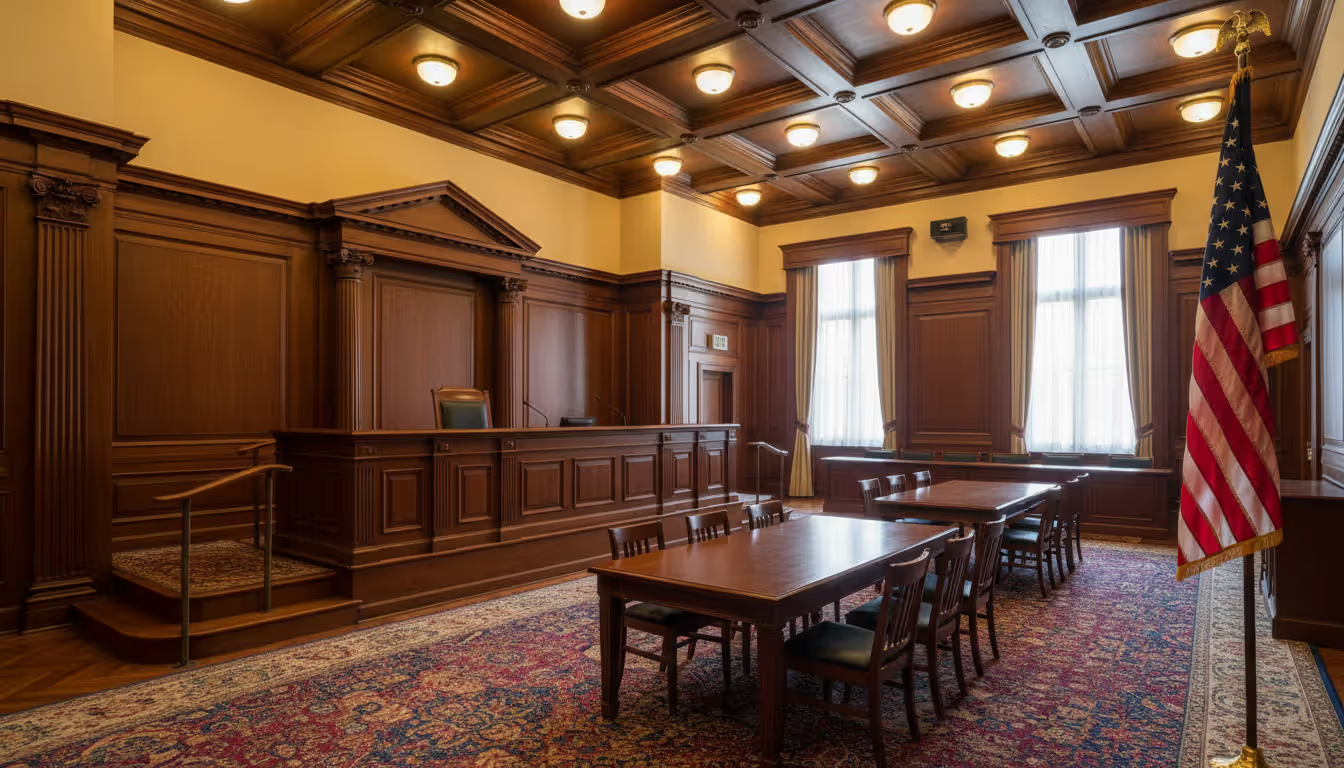
The bailiff or clerk calls your case name. You and the respondent approach the front—typically two tables or podiums, one per party. Stay on your side. Don't attempt speaking to the respondent.
The judge confirms identities and that everyone understands why they're there. Because you filed the petition, you'll probably present your case first. Speak directly to the judge, not the respondent. Make eye contact with the judge, not your abuser. This helps you maintain composure and shows the court you're taking this seriously.
Walk the judge through what happened. Reference your evidence: "Your Honor, on March 3rd, the respondent punched me in the face during an argument about money. I have photographs showing the bruising, which I'd like submitting as Exhibit A. I also have a police report from calling 911 that night—that's Exhibit B."
Hand evidence to the bailiff or clerk (don't approach the judge directly). They'll give it to the judge. Explain what each piece shows and why it matters for your safety.
The respondent gets equal time responding. They might claim you're lying, exaggerating, or that you were the aggressor. They may present their own evidence. This part can be emotionally difficult—hearing your abuser deny or minimize what they did hurts. Stay calm. Don't interrupt, roll your eyes, or react visibly. You'll get a chance responding.
After both sides present, the judge may ask questions. Answer honestly and directly. "I don't know" or "I don't remember the exact time" is acceptable—don't guess or exaggerate. Credibility is everything.
What Judges Consider
Judges don't need ironclad proof like criminal trials require. The standard is "preponderance of evidence"—basically, is your version more probably true than not? That's considerably lower than "beyond reasonable doubt."
What influences judges:
Consistency and specificity in your testimony: Detailed accounts with specific dates and events sound more credible than vague generalizations
Supporting evidence: Photos, texts, police reports, medical records, and witnesses strengthen cases significantly
Severity and frequency of incidents: Patterns of escalating abuse weigh heavily
Whether your fear is reasonable: If someone twice your size threatened to kill you and has violence history, any judge finds your fear reasonable
Demeanor: Staying calm and focused (despite emotional difficulty) helps your credibility
The respondent's testimony: Do they admit some incidents but justify them? Do they contradict themselves? Do they seem hostile or remorseful?
You don't need proving every single allegation. One proven serious abuse incident or credible threat may suffice.
Possible Outcomes
Judges usually decide immediately, though occasionally they'll take matters "under submission" and mail decisions within days. Three outcomes exist:
Restraining order granted: You receive a long-term order (typically 3-5 years) with specific conditions the respondent must follow. The judge specifies terms: distance requirements, custody arrangements, firearms surrender deadlines, etc.
Request denied: The judge finds insufficient evidence warranting a restraining order. Your temporary order expires immediately. This doesn't mean you lied—it means the judge didn't find evidence met legal standards.
Hearing continued: The judge postpones the decision, usually because the respondent wasn't properly served, needs reviewing additional evidence, or wants both parties returning with specific documentation. Your temporary order remains active until the next hearing.
When your order is granted, don't leave the courthouse without certified copies. Request at least 4-5 copies. Keep one with you always. Store others in your car, at work, with a trusted friend, and someplace safe at home. Give copies to your employer's security team, your children's schools, and consider providing one to your local police station so it's in their system.
How Long Does a Restraining Order Last?
Restraining orders save lives when victims have the courage to seek them.I tell every client that filing for protection isn't an overreaction—it's taking your safety seriously. These orders create real legal consequences for continued abuse and give law enforcement clear authority to intervene quickly when violations occur. They're one of the most effective tools we have for protecting domestic violence victims
— Jennifer Martinez
Restraining order duration varies significantly based on type and your state's laws.
Emergency protective orders provide shortest protection—just 5 to 7 days typically. They're crisis intervention tools, not long-term solutions. Their purpose is getting you safely to the courthouse during business hours.
Temporary restraining orders bridge the gap from filing to your hearing. Most last 20 to 25 days, though this varies. When your hearing gets continued (postponed), the temporary order automatically extends until the rescheduled hearing date. I've seen temporary orders last six weeks when hearings got rescheduled multiple times.
Long-term restraining orders issued after hearings have widely varying durations by state:
One to two years: Some states start with shorter orders, particularly for first-time petitioners with less severe abuse
Three years: Common in many jurisdictions as middle-ground duration
Five years: Increasingly becoming standard in states like California
Ten years: Available in some states for severe cases involving serious injury or extensive abuse history
Indefinite/permanent: A few states allow judges issuing orders without expiration dates in extreme circumstances involving attempted murder, repeated violations of prior orders, or similar severe situations
Check your specific order—the duration will be clearly stated.
Renewal Process
Your restraining order doesn't automatically renew. You've got to request an extension before expiration. Start this process at least two months early ensuring continuous protection.
Good news: renewal is usually easier than obtaining the initial order. Many states no longer require proving new abuse occurred. Instead, you just need demonstrating you still reasonably fear the respondent. You might show:
The underlying abuse was severe enough that fear continues
The respondent has maintained threatening behavior (even without violating the order)
The respondent hasn't completed court-ordered programs
You recently heard the respondent discussing harming you
Some courts handle renewals by written request when the respondent doesn't contest. Others schedule brief hearings. The process is typically faster and less intensive than your original hearing.
Author: Aaron Whitfield;
Source: sbardellaorchards.com
Modification and Termination
Either party can ask courts to modify or terminate restraining orders before expiration. Common modification scenarios:
You need adjusting custody schedules as children age
Stay-away distances need modification due to changed work locations
You want adding provisions that weren't in the original order
The respondent can petition for early termination. They must file formal requests and prove changed circumstances—usually that they've completed anger management, maintained employment, had no violent incidents, and no longer pose danger. You'll receive notice and can oppose their request at a hearing.
One critical point: restraining orders don't just disappear because both parties reconcile or you've moved past the relationship. The order remains enforceable until expiration unless you formally request dismissal through the court. Even if you want contact with the person again, the order stays active—and allowing contact could put both of you in legal jeopardy for violating court orders.
Comparison of Restraining Order Types
Feature
Emergency Protective Orders
Temporary Restraining Orders
Long-Term Restraining Orders
Who requests it
Police officers request it on your behalf after responding to incidents
You file paperwork directly at courthouse
Issued by judge following full hearing with both parties present
Speed of issuance
Immediate—available around the clock, including weekends and holidays
Same business day or next morning after filing
Takes 15-25 days from filing (scheduled hearing date)
How long it lasts
5-7 days only
Until scheduled hearing (15-25 days typically)
Usually 3-5 years; can range from 1-10 years or indefinite depending on state
Requires a hearing
No hearing needed
No—judge reviews paperwork only (ex parte)
Yes—both sides present evidence and testimony
Key characteristics
Crisis response for immediate danger; very short-term; you don't go to court
Provides protection during waiting period before your hearing; judge sees only your side initially
Comprehensive, long-term protection; harder to challenge since respondent participated in hearing
Frequently Asked Questions About Domestic Violence Restraining Orders
Can I get a restraining order without a lawyer?
Absolutely—courts specifically designed the restraining order process for self-representation. You'll find simplified forms, and many courthouses staff self-help centers where clerks answer procedural questions (though they can't give legal advice like "should you file" or "will you win"). Local domestic violence organizations frequently offer free help completing paperwork. That said, legal representation helps when your situation is complicated—significant assets to divide, contested custody battles, or if the respondent hires an attorney. But thousands of people successfully obtain restraining orders without lawyers every year.
What happens if the abuser violates the restraining order?
Violating a restraining order means criminal consequences. Any violation—showing up at your home, sending even one text message, having a friend contact you on their behalf—breaks the law. Call 911 immediately when violations occur. Police can arrest the violator on the spot without witnessing the violation themselves; your statement and the order on file suffice. Prosecutors may file criminal charges resulting in fines, jail time (ranging from days to years depending on violation severity and prior violations), or both. Each violation is a separate offense—three unwanted text messages equal three violations. Document everything: save messages, take screenshots with timestamps, note dates and times of in-person encounters. This evidence strengthens potential criminal cases and helps if you need extending your order or requesting stricter terms.
Does a restraining order show up on a background check?
Yes—restraining orders are public court records visible on most background checks. They'll appear when employers, landlords, gun dealers, or others conduct background screenings. For the protected person, this rarely creates problems; if anything, it explains why you've been cautious or relocated. For the restrained person, consequences can be substantial: difficulty obtaining employment (especially jobs requiring firearms, security clearances, or working with vulnerable populations), housing application denials, professional license complications, and immigration consequences for non-citizens. Some states permit expungement of restraining orders years after expiration if the restrained person meets strict criteria like no subsequent orders and no criminal convictions, but expungement isn't automatic or guaranteed.
Can I drop a restraining order after it's issued?
You can request dismissal, but the judge makes final decisions—not you. File written motions explaining why you no longer want protection. The court schedules hearings where judges will question you directly, often in private settings without the respondent present initially. Judges want ensuring nobody is pressuring or threatening you to drop the order. They sometimes deny dismissal requests if they believe danger persists, regardless of your wishes. This policy exists because abusers frequently pressure victims dropping protective orders as conditions for "reconciliation" or through threats. Courts prioritize safety over either party's preferences. Important: never simply ignore the order or allow contact without court approval—that doesn't terminate the order and can create legal problems for both of you.
Will a restraining order affect child custody arrangements?
Yes, significantly. Most restraining orders addressing situations where you share children with the respondent include temporary custody provisions. Courts typically grant protected parents primary custody and either suspend restrained parents' visitation entirely or allow only supervised visitation through monitored exchange centers. These custody terms last for the order's duration unless modified. Beyond temporary arrangements, restraining orders carry weight in permanent custody proceedings. Many states have legal presumptions that awarding custody to parents who committed domestic violence against the other parent isn't in children's best interests. This doesn't automatically disqualify the abusive parent from custody, but it shifts the burden to them proving they've changed and custody wouldn't endanger the child. Judges take domestic violence very seriously in custody determinations.
How much does it cost to file for a restraining order?
Most states eliminated filing fees for domestic violence restraining orders—they've removed financial barriers since money shouldn't prevent abuse victims from seeking safety. States that do charge fees (typically $100-400 when applicable) offer fee waivers based on income. Request waiver forms when you file; approval is usually quick for domestic violence cases. Beyond filing fees, you might incur costs for serving papers on the respondent—$50-200 if you hire professional process servers rather than using sheriff's offices (which are often free). Document copying at courthouses usually costs 25-50 cents per page. Legal representation varies enormously: free through legal aid organizations, modest fees through domestic violence legal clinics, or thousands of dollars for private attorneys handling complex cases. Many areas provide pro bono (free) attorneys for domestic violence restraining order cases through local bar associations or nonprofit organizations.
Getting a restraining order represents an important protective step, but think of it as one piece of a larger safety strategy rather than a complete solution. The order creates legal consequences for continued abuse and gives police clear authority acting quickly, but it's paper—not a physical barrier or bodyguard.
Build broader safety plans beyond legal orders. Secure your home with new locks, additional lighting, and security cameras if feasible. Change your routines—vary your route to work, shop at different stores at different times, avoid predictable patterns making you easy to find. Share your situation with trusted people: your employer or HR department, close friends or family members, neighbors who can watch for suspicious activity. Keep a bag packed with essentials (documents, medication, clothes, cash) in case you need leaving quickly.
Store certified copies of your restraining order strategically: one in your purse or wallet always, one in your vehicle glove compartment, one at work, one with a trusted friend or family member. Provide copies to your workplace security desk, your children's schools and daycare centers (with explicit instructions that the restrained person is not authorized for pickup), and consider filing a copy with your local police department's records division so it's immediately accessible when officers check their system.
Trust your instincts about safety. If seeking a restraining order feels like you're "making too big a deal" or you worry about seeming dramatic, remember that courts issue these orders because domestic violence is serious, unpredictable, and frequently escalates. Judges see hundreds of these cases—they understand the danger even when victims minimize it. Taking legal action demonstrates strength and responsibility toward your own safety and your children's wellbeing, not weakness or vindictiveness.
If immediate danger exists right now, call 911 first—worry about paperwork later. Your physical safety takes priority over any legal process. Once you're secure, you can navigate the restraining order system with support from law enforcement, victim advocates, and courts designed specifically for protecting people in your situation.
A Protection From Abuse order is a civil court order protecting individuals from domestic violence and abuse by someone with whom they share a specific relationship. Understanding how to obtain a PFA, what happens during hearings, and the consequences of violations can help you take the first step toward safety
A no contact order can reshape daily life by restricting communication and proximity. This guide explains how these court-issued directives work in criminal prosecutions and divorce cases, the consequences of violations, and the critical differences from restraining orders
Medical neglect occurs when parents fail to provide necessary healthcare, causing serious harm to children. This comprehensive guide explains recognition signs, legal definitions, investigation processes, and reporting requirements to protect vulnerable children
California Penal Code 273.5 addresses inflicting corporal injury on a spouse or cohabitant, carrying significantly harsher penalties than simple battery. Understanding the legal definition, required elements, and differences from related charges matters for anyone navigating domestic violence accusations
The content on this website is provided for general informational and educational purposes only. It is intended to explain concepts related to family law, divorce, custody, child support, and related legal matters.
All information on this website, including articles, guides, and examples, is presented for general educational purposes. Legal processes may vary depending on jurisdiction, personal circumstances, and applicable laws.
This website does not provide legal advice, and the information presented should not be used as a substitute for consultation with qualified family law attorneys or legal professionals.
The website and its authors are not responsible for any errors or omissions, or for any outcomes resulting from decisions made based on the information provided on this website.